Fed Chair Jerome Powell Praises Paul Volcker’s Legacy Amid Ongoing Political Pressure
Federal Reserve Chair Jerome Powell highlights Paul Volcker’s legacy of fighting inflation while reaffirming the central bank’s independence amid rising political pressure.
 SANJANA DUTTA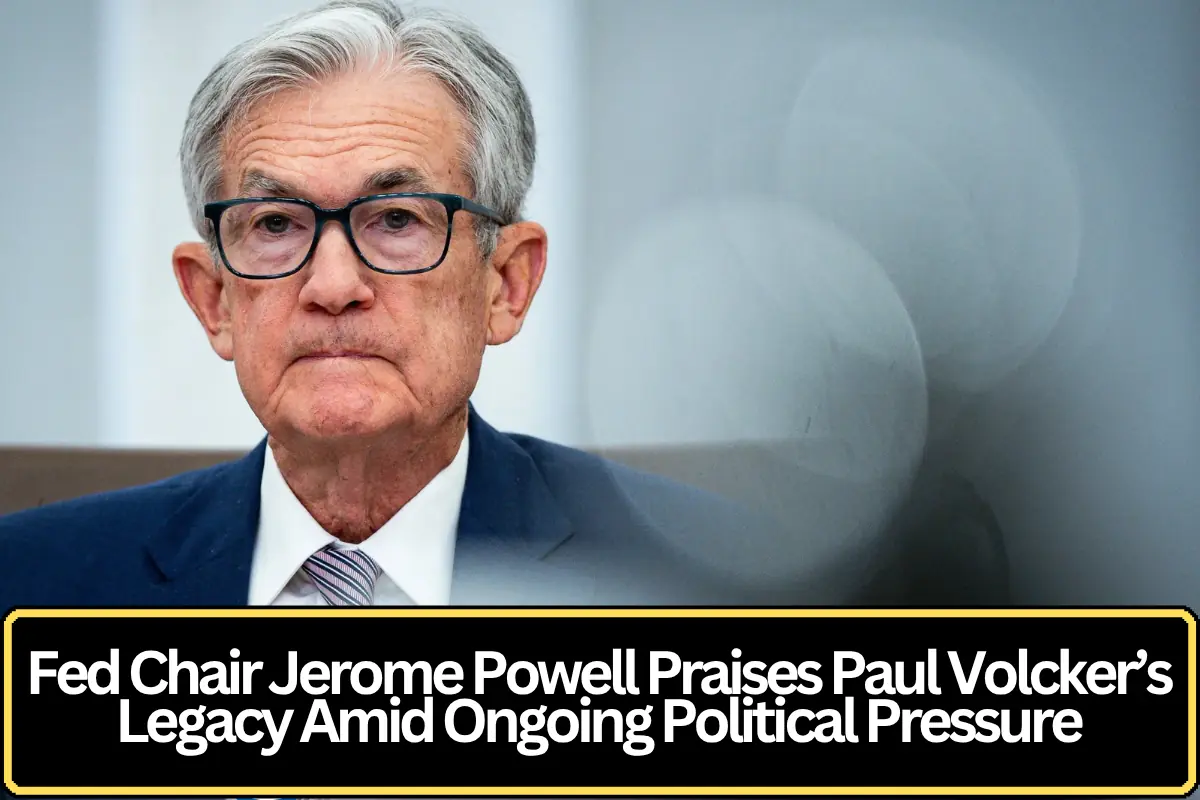
Powell Highlights Volcker’s Legacy in Challenging Economic Climate
Federal Reserve Chair Jerome Powell has praised the legacy of former Fed Chairman Paul Volcker, emphasizing the importance of central bank independence as the institution faces renewed political pressure. Speaking at a recent event, Powell underscored Volcker’s role in combating inflation during the late 20th century and drew parallels to the current economic environment in the United States.
Powell’s remarks come at a time when the Federal Reserve is navigating persistent inflation concerns, interest rate decisions, and increasing scrutiny from political leaders. By invoking Volcker’s legacy, Powell signaled the Fed’s commitment to maintaining its policy direction despite external pressures.
Volcker’s Anti-Inflation Strategy Revisited
Paul Volcker, who served as Federal Reserve Chairman from 1979 to 1987, is widely credited with taking aggressive measures to control runaway inflation in the United States. His tenure was marked by sharply higher interest rates, which successfully brought inflation under control but also triggered a severe economic slowdown.
Powell noted that Volcker’s willingness to take difficult and often unpopular decisions demonstrated the importance of prioritizing long-term economic stability over short-term political considerations. He described Volcker’s approach as a defining moment in modern central banking.
The reference to Volcker highlights the enduring relevance of his policies, particularly as the Federal Reserve continues to grapple with balancing inflation control and economic growth.
Rising Political Pressure on the Federal Reserve
The Federal Reserve has recently faced increased political scrutiny over its monetary policy decisions, including interest rate adjustments aimed at controlling inflation. Lawmakers and political figures have expressed concerns about the potential impact of these policies on economic growth, employment, and borrowing costs.
Powell acknowledged these pressures but reaffirmed the Fed’s commitment to making decisions based on economic data and long-term objectives. He emphasized that maintaining independence is critical to ensuring credibility and effectiveness in monetary policy.
The issue of central bank independence has become a focal point in economic discussions, particularly as governments worldwide confront inflationary pressures and economic uncertainty.
Balancing Inflation Control and Economic Growth
The Federal Reserve’s current policy stance reflects a delicate balance between curbing inflation and supporting economic growth. While inflation has shown signs of easing, it remains above the Fed’s target levels, prompting continued vigilance.
Powell indicated that the central bank will continue to assess economic data carefully before making further policy decisions. He stressed that achieving price stability is essential for sustainable economic growth and financial stability.
At the same time, the Fed must consider the broader economic impact of its policies, including effects on businesses, consumers, and financial markets. This balancing act underscores the complexity of modern monetary policymaking.
Historical Lessons for Current Policy
By referencing Volcker’s tenure, Powell highlighted the importance of learning from historical precedents. Volcker’s actions demonstrated that decisive measures can restore economic stability, even if they involve short-term challenges.
Powell suggested that these lessons remain relevant as the Federal Reserve navigates current economic conditions. He noted that maintaining a clear focus on long-term goals can help guide policy decisions in uncertain times.
The comparison also serves to reinforce the Fed’s institutional continuity and its commitment to upholding principles that have guided its operations for decades.
Market and Economic Implications
Powell’s remarks have been closely watched by financial markets, which are sensitive to signals about future monetary policy. Investors and analysts often look to statements from the Fed Chair for insights into the central bank’s outlook and potential policy direction.
The emphasis on independence and long-term stability may reassure markets about the Fed’s commitment to its mandate. However, ongoing uncertainty about inflation and economic growth continues to shape market expectations.
Economic indicators, including employment data, consumer spending, and global developments, will play a key role in determining the Fed’s next steps.
Global Context of Central Bank Independence
The issue of central bank independence is not unique to the United States. Around the world, central banks are facing similar challenges as they respond to inflationary pressures and economic disruptions.
Powell’s comments reflect a broader global trend in which monetary authorities seek to maintain credibility and autonomy in the face of political and economic pressures. The ability to operate independently is widely seen as essential for effective policymaking.
This context underscores the importance of institutional frameworks that support central banks in fulfilling their mandates without undue interference.
Future Outlook for the Federal Reserve
Looking ahead, the Federal Reserve is expected to continue its cautious approach to monetary policy. Powell indicated that the central bank remains focused on achieving its dual mandate of maximum employment and stable prices.
The path forward will depend on a range of factors, including inflation trends, economic growth, and global developments. Policymakers will need to remain flexible and responsive to changing conditions.
Powell’s reference to Volcker suggests that the Fed is prepared to take necessary actions, even in the face of political challenges, to ensure long-term economic stability.
Conclusion
Jerome Powell’s praise for Paul Volcker underscores the enduring importance of strong leadership and independence in central banking, particularly during periods of economic uncertainty.
Current Status
The Federal Reserve continues to monitor economic conditions closely while maintaining its policy stance amid ongoing political and market scrutiny.