Indian Carmakers’ Market Share Hits 27% in FY26 from 18% in FY22 Amid SUV-Led Growth
Indian automakers’ share rose to 27% in FY26 from 18% in FY22, led by Tata Motors and Mahindra as SUV demand surged.
 HCP TEAM
Indian carmakers increased their combined market share to nearly 27 per cent in FY26, up from 18 per cent in FY22, marking a five-year high, according to vehicle registration data compiled by the Federation of Automobile Dealers Associations (FADA). The growth reflects a structural shift driven by strong sport utility vehicle (SUV) demand and faster product response by domestic manufacturers.
Domestic Share Rises to 27% in FY26
The rise in market share underscores a notable change in India’s passenger vehicle landscape, where local manufacturers such as Tata Motors and Mahindra & Mahindra have strengthened their position. The data, based on registrations from the government’s Vahan portal covering 1,463 regional transport offices, serves as a proxy for retail sales and highlights a nine-percentage-point gain over four years.
Analysts attribute the shift to the ability of domestic automakers to quickly align with evolving market trends. According to Harshvardhan Sharma, group head, automotive at Nomura Consulting, Indian companies have outperformed not only in volumes but also in market relevance by responding faster to demand for SUVs and value-driven offerings.
Mahindra and Tata Motors Lead Gains
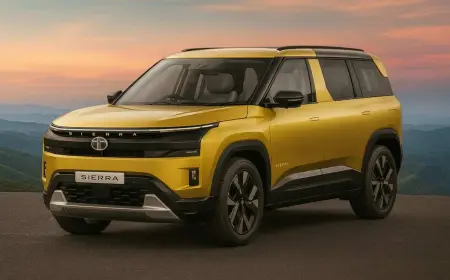
Mahindra & Mahindra nearly doubled its market share to 13.4 per cent in FY26 from 6.8 per cent in FY22, supported by a strong SUV portfolio including Scorpio-N, XUV 3XO and Thar. Tata Motors also expanded its share to 13 per cent from 11.3 per cent during the same period, driven by new launches, electric vehicles and product refresh cycles.
Both companies are now competing closely for the second position in India’s passenger vehicle market. Their growth has been supported by a steady pipeline of SUVs and feature-rich models aligned with domestic demand trends.
Foreign Carmakers Lose Ground
Korean and European manufacturers ceded market share during the period. Hyundai Motor India’s share declined to 12.3 per cent in FY26 from 16.3 per cent in FY22, resulting in a drop to fourth position after holding the second rank for nearly 25 years. Kia India saw a marginal increase in share to 5.9 per cent from 5.3 per cent.
European automakers’ combined share fell to 4.3 per cent in FY26 from 6.2 per cent in FY22, although the rate of decline has moderated. Within this group, Skoda Auto Volkswagen India recorded a recovery, with its share rising to 2.3 per cent.
Japanese Carmakers Retain Dominance
Japanese manufacturers continued to lead the market with a combined share of nearly 49 per cent in FY26, anchored by Maruti Suzuki. However, internal shifts were evident as Maruti’s market share declined to an all-time low of 39.71 per cent. Other Japanese players, including Honda and Nissan, also recorded consistent erosion.
The decline within the segment was partly offset by Toyota, which increased its market share to 7.1 per cent in FY26 from 3.9 per cent in FY22, indicating uneven performance among Japanese brands.
SUV Demand and Product Strategy Drive Shift
Analysts point to structural factors behind the rise of domestic automakers, particularly the growing dominance of SUVs, which now account for nearly two-thirds of passenger vehicle sales in India. Mahindra’s aggressive SUV expansion and Tata Motors’ early push in electric vehicles through models such as Nexon and Punch have enabled both companies to capture demand across segments.
In contrast, several foreign automakers have faced challenges due to slower product refresh cycles and gaps in meeting evolving consumer expectations around features, connectivity and pricing. Hyundai’s decline, in particular, reflects the impact of an ageing portfolio and the absence of major new launches.
Chinese-origin brands, including JSW MG Motor and BYD India, are gradually expanding their presence, with their combined market share rising to 1.5 per cent in FY26 from negligible levels in FY22.
The data highlights a broader realignment in India’s passenger vehicle market, where domestic manufacturers are gaining ground through faster response to demand trends and targeted product strategies focused on SUVs and electric vehicles.