Iran Says Political System Stable Despite Killings of Top Leaders Amid Ongoing Conflict
Iran asserts its political system remains stable despite the killing of top leaders in US and Israeli strikes, amid escalating regional conflict.
 SANJANA DUTTA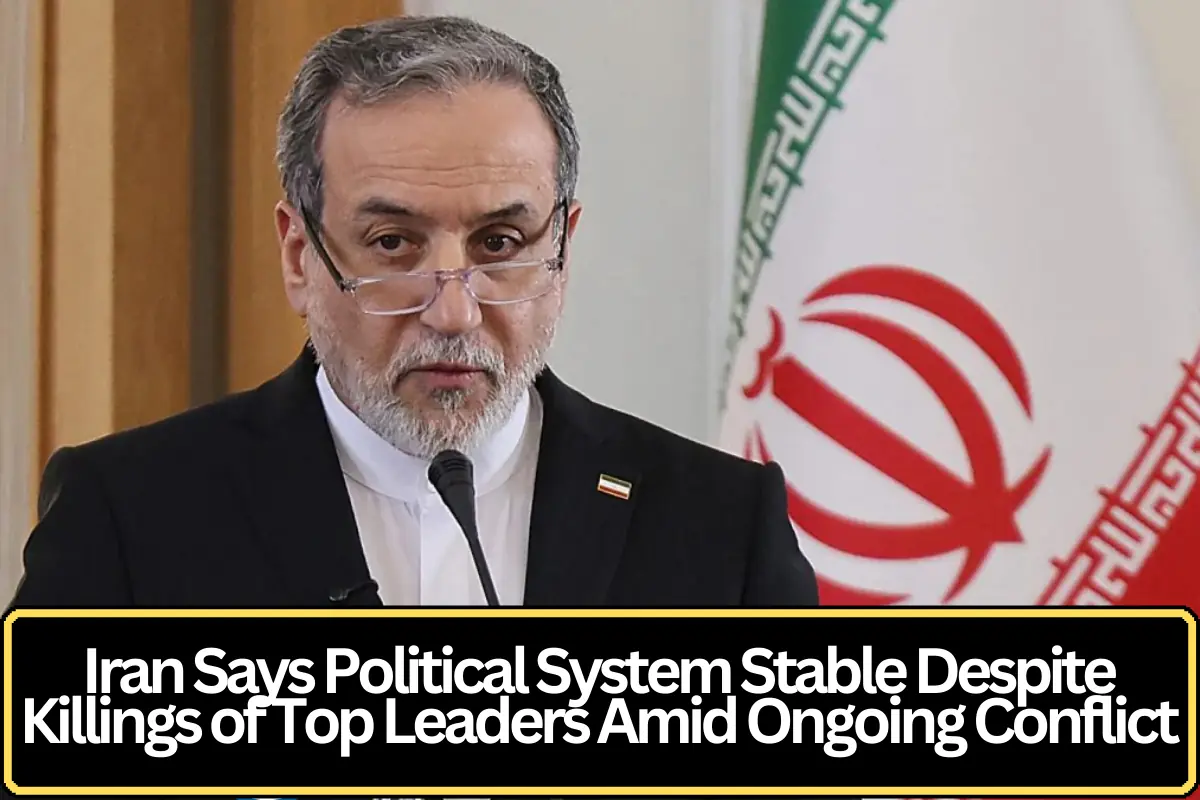
Iran Asserts Stability Amid Escalating Conflict
Iran has stated that its political system remains stable despite the killing of several top leaders in recent strikes attributed to the United States and Israel, as the conflict in the Middle East continues to intensify in March 2026. Iranian officials emphasized that the country’s governance structure is resilient and will not be destabilized by targeted attacks, even as hostilities escalate across the region.
The remarks come amid ongoing military exchanges involving Iran, Israel, and allied forces, with airstrikes and missile attacks targeting strategic and leadership positions. The killing of senior figures has raised concerns internationally about potential disruptions within Iran’s leadership and the broader implications for regional stability.
Government Emphasizes Institutional Strength
Iranian authorities have highlighted the strength of the country’s political institutions, stating that governance does not depend on individual leaders but on a structured system capable of continuity. Officials stressed that succession mechanisms and established frameworks ensure that administrative and strategic operations continue without interruption.
They argued that attempts to weaken Iran through targeted assassinations would not succeed, describing such actions as part of broader efforts to destabilize the nation. The government reiterated its commitment to maintaining stability and responding decisively to external threats.
Analysts note that Iran’s political system, which combines elected institutions with clerical oversight, is designed to withstand internal and external shocks, providing a level of resilience during crises.
Escalating Military Confrontation
The statement comes as the conflict between Iran and Israel, with involvement from the United States, has entered a prolonged and increasingly intense phase. Both sides have carried out sustained military operations, including airstrikes on infrastructure and strategic sites.
The targeting of leadership figures marks a significant escalation, reflecting a shift toward high-value targets in an effort to disrupt command structures. However, Iran’s response suggests that such tactics may not achieve their intended impact.
Military analysts caution that continued escalation could lead to further retaliatory actions, increasing the risk of a wider regional conflict involving additional actors.
International Concerns Over Stability
The killing of top Iranian leaders has drawn global attention, with governments and international organizations expressing concern about the potential consequences. There are fears that leadership losses could lead to internal instability or unpredictable responses from Iran.
However, Iran’s reassurances aim to counter these concerns, presenting an image of continuity and control. Officials have sought to reassure both domestic and international audiences that the country’s political system remains intact and functional.
Experts suggest that maintaining this perception is crucial for Iran, particularly in the context of ongoing conflict and diplomatic pressure.
Impact on Regional Dynamics
The developments are likely to influence the broader geopolitical landscape of the Middle East. The targeting of leaders could alter strategic calculations on all sides, potentially leading to shifts in military and diplomatic approaches.
Iran’s assertion of stability may also serve as a signal to its allies and adversaries that it remains capable of sustaining prolonged engagement. This could impact the decisions of regional actors considering their own positions in the conflict.
The situation underscores the complexity of the crisis, where military actions are closely intertwined with political messaging and strategic signaling.
Economic and Security Implications
The ongoing conflict, combined with leadership losses, has implications for economic stability and security within Iran and beyond. Disruptions to infrastructure and uncertainty in governance can affect economic activity and investor confidence.
At the same time, the broader regional instability continues to influence global markets, particularly in the energy sector. Concerns over supply disruptions and rising tensions have contributed to volatility in oil prices.
Iran’s emphasis on stability is partly aimed at mitigating these effects, projecting confidence in its ability to manage both internal and external challenges.
Diplomatic Context and Challenges
Diplomatic efforts to address the conflict remain ongoing, though progress has been limited. The escalation, including the targeting of leaders, has complicated negotiations and increased tensions between the involved parties.
Iran has reiterated its stance that it will respond to aggression while remaining open to diplomatic solutions that respect its sovereignty. However, the current environment of heightened hostilities presents significant obstacles to meaningful dialogue.
International mediators continue to call for restraint and de-escalation, emphasizing the risks associated with prolonged conflict.
Resilience of Governance Structures
Political analysts highlight that Iran’s governance model includes mechanisms for continuity, such as defined lines of succession and institutional decision-making processes. These features are intended to ensure stability even in times of crisis.
The government’s response to the killings reflects confidence in these structures, as well as a strategic effort to maintain public morale and deter adversaries. By emphasizing resilience, Iran aims to counter narratives suggesting vulnerability.
This approach is consistent with broader efforts to project strength and unity in the face of external pressure.
Outlook for the Conflict
The situation remains highly volatile, with ongoing military actions and limited progress in diplomatic efforts. The impact of leadership losses on the conflict’s trajectory will depend on how effectively Iran manages succession and maintains operational continuity.
Observers note that the coming weeks will be critical in determining whether the conflict escalates further or moves toward de-escalation. The actions of key actors, including the United States and Israel, will play a significant role in shaping outcomes.
As the crisis unfolds, the balance between military strategy and political stability will remain a central factor in the region’s future.
Conclusion
Iran’s assertion of political stability despite the killing of top leaders highlights the resilience of its governance system amid a period of intense conflict. The developments underscore the interplay between military actions and political dynamics in shaping the trajectory of the crisis.
Current Status
Iran maintains that its political system remains stable and functional despite leadership losses, as the broader conflict continues with ongoing military exchanges and heightened regional tensions.