Experts Urge Caution as AI in Medicine Shows Promise for Transforming Healthcare
Experts highlight the potential of AI in medicine while warning of risks, emphasizing the need for careful implementation and regulation in healthcare systems.
 Akanksha jain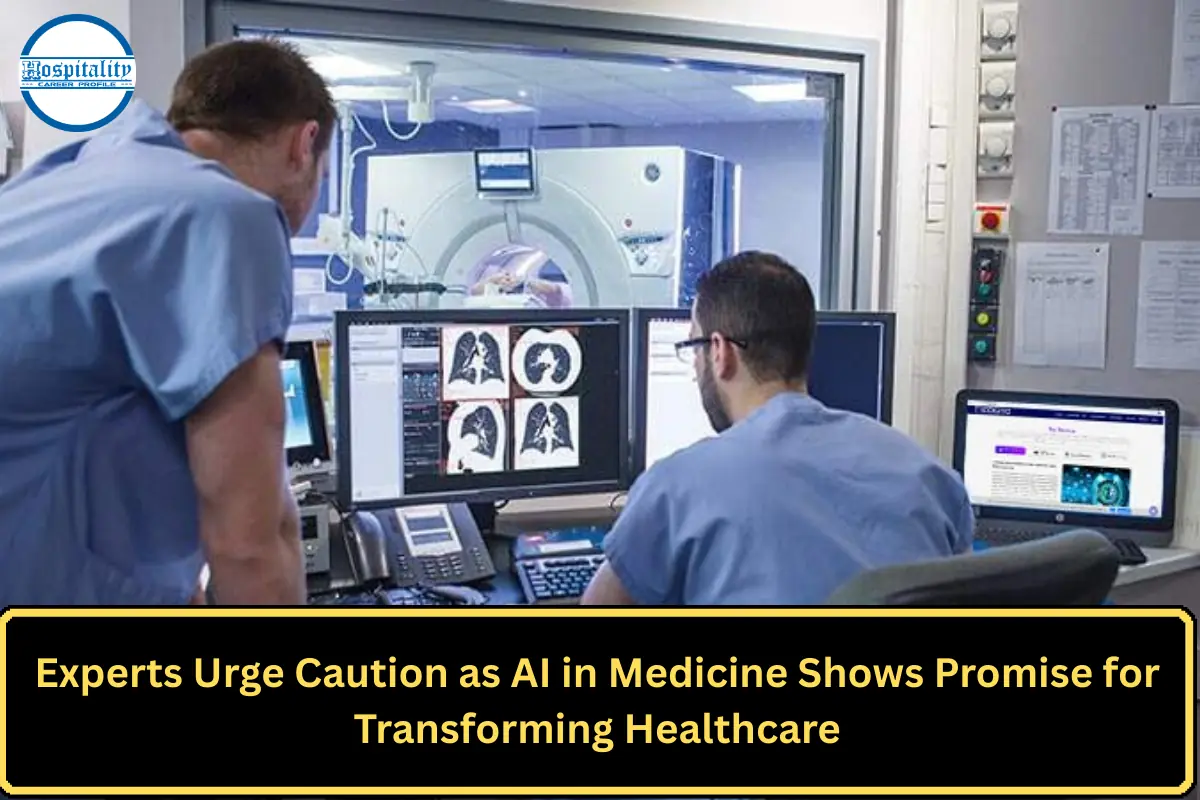
Experts Urge Caution as AI in Medicine Shows Promise for Transforming Healthcare
Artificial intelligence is rapidly transforming the healthcare sector, offering new possibilities in diagnosis, treatment, and patient management, but experts are warning that its adoption must be approached with caution to avoid risks to patient safety and system integrity, according to recent insights shared in March 2026.
Healthcare professionals, researchers, and industry leaders say that while AI-driven tools have demonstrated significant potential in improving efficiency and accuracy, concerns remain around data quality, regulatory oversight, and ethical considerations. The discussion comes at a time when healthcare systems worldwide are increasingly integrating digital technologies into clinical workflows.
Growing Role of AI in Healthcare
AI technologies are being deployed across various aspects of healthcare, including medical imaging, predictive analytics, drug discovery, and administrative processes. These tools can analyze large volumes of data quickly, assisting clinicians in identifying patterns and making more informed decisions.
In diagnostic applications, AI systems have shown the ability to detect diseases such as cancer, cardiovascular conditions, and neurological disorders with a high degree of accuracy. This has the potential to improve early detection and patient outcomes, particularly in settings where access to specialized expertise is limited.
AI is also being used to streamline hospital operations, reduce administrative burdens, and optimize resource allocation, contributing to more efficient healthcare delivery.
Potential Benefits for Patients and Providers
Experts note that AI could significantly enhance patient care by enabling personalized treatment plans and improving clinical decision-making. By analyzing patient data, including medical history and genetic information, AI systems can help tailor interventions to individual needs.
For healthcare providers, AI tools can reduce workload and allow clinicians to focus more on patient interaction rather than administrative tasks. This could lead to improved patient satisfaction and better overall care experiences.
Additionally, AI-driven innovations in drug development and clinical research may accelerate the discovery of new therapies, potentially bringing treatments to market more quickly.
Concerns Over Data Quality and Bias
Despite its promise, experts warn that AI systems are only as reliable as the data they are trained on. Poor-quality or biased data can lead to inaccurate predictions and potentially harmful outcomes for patients.
Bias in AI models is a particular concern, as it can result in disparities in healthcare delivery. If datasets do not adequately represent diverse populations, the performance of AI systems may vary across different demographic groups.
Addressing these issues requires rigorous data validation, ongoing monitoring, and the inclusion of diverse datasets in AI development.
Regulatory and Ethical Challenges
The rapid advancement of AI in healthcare has outpaced the development of regulatory frameworks in many regions. Experts emphasize the need for clear guidelines and standards to ensure the safe and effective use of AI technologies.
Regulators are working to establish policies that address issues such as data privacy, algorithm transparency, and accountability. Ensuring that AI systems are explainable and that decisions can be understood by clinicians is a key priority.
Ethical considerations also play a significant role, particularly in areas such as patient consent, data usage, and the potential for over-reliance on automated systems.
Integration into Clinical Practice
Integrating AI into clinical practice presents both opportunities and challenges. While the technology can enhance decision-making, it must be carefully integrated into existing workflows to avoid disruption.
Healthcare providers require training to effectively use AI tools and interpret their outputs. Without proper understanding, there is a risk of misinterpretation or over-reliance on automated recommendations.
Experts stress that AI should be viewed as a support tool rather than a replacement for clinical judgment, with human oversight remaining essential in patient care.
Cybersecurity and Data Privacy Risks
The increasing use of digital technologies in healthcare raises concerns about cybersecurity and data privacy. AI systems often rely on large datasets that include sensitive patient information, making them potential targets for cyberattacks.
Protecting this data is critical to maintaining patient trust and ensuring compliance with privacy regulations. Healthcare organizations must invest in robust cybersecurity measures and adopt best practices for data protection.
Experts also highlight the importance of transparency in how patient data is collected, stored, and used in AI applications.
Balancing Innovation with Safety
As AI continues to evolve, balancing innovation with safety will be a key challenge for the healthcare sector. While the technology offers significant benefits, its risks must be carefully managed to prevent unintended consequences.
Stakeholders across the industry, including governments, healthcare providers, and technology companies, are working to develop frameworks that support responsible innovation. Collaboration is seen as essential to ensuring that AI is used effectively and ethically.
Experts argue that a cautious approach does not mean slowing progress but rather ensuring that advancements are implemented in a way that prioritizes patient safety and public trust.
Future Outlook
The role of AI in medicine is expected to continue expanding, with new applications emerging across different areas of healthcare. As the technology matures, it has the potential to reshape how care is delivered and experienced.
However, experts emphasize that the success of AI in healthcare will depend on addressing current challenges, including data quality, regulation, and ethical considerations. Ongoing research and evaluation will be critical in refining these technologies.
For now, the consensus among experts is clear: while AI holds great promise for transforming healthcare, its adoption must be guided by careful planning, strong oversight, and a commitment to patient safety.
The evolution of AI in medicine remains closely watched as stakeholders work to harness its potential while mitigating associated risks.