Artificial Intelligence Emerges as Tool to Reduce Billing Disputes Between U.S. Hospitals and Insurers
Hospitals and insurance companies in the United States are increasingly using artificial intelligence to resolve long-standing disputes over medical billing, aiming to streamline payment decisions and reduce administrative conflicts.
 Akanksha jain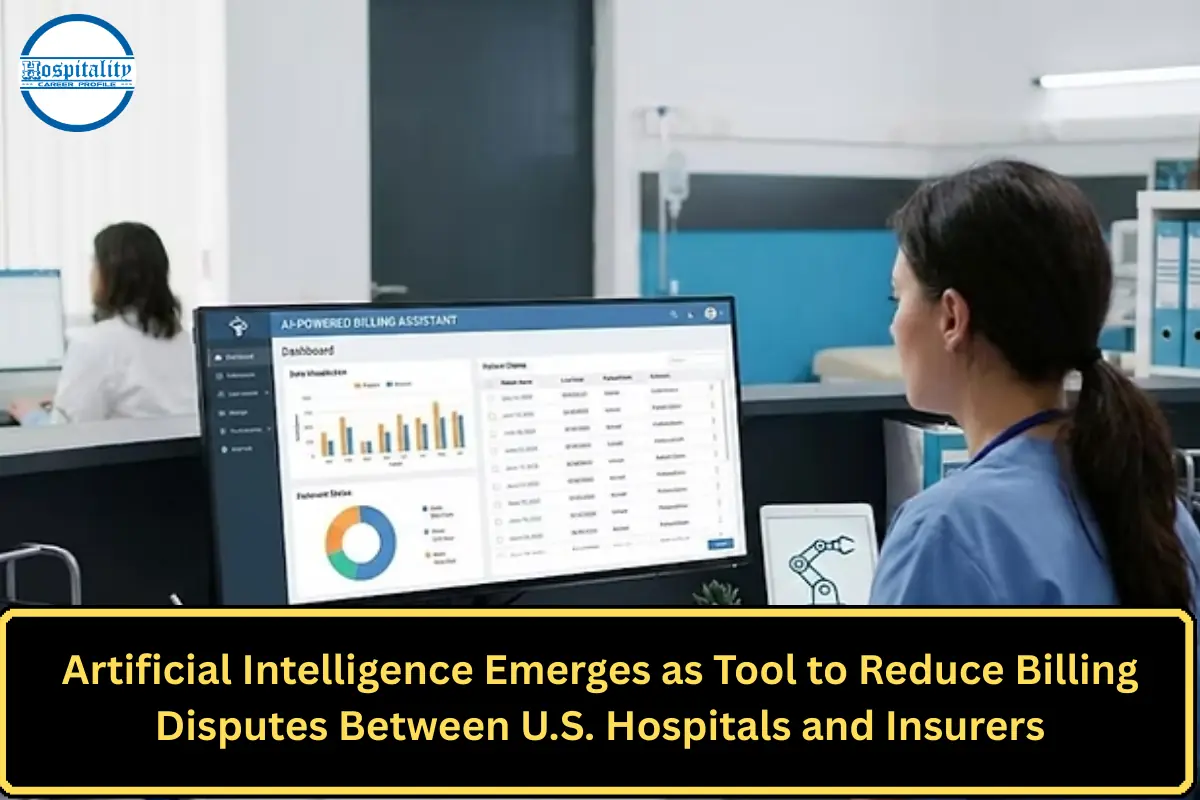
Artificial Intelligence Emerging as a Solution in Hospital–Insurance Payment Disputes
Artificial intelligence is increasingly being adopted by hospitals and health insurance companies in the United States to address long‑standing disputes over medical billing and payment approvals. Healthcare providers and insurers are deploying AI systems to analyze claims, review treatment records, and determine payment responsibility more efficiently, a development aimed at reducing administrative conflicts and delays that often affect hospitals and patients.
The technology is being used to automate complex billing processes that traditionally required manual review by healthcare administrators and insurance staff. By processing large volumes of data from medical records, insurance policies, and treatment documentation, AI systems are helping both sides identify whether procedures meet coverage requirements and whether claims should be approved or contested.
Industry experts say the approach could significantly reduce the time required to resolve billing disagreements, which have long been a source of tension between hospitals seeking payment for services and insurers evaluating whether treatments fall within coverage policies.
Long‑Standing Disputes in Healthcare Billing
Disputes over payment responsibility are a persistent challenge within the United States healthcare system. Hospitals often submit claims for procedures, tests, and treatments provided to patients, but insurance companies may question whether the services were medically necessary or fully covered under the patient’s insurance plan.
These disagreements frequently result in lengthy review processes, delayed payments, and administrative appeals. In some cases, unresolved disputes can lead to financial pressure for healthcare providers and confusion for patients who may receive unexpected bills while insurers and hospitals attempt to determine payment responsibility.
Healthcare administrators say the complexity of insurance policies, combined with large volumes of medical claims, has made the billing process increasingly difficult to manage using traditional manual review systems. Each claim may require verification of patient coverage, treatment justification, clinical documentation, and policy compliance.
Because of the number of stakeholders involved, resolving billing disagreements often requires extensive communication between hospitals, insurance providers, and billing specialists.
AI Tools Analyze Claims and Medical Data
Artificial intelligence systems designed for healthcare administration can analyze large datasets associated with insurance claims, including patient histories, diagnostic codes, treatment records, and policy guidelines. These systems are capable of identifying patterns and determining whether submitted claims align with coverage requirements.
Hospitals are using AI to review clinical documentation and ensure claims are prepared accurately before submission to insurers. At the same time, insurance companies are deploying similar technologies to evaluate incoming claims and determine whether they meet reimbursement criteria.
By automating parts of the review process, AI platforms can flag inconsistencies, highlight missing documentation, and suggest whether a claim is likely to be approved or denied. This allows healthcare administrators to address potential issues earlier in the billing process.
Technology providers say the goal is not to replace human oversight but to support decision‑making by quickly processing large volumes of complex data.
Reducing Administrative Costs in Healthcare
Administrative expenses account for a significant portion of healthcare spending in the United States. Processing insurance claims, verifying coverage details, and resolving billing disputes require extensive staff resources for both hospitals and insurance providers.
Healthcare economists note that administrative costs can increase when claims require multiple reviews or appeals. Each step in the process may involve documentation checks, communication between institutions, and regulatory compliance reviews.
By automating routine tasks such as claim validation and document verification, AI technologies can reduce the amount of manual work required in the billing process. This may allow healthcare organizations to allocate administrative staff to more complex tasks that require professional judgment.
Industry analysts say improved efficiency could reduce operational costs and shorten the time it takes for hospitals to receive payment for services.
Potential Benefits for Hospitals and Patients
Hospitals say faster claim processing could improve financial stability by reducing delays in reimbursements. Payment delays can create financial challenges for healthcare providers, particularly when they manage large volumes of patient treatments and depend on timely insurance payments to maintain operations.
Patients may also benefit from improved billing clarity. When claims are processed more efficiently and disputes are resolved earlier, patients may be less likely to receive unexpected medical bills or experience uncertainty regarding insurance coverage.
Healthcare administrators note that billing transparency remains a major concern for patients navigating the U.S. healthcare system. AI‑supported systems may help clarify coverage decisions and provide clearer explanations of billing outcomes.
However, experts emphasize that technology alone cannot eliminate all disputes, as coverage policies and medical necessity evaluations still require professional interpretation.
Growing Role of AI in Healthcare Administration
The adoption of artificial intelligence in healthcare has expanded rapidly in recent years. While much attention has focused on clinical applications such as disease diagnosis and medical imaging analysis, AI is also playing a growing role in administrative functions within hospitals and insurance companies.
Healthcare technology firms are developing platforms designed specifically for claims processing, fraud detection, medical coding, and reimbursement analysis. These tools can analyze thousands of claims simultaneously and identify patterns that might otherwise be difficult for human reviewers to detect.
Hospitals and insurers increasingly view such technologies as essential tools for managing complex healthcare systems that generate large volumes of data and documentation.
Digital transformation efforts across the healthcare sector are also encouraging institutions to adopt data‑driven approaches to improve operational efficiency.
Challenges and Oversight Considerations
Despite the potential benefits, the use of AI in healthcare administration raises questions about transparency, oversight, and accountability. Decisions regarding insurance coverage and payment can have significant financial consequences for both hospitals and patients.
Regulators and healthcare policy experts say AI‑based systems must be carefully designed to ensure fairness and accuracy. Algorithms must rely on reliable medical data and clearly defined policy guidelines to avoid errors that could lead to incorrect claim approvals or denials.
Healthcare organizations implementing AI technologies are typically required to maintain human oversight in decision‑making processes. Administrators and medical professionals remain responsible for reviewing complex cases and ensuring compliance with healthcare regulations.
Ensuring that AI tools operate transparently and consistently will remain an important consideration as their use expands across the healthcare sector.
Future Outlook for AI in Healthcare Billing
Healthcare analysts expect the use of artificial intelligence in medical billing and insurance claims processing to grow in the coming years. As healthcare data systems become more integrated and digital records become more standardized, AI technologies will likely play a larger role in managing administrative operations.
Hospitals and insurers are continuing to test and refine AI‑driven platforms to determine how effectively they can improve billing efficiency and reduce disputes. Technology companies working in the healthcare sector are also investing in research and development aimed at enhancing the accuracy and reliability of AI‑based administrative tools.
While the technology is still evolving, early adoption suggests that AI could help streamline a complex billing ecosystem that has historically been a source of friction between healthcare providers and insurers.
Industry observers say ongoing collaboration between healthcare institutions, insurers, and technology providers will be essential to ensure that AI tools support efficient, transparent, and fair billing practices across the healthcare system.