Scientists Identify ALS-Linked Protein Connecting DNA Repair to Cancer and Dementia Risk
Scientists have identified a protein linked to ALS that plays a key role in DNA repair, offering new insights into connections between cancer, neurodegeneration, and dementia.
 Akanksha jain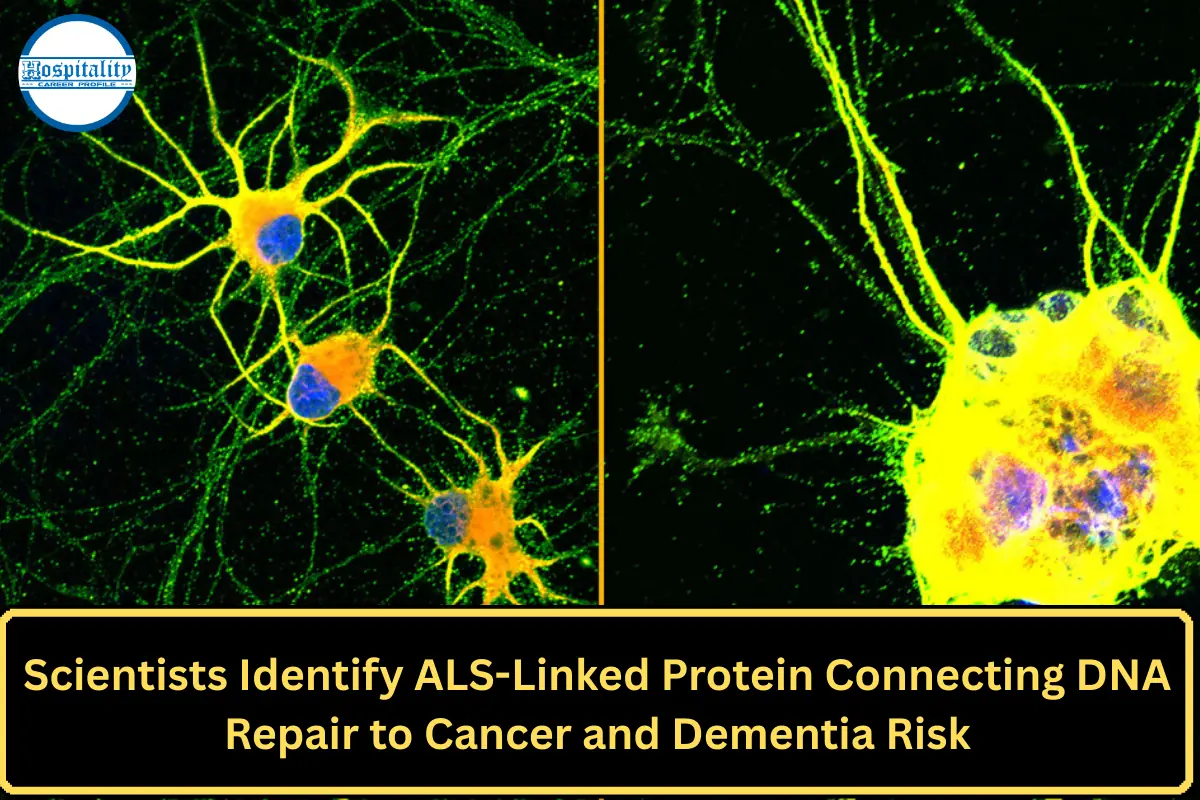
Discovery of ALS-Linked Protein Reveals New Links Between DNA Repair, Cancer, and Dementia
Scientists have identified a protein associated with amyotrophic lateral sclerosis (ALS) that plays a crucial role in DNA repair, shedding new light on how defects in cellular repair mechanisms may contribute to cancer and neurodegenerative diseases such as dementia. The findings, reported in March 2026 by an international team of researchers, highlight a shared biological pathway that could help explain connections between these seemingly distinct conditions.
The study focused on understanding how cells maintain genetic stability through DNA repair processes and how disruptions in these mechanisms can lead to disease. Researchers found that the ALS-linked protein is involved in detecting and repairing DNA damage, a fundamental function necessary for cell survival and proper functioning.
By uncovering this link, scientists say the research provides important insights into how failures in DNA repair systems may contribute to both uncontrolled cell growth seen in cancer and the progressive loss of nerve cells characteristic of neurodegenerative disorders.
Understanding the Role of DNA Repair in Human Health
DNA repair is a critical process that allows cells to fix damage caused by environmental factors, normal metabolic activity, and errors during cell division. Without efficient repair systems, genetic mutations can accumulate, potentially leading to disease.
In cancer, defects in DNA repair can allow cells to grow uncontrollably, as damaged DNA is not properly corrected. In contrast, in neurodegenerative diseases such as ALS and dementia, impaired repair mechanisms can contribute to the gradual degeneration of neurons, which are particularly vulnerable to accumulated genetic damage.
The newly identified protein appears to play a dual role in maintaining genomic stability, making it a key point of intersection between these disease pathways.
Linking ALS to Broader Disease Mechanisms
Amyotrophic lateral sclerosis is a progressive neurological disorder that affects motor neurons, leading to muscle weakness and eventual loss of movement. While genetic mutations have been identified in some ALS cases, the underlying biological mechanisms driving the disease remain only partially understood.
The discovery that an ALS-associated protein is directly involved in DNA repair suggests that genomic instability may be a contributing factor in the disease’s progression. This finding may help explain why certain genetic mutations increase susceptibility to ALS and other neurodegenerative conditions.
Researchers noted that similar disruptions in DNA repair pathways have been observed in studies of Alzheimer’s disease and other forms of dementia, indicating that these conditions may share common molecular origins.
Implications for Cancer Research
The study also has significant implications for cancer research. DNA repair pathways are already a major focus in oncology, as many cancer therapies target the ability of tumor cells to repair genetic damage. By identifying a protein that links ALS to DNA repair, scientists may gain new insights into how these pathways can be manipulated for therapeutic benefit.
In cancer, the failure of DNA repair systems can lead to the accumulation of mutations that drive tumor growth. However, certain cancer treatments exploit these weaknesses by further disrupting repair mechanisms, making cancer cells more vulnerable to damage.
The newly discovered protein could represent a potential target for future therapies aimed at regulating DNA repair activity. Researchers say understanding its function in greater detail may open new avenues for developing treatments that address both cancer and neurodegenerative diseases.
Shared Pathways Between Neurodegeneration and Cancer
Although cancer and neurodegenerative diseases appear to have opposite effects—one involving uncontrolled cell growth and the other involving cell loss—scientists have increasingly recognized that they can share underlying biological pathways.
One of the key common factors is the regulation of DNA repair and cellular stress responses. When these systems fail, cells may either begin to divide uncontrollably or become damaged and die.
The identification of a protein that operates within this shared pathway strengthens the idea that studying one disease can provide valuable insights into others. Researchers say this cross-disciplinary approach could accelerate progress in understanding complex diseases.
The findings also suggest that therapies targeting DNA repair pathways may need to be carefully balanced, as enhancing repair mechanisms could benefit neurodegenerative conditions while potentially influencing cancer risk.
Potential for Future Therapeutic Development
The discovery opens the door to further research into how the ALS-linked protein can be targeted for therapeutic purposes. Scientists are now exploring whether modifying the activity of this protein could improve DNA repair in affected cells or prevent the accumulation of genetic damage.
Such approaches could lead to new treatments for ALS and related neurodegenerative diseases, which currently have limited therapeutic options. At the same time, understanding how the protein functions in cancer cells could inform the development of targeted therapies that exploit weaknesses in tumor DNA repair systems.
Researchers emphasize that additional studies will be needed to translate these findings into clinical applications. Laboratory research must be followed by preclinical studies and clinical trials to ensure safety and effectiveness in humans.
Advancing Knowledge in Neurodegenerative Disease Research
The study contributes to a growing body of research aimed at understanding the molecular mechanisms underlying neurodegenerative diseases. Advances in genetics, molecular biology, and imaging technologies have enabled scientists to explore how cellular processes such as DNA repair influence disease progression.
By identifying key proteins involved in these processes, researchers can develop more precise models of disease and design therapies that target specific biological pathways. This approach has already led to progress in other areas of medicine, including targeted cancer therapies and personalized treatment strategies.
The discovery also highlights the importance of interdisciplinary research, bringing together expertise in neuroscience, genetics, and oncology to address complex health challenges.
Challenges and Next Steps
Despite the promising findings, researchers caution that significant work remains before the discovery can be translated into clinical treatments. Understanding the precise mechanisms by which the protein influences DNA repair will be critical for developing targeted therapies.
Scientists will also need to investigate how the protein behaves in different cell types and disease contexts, as well as how it interacts with other components of the DNA repair system.
Future research may explore whether the protein can serve as a biomarker for early detection of disease or as a target for drugs designed to modify DNA repair activity.
Clinical trials will ultimately be required to determine whether therapies based on this discovery can provide meaningful benefits to patients.
Broader Impact on Biomedical Research
The identification of a protein that links ALS, cancer, and dementia underscores the interconnected nature of many diseases at the molecular level. As scientists continue to uncover these connections, they are gaining a deeper understanding of how fundamental biological processes influence health and disease.
This knowledge may lead to more integrated approaches to treatment, where therapies are designed to address multiple aspects of disease simultaneously. By focusing on shared pathways such as DNA repair, researchers hope to develop strategies that can benefit a wide range of patients.
The study represents an important step forward in understanding the complex relationship between genetic stability, cellular function, and disease progression.
Researchers said further investigations are ongoing to explore the full implications of the discovery and to determine how it can be applied to improve treatment options for both cancer and neurodegenerative disorders.