Apple Launches Unified Platform to Streamline Device Management and Business Operations
 Taniska Kumari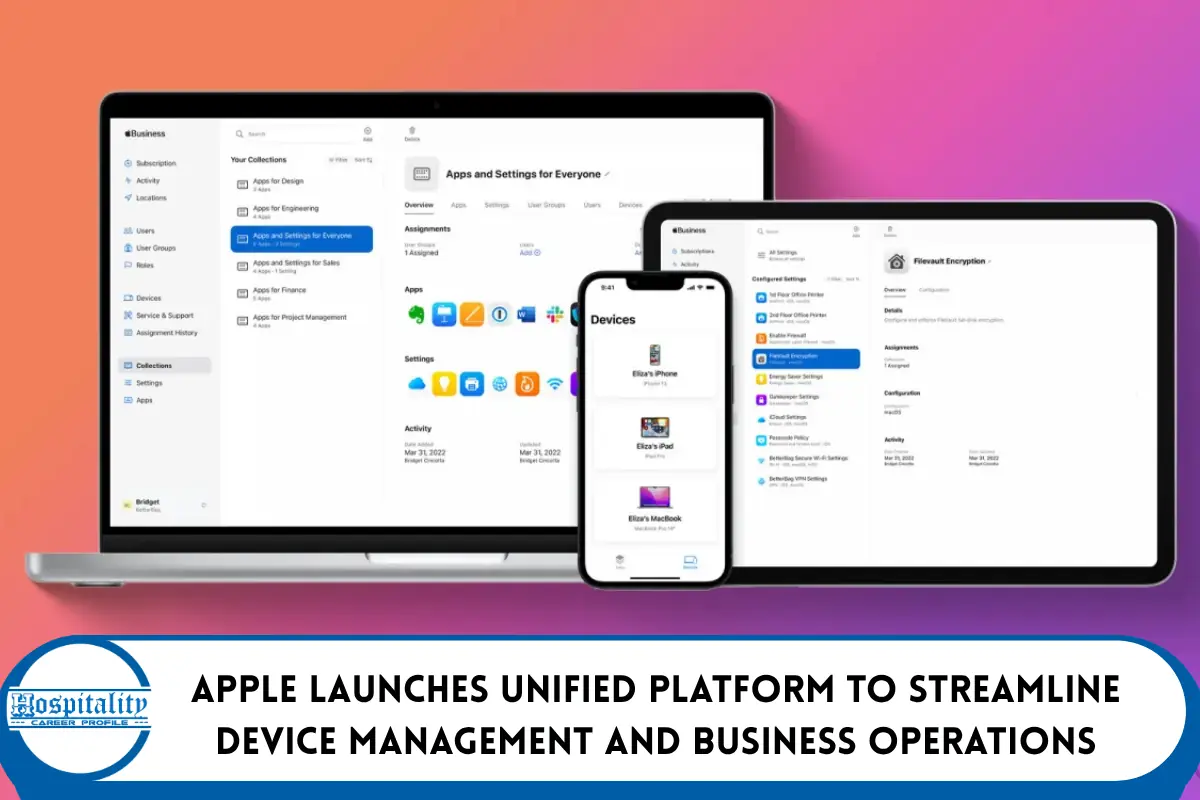
In a major step to bolster its position in the workplace technology sector, Apple has introduced a new unified platform intended to streamline device administration and business processes. The platform was unveiled in March 2026 with the goal of enhancing workflow integration across corporate systems and assisting enterprises in managing Apple devices more effectively..
Unified Approach to Device Management
The newly introduced platform brings together multiple tools into a single system, allowing businesses to manage iPhones, iPads, and Mac devices from one centralized interface. This approach is intended to reduce complexity for IT teams and streamline operations across organizations of different sizes.
By consolidating device management functions, Apple aims to eliminate the need for multiple third-party solutions, enabling companies to control security, updates, and configurations more effectively.
Focus on Enterprise Efficiency
The platform is designed with enterprise users in mind, offering features that support large-scale deployments and operational efficiency. Businesses can automate device setup, enforce security policies, and monitor performance in real time.
This development reflects Apple’s increasing focus on enterprise customers, a segment that has seen steady growth as more organizations adopt Apple products for professional use.
Integration Across Apple Ecosystem
A key feature of the platform is its deep integration with Apple’s ecosystem. Devices can seamlessly connect and share data, allowing employees to move between tasks without disruption. This level of integration is expected to enhance productivity and collaboration within organizations.
The platform also supports synchronization across applications, ensuring that workflows remain consistent regardless of the device being used.
Enhanced Security Features
Security remains a central focus of the new platform. Apple has incorporated advanced security controls that allow businesses to protect sensitive data while maintaining compliance with industry standards.
Features such as remote device locking, data encryption, and threat detection are built into the system, providing a comprehensive security framework for enterprise users.
Simplifying IT Operations
The unified platform is expected to reduce the workload for IT departments by automating routine tasks and providing a clear overview of all managed devices. This can help organizations minimize downtime and respond quickly to technical issues.
By simplifying IT management, Apple aims to make its ecosystem more attractive to businesses that require reliable and scalable solutions.
Support for Business Applications
In addition to device management, the platform supports integration with business applications, enabling organizations to connect their operational tools directly with Apple devices. This includes compatibility with productivity software, communication tools, and enterprise systems.
The integration is designed to improve workflow efficiency and ensure that employees can access essential tools without switching between multiple platforms.
Competitive Landscape
Apple’s move comes amid increasing competition in the enterprise technology market, where companies are investing in unified management solutions. By offering a native platform, Apple aims to compete more directly with established enterprise software providers.
The company’s focus on simplicity, security, and ecosystem integration may help differentiate its offering in a crowded market.
Potential Impact on Businesses
For businesses, the unified platform could lead to cost savings by reducing reliance on multiple software solutions. It may also improve operational efficiency by providing a single point of control for device and system management.
Small and medium-sized enterprises, in particular, may benefit from the simplified setup and ease of use, while larger organizations can take advantage of advanced management features.
Future Developments
Industry analysts expect Apple to continue expanding the platform with additional features and capabilities over time. This may include deeper integration with cloud services, enhanced analytics tools, and further automation options.
The company is also likely to gather feedback from enterprise users to refine the platform and address specific business needs.
Conclusion
Apple’s launch of a unified platform for device management and business operations represents a strategic step toward strengthening its enterprise offerings, with the initiative expected to evolve as adoption grows and additional features are introduced.