AstraZeneca Announces $1.5 Billion Investment in China to Expand Pharmaceutical Operations
AstraZeneca plans to invest $1.5 billion in China to expand its pharmaceutical operations, strengthening its presence in one of the world’s fastest-growing healthcare markets.
 Akanksha jain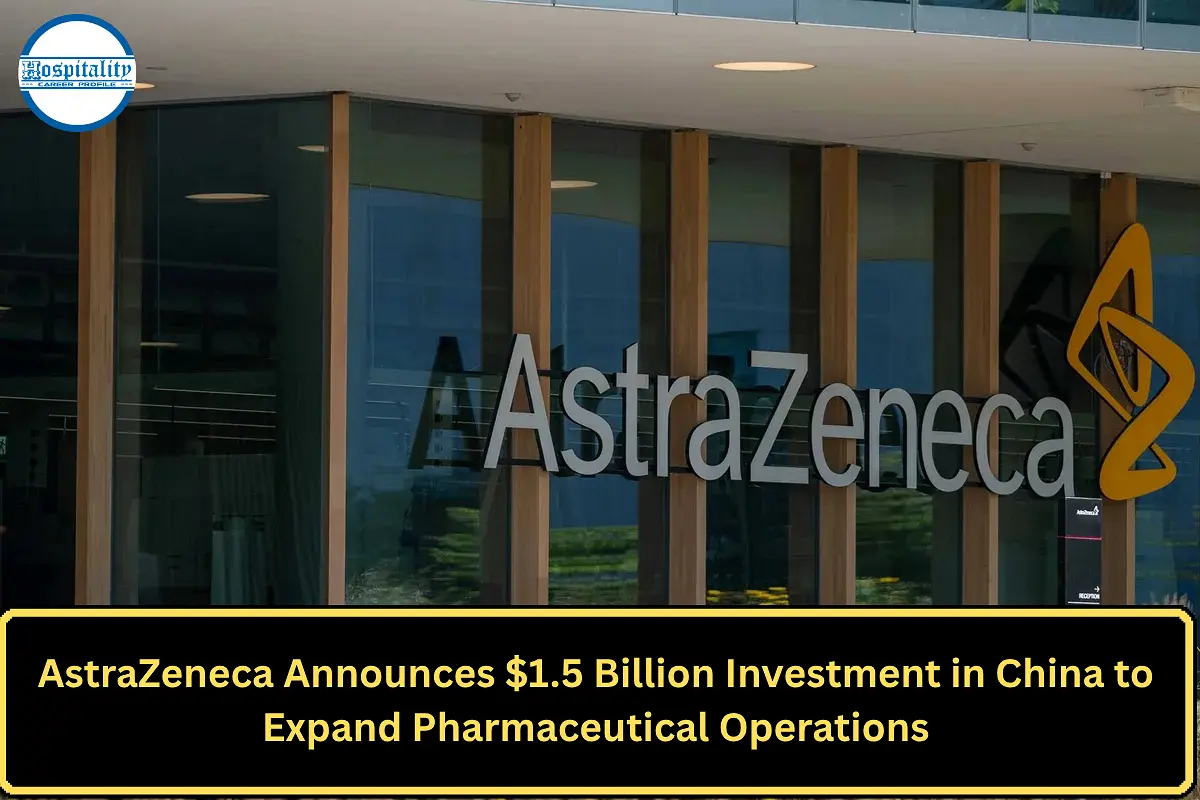
AstraZeneca Announces $1.5 Billion Investment in China to Expand Pharmaceutical Operations
AstraZeneca has announced plans to invest $1.5 billion in China to expand its pharmaceutical operations, the company said in late March 2026, as it seeks to strengthen its footprint in one of the world’s fastest-growing healthcare markets. The investment will focus on research, development, and manufacturing capabilities, underscoring the company’s long-term commitment to the region.
The move comes as global pharmaceutical companies increasingly prioritize China due to its large patient population, rising healthcare demand, and supportive policy environment for innovation. AstraZeneca’s latest investment is expected to enhance its ability to develop and deliver new medicines while deepening collaboration with local healthcare and research institutions.
Expansion of Research and Development Capabilities
A significant portion of the investment will be directed toward expanding research and development (R&D) infrastructure in China. AstraZeneca aims to accelerate the discovery and development of new therapies, particularly in areas such as oncology, cardiovascular disease, and rare conditions.
The company has been actively building its R&D presence in China over the past decade, establishing innovation centers and partnerships with academic institutions. The new funding is expected to further strengthen these efforts by supporting advanced technologies, clinical trials, and talent development.
Executives have emphasized that China’s growing scientific ecosystem and skilled workforce make it an increasingly important hub for global drug development.
Strengthening Manufacturing and Supply Chain
In addition to R&D, AstraZeneca plans to expand its manufacturing capabilities in China. The investment will support the construction and upgrading of production facilities to meet increasing demand for medicines both domestically and globally.
Enhancing local manufacturing is seen as a strategic priority, enabling the company to improve supply chain resilience and reduce reliance on imports. The expansion is also expected to support faster delivery of medicines to patients and improve operational efficiency.
Industry experts note that localized production has become a key focus for pharmaceutical companies in the wake of recent global supply chain disruptions.
Focus on Innovation and Collaboration
AstraZeneca’s investment strategy includes strengthening partnerships with Chinese biotechnology firms, research institutions, and healthcare providers. Collaborative initiatives are expected to play a central role in advancing innovation and bringing new therapies to market.
The company has previously entered into multiple partnerships in China to co-develop drugs and leverage local expertise. The latest investment is likely to expand these collaborations, fostering a more integrated approach to research and commercialization.
Such partnerships are increasingly common in the pharmaceutical industry, as companies seek to share risks, accelerate development timelines, and access new markets.
China’s Growing Importance in Global Pharma
China has emerged as a major player in the global pharmaceutical industry, driven by strong economic growth, increased healthcare spending, and regulatory reforms aimed at encouraging innovation. The country’s large and aging population has created significant demand for advanced medical treatments.
Government initiatives to streamline drug approvals and support domestic innovation have also made China an attractive destination for investment. Multinational pharmaceutical companies are expanding their presence to capitalize on these opportunities and remain competitive in the global market.
AstraZeneca has been one of the most active foreign pharmaceutical companies in China, consistently investing in infrastructure, research, and partnerships.
Economic and Strategic Implications
The $1.5 billion investment is expected to have broader economic implications, including job creation, technology transfer, and increased collaboration between international and local stakeholders. It also reflects the strategic importance of China in AstraZeneca’s global growth plans.
Analysts suggest that the move could strengthen the company’s competitive position in key therapeutic areas, particularly as demand for innovative treatments continues to rise. The investment may also help AstraZeneca navigate pricing and regulatory challenges by aligning more closely with local market dynamics.
For China, continued investment from global pharmaceutical companies supports its ambition to become a leading hub for biomedical innovation.
Industry Trends and Competitive Landscape
AstraZeneca’s announcement aligns with a broader trend of increased investment in Asia by global pharmaceutical companies. Competitors are also expanding their presence in the region to tap into growth opportunities and diversify their operations.
The competitive landscape is intensifying as both multinational and domestic companies invest in innovation and capacity expansion. Companies are focusing on developing differentiated therapies and leveraging advanced technologies to gain a competitive edge.
Experts note that sustained investment will be critical for maintaining leadership in an industry characterized by rapid scientific advancements and evolving market dynamics.
Challenges and Considerations
Despite the opportunities, operating in China presents certain challenges, including regulatory complexities, pricing pressures, and competition from local players. Companies must navigate these factors while ensuring compliance with local regulations and maintaining high standards of quality and safety.
AstraZeneca has indicated that it will continue to work closely with regulators and stakeholders to address these challenges and ensure the successful implementation of its investment plans.
Maintaining a balance between global strategy and local adaptation will be key to achieving long-term success in the market.
Future Outlook
The investment is expected to play a significant role in AstraZeneca’s future growth, particularly as the company seeks to expand its pipeline of innovative therapies. Continued focus on R&D, manufacturing, and partnerships will be central to its strategy.
Industry observers will be closely watching how the investment translates into new product launches, improved market access, and enhanced competitiveness. The move also highlights the increasing importance of emerging markets in shaping the future of the pharmaceutical industry.
As global demand for healthcare solutions continues to grow, strategic investments such as this are likely to remain a key driver of industry development.
Conclusion
AstraZeneca’s $1.5 billion investment in China underscores the country’s growing role in global pharmaceuticals, with the company aiming to expand its capabilities and strengthen its position in a rapidly evolving healthcare market.