Australia’s Foreign Policy Debate Intensifies Amid Claims of Alignment With US and Israel on Iran
A growing debate in Australia questions whether the country’s Labor government is aligning too closely with US and Israeli policies toward Iran, raising concerns about foreign policy independence.
 SANJANA DUTTA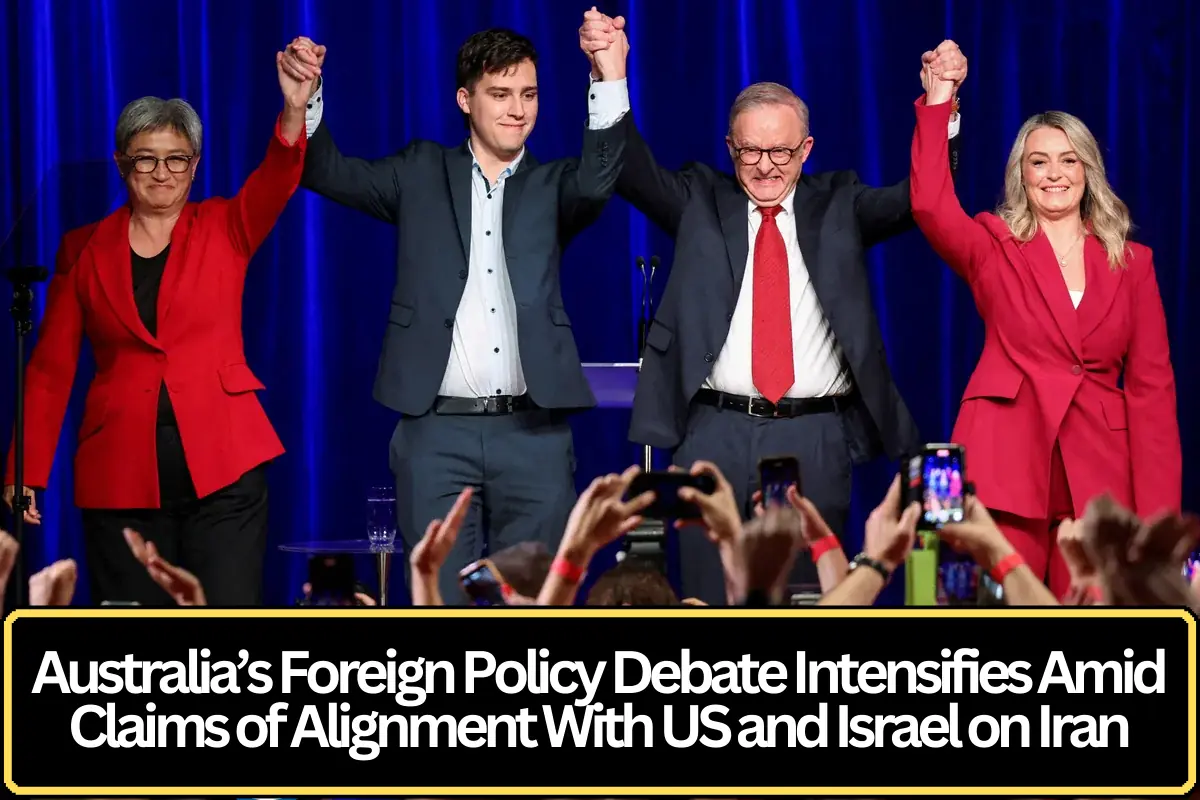
Debate Grows Over Australia’s Foreign Policy Direction
A renewed debate has emerged in Australia over the direction of the country’s foreign policy, following criticism that the government has not clearly distanced itself from policies associated with former US President Donald Trump. Critics argue that Australia’s diplomatic stance risks drawing the country into broader geopolitical tensions involving the United States, Israel, and Iran.
The discussion has gained attention in political and academic circles, where analysts are questioning whether Australia’s strategic alignment with traditional allies may limit its ability to pursue a more independent foreign policy approach.
Supporters of the government, however, maintain that Australia’s current strategy reflects longstanding security partnerships and regional stability concerns rather than ideological alignment with specific foreign leaders or past administrations.
Concerns About Escalating Middle East Tensions
At the center of the debate is the evolving geopolitical situation surrounding Iran and the Middle East. Rising tensions in the region, combined with military cooperation among Western allies, have led some commentators to warn that Australia could become indirectly involved in a conflict far from its immediate strategic environment.
Critics argue that strong alignment with US and Israeli positions on Iran may increase diplomatic risks and complicate Australia’s relationships with other countries in the region.
They suggest that Australia should pursue a more independent diplomatic approach that prioritizes regional stability and multilateral engagement rather than aligning automatically with major allies.
Labor Government Under Scrutiny
The current Labor government has faced criticism from some political commentators who believe it has not clearly defined how its foreign policy differs from previous administrations. Critics say the government has avoided directly addressing accusations that elements of Trump-era strategic thinking still influence Western alliances.
Others argue that such claims overlook the complexities of modern diplomacy. Australia’s security partnerships, including intelligence sharing and defense cooperation with major allies, are deeply institutionalized and have evolved over decades.
Government supporters say these partnerships remain essential for national security, particularly as geopolitical competition intensifies across multiple regions.
Balancing Alliances and Independence
Australia has long maintained close strategic ties with the United States while also pursuing diplomatic engagement across Asia and the broader Indo-Pacific region. Balancing these relationships is often a central challenge for policymakers.
Foreign policy experts note that middle powers like Australia frequently face difficult choices when navigating global rivalries. Aligning with major allies can provide security guarantees and technological cooperation but may also limit diplomatic flexibility.
The current debate highlights this tension between alliance commitments and the desire for independent policy-making.
Public and Political Reaction
Public opinion on foreign policy issues in Australia remains diverse. While some citizens support strong alliances with Western partners, others advocate for a more neutral or independent approach to global conflicts.
Political debate around the issue may intensify as international tensions evolve and as voters increasingly scrutinize how foreign policy decisions could affect Australia’s economic and security interests.
Analysts suggest that discussions about Australia’s role in global geopolitics are likely to continue, particularly as conflicts and strategic competition reshape international relations.
A Wider Conversation About Global Alliances
The debate surrounding Australia’s diplomatic stance reflects broader global questions about alliances, military cooperation, and national sovereignty in foreign policy decision-making.
As geopolitical tensions shift and new security challenges emerge, many countries are reassessing how closely they align with traditional partners and how they balance security cooperation with independent diplomatic priorities.
For Australia, the outcome of this discussion could influence how the country positions itself in future international crises and how it defines its role in the evolving global order.