Ayurveda Gains Global Recognition as Scientific Research Strengthens Credibility
Ayurveda is gaining global recognition as scientific research and international publications validate India’s ancient healing system.
 Akanksha jain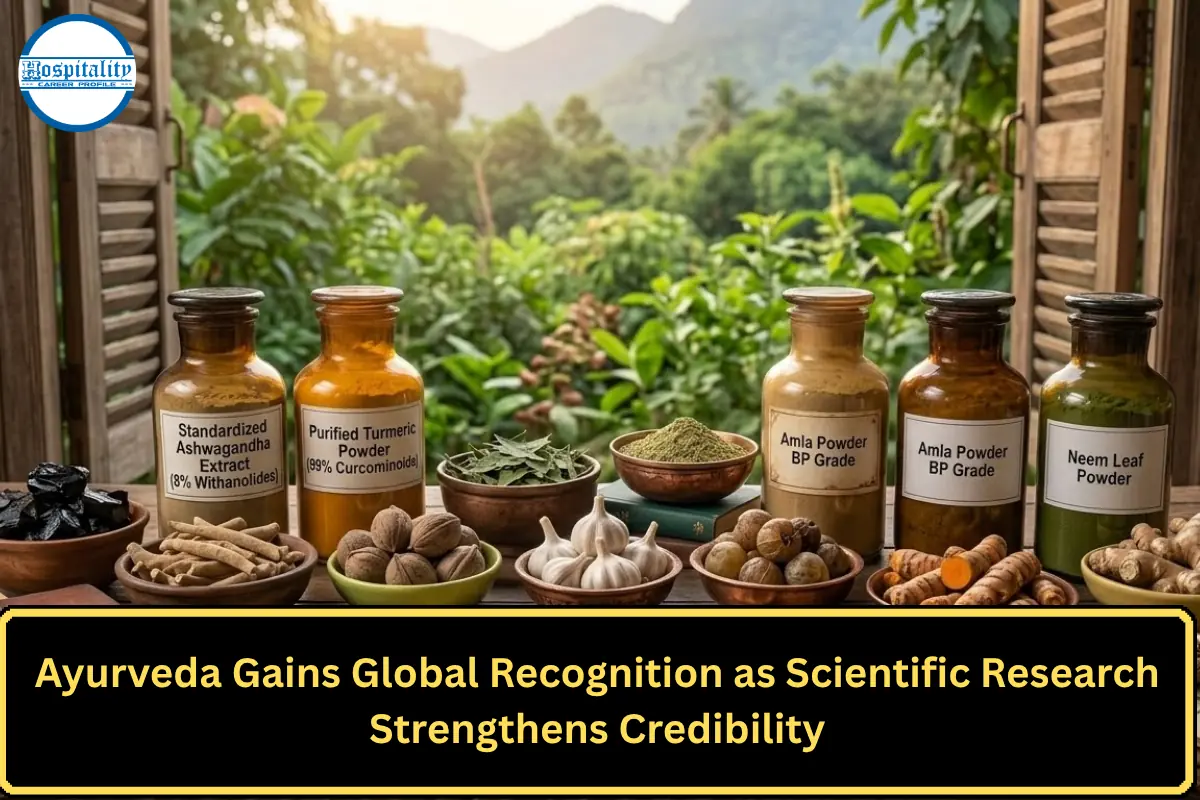
Ayurveda Gains Global Recognition as Scientific Research Strengthens Credibility
India’s traditional system of medicine, Ayurveda, is gaining increasing global recognition in 2026 as scientific research and international journal publications continue to validate its principles, methods, and therapeutic outcomes. Researchers, healthcare professionals, and policymakers are now placing greater emphasis on integrating Ayurveda into mainstream healthcare systems, citing growing evidence of its effectiveness in preventive and holistic care.
The shift comes as global demand for alternative and complementary medicine rises, driven by increasing awareness of lifestyle-related diseases and the limitations of purely treatment-based healthcare models. Experts say Ayurveda’s focus on balance, natural remedies, and long-term wellness aligns with current global health priorities.
Growing Scientific Validation
Recent years have seen a surge in scientific studies examining Ayurvedic formulations, therapies, and underlying principles. Researchers are using modern methodologies to evaluate the efficacy and safety of traditional treatments, leading to a growing body of evidence published in peer-reviewed international journals.
These studies are helping bridge the gap between traditional knowledge and modern science, making Ayurveda more accessible and credible to global medical communities. Experts note that such validation is critical for wider acceptance, particularly in countries where regulatory standards require rigorous scientific backing.
The integration of clinical trials, pharmacological research, and data-driven analysis is contributing to a deeper understanding of how Ayurvedic treatments work.
Rising Global Interest
Ayurveda is attracting attention beyond India, with increasing interest from healthcare providers, researchers, and patients worldwide. Wellness centers, research institutions, and universities in various countries are exploring Ayurvedic practices as part of integrative medicine approaches.
The global wellness industry has also played a significant role in popularizing Ayurveda, particularly in areas such as stress management, nutrition, and preventive health. Demand for Ayurvedic products, including herbal supplements and therapeutic oils, is steadily rising in international markets.
Experts believe that the global appeal of Ayurveda lies in its holistic approach, which addresses physical, mental, and emotional well-being.
Integration with Modern Healthcare
Healthcare systems are increasingly exploring ways to integrate Ayurveda with modern medical practices. This integrative approach aims to combine the strengths of both systems, offering patients a more comprehensive range of treatment options.
In India, government initiatives are promoting the inclusion of Ayurveda alongside conventional medicine in public healthcare services. Efforts are also being made to standardize practices, improve quality control, and ensure the safety of Ayurvedic products.
Internationally, collaborations between Ayurvedic practitioners and modern healthcare providers are expanding, particularly in areas such as chronic disease management and rehabilitation.
Focus on Preventive and Holistic Care
One of Ayurveda’s key strengths is its emphasis on prevention and maintaining overall health. Unlike conventional medicine, which often focuses on treating symptoms, Ayurveda aims to address the root causes of disease through lifestyle modifications, diet, and natural therapies.
This preventive approach is gaining relevance as countries grapple with rising cases of non-communicable diseases such as diabetes, cardiovascular conditions, and obesity. Experts argue that integrating preventive strategies can reduce healthcare costs and improve long-term outcomes.
Practices such as personalized nutrition, detoxification therapies, and daily wellness routines are being increasingly adopted as part of holistic health management.
Challenges in Standardization and Regulation
Despite its growing popularity, Ayurveda faces challenges related to standardization, quality control, and regulatory approval. Variability in formulations, differences in practice methods, and lack of uniform guidelines can pose obstacles to global acceptance.
Regulatory authorities in various countries require stringent testing and documentation to ensure safety and efficacy, which can be difficult to achieve for traditional remedies with complex compositions. Efforts are underway to develop standardized protocols and improve documentation to meet these requirements.
Experts emphasize that addressing these challenges will be essential for sustaining growth and ensuring consumer trust.
Role of Education and Research Institutions
Educational and research institutions are playing a crucial role in advancing Ayurveda’s global standing. Universities and research centers are expanding programs focused on traditional medicine, encouraging interdisciplinary studies that combine ancient knowledge with modern science.
Collaborative research initiatives involving international institutions are also contributing to the development of evidence-based practices. These efforts are helping to build a robust scientific foundation for Ayurveda, supporting its integration into global healthcare systems.
Training programs for practitioners are being enhanced to ensure consistency and quality in the delivery of Ayurvedic treatments.
Economic and Industry Impact
The growing acceptance of Ayurveda is also having a positive impact on India’s healthcare and wellness industries. The sector is witnessing increased investment, expansion of product lines, and entry into new international markets.
Export of Ayurvedic products is rising, supported by government initiatives aimed at promoting traditional medicine globally. The industry is also benefiting from advancements in manufacturing processes and quality assurance practices.
Experts note that the economic potential of Ayurveda extends beyond healthcare, contributing to sectors such as tourism, wellness, and natural products.
Future Outlook
The future of Ayurveda appears promising as scientific validation continues to strengthen its credibility and global demand grows. Experts believe that ongoing research, improved regulation, and greater integration with modern medicine will be key to its sustained expansion.
Technological advancements, including digital health platforms and data analytics, may further enhance the reach and effectiveness of Ayurvedic practices. These tools can support personalized treatment plans and improve patient outcomes.
Continued collaboration between governments, researchers, and industry stakeholders will be essential in unlocking the full potential of Ayurveda on the global stage.
Conclusion
As scientific research increasingly validates its principles and global interest continues to rise, Ayurveda is emerging as a significant contributor to modern healthcare, with its holistic and preventive approach gaining relevance in addressing contemporary health challenges.