Ayushman Bharat Scheme Crosses 11.69 Crore Hospital Admissions, Majority in Private Facilities
India’s Ayushman Bharat scheme has recorded over 11.69 crore hospital admissions, with a significant share handled by private hospitals, the government said.
 Akanksha jain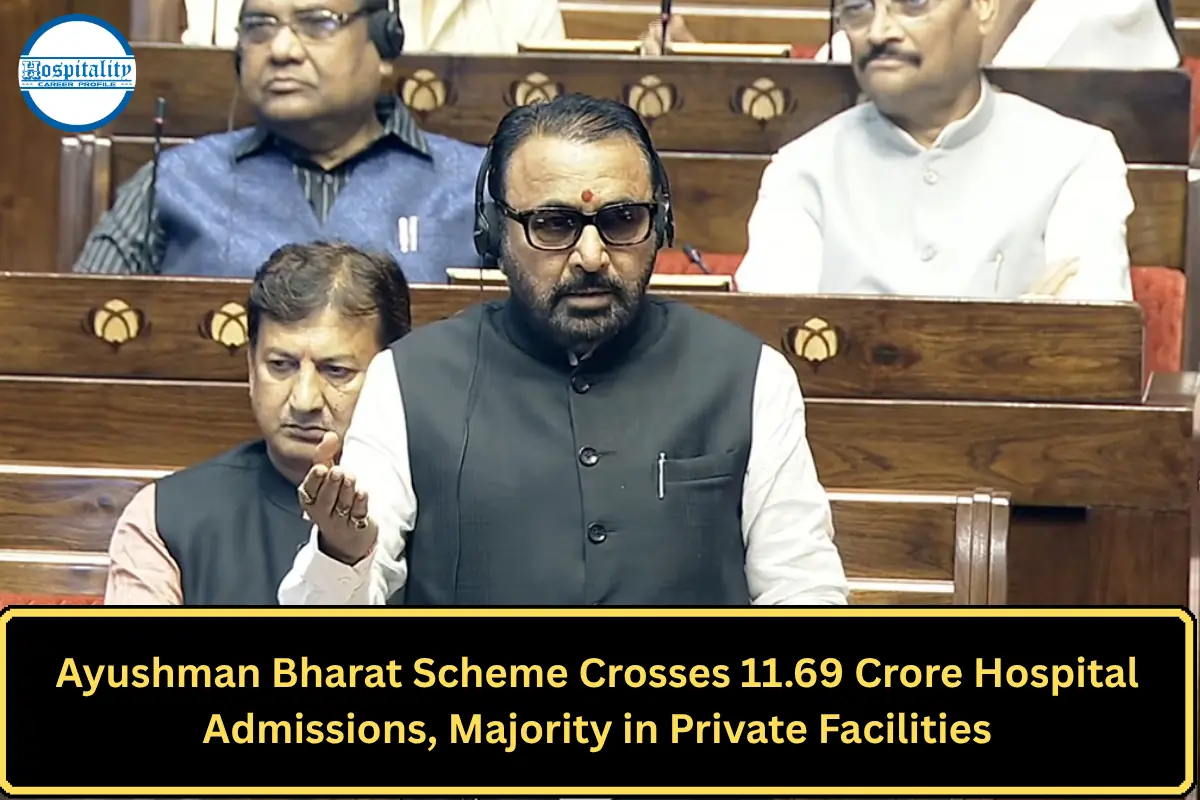
Ayushman Bharat Scheme Crosses 11.69 Crore Hospital Admissions, Majority in Private Facilities
India’s flagship public health insurance program, Ayushman Bharat, has crossed 11.69 crore hospital admissions as of March 2026, with nearly 6.74 crore of these treatments carried out in private hospitals, according to government data, highlighting the growing role of private healthcare providers in delivering subsidized medical services across the country.
The figures, released by officials, underscore the scale and reach of the Pradhan Mantri Jan Arogya Yojana (PM-JAY), which was launched to provide financial protection and access to quality healthcare for economically vulnerable populations. The scheme covers secondary and tertiary hospitalization costs for millions of beneficiaries nationwide.
Expanding Reach of Public Health Coverage
The milestone of over 11.69 crore hospital admissions reflects the rapid expansion of the Ayushman Bharat scheme since its inception. The program has emerged as one of the world’s largest government-funded health insurance initiatives, aimed at reducing out-of-pocket expenditure for low-income households.
Officials said the increasing number of admissions indicates greater awareness and utilization of healthcare services among eligible beneficiaries. The scheme has enabled access to a wide range of treatments, including surgeries, critical care, and chronic disease management.
The government has consistently emphasized the scheme’s role in bridging healthcare access gaps, particularly in rural and underserved regions.
Private Hospitals Play Key Role
Data showing that 6.74 crore admissions have taken place in private hospitals highlights the critical role of the private sector in the scheme’s implementation. Private healthcare providers have been empanelled under the program to expand capacity and ensure timely access to specialized care.
Experts note that private hospitals often offer advanced medical infrastructure and specialized services, which can complement the capabilities of public healthcare institutions. Their participation has helped reduce pressure on government hospitals and improve service availability.
However, the reliance on private providers has also sparked discussions about cost management, quality control, and equitable distribution of services.
Improving Healthcare Access
The Ayushman Bharat scheme has significantly improved access to healthcare for millions of beneficiaries who previously faced financial barriers to treatment. By covering hospitalization costs, the program has reduced the burden of medical expenses on households.
Beneficiaries can access services across a network of empaneled hospitals, both public and private, ensuring flexibility and choice in treatment options. The scheme’s portability feature allows patients to seek care outside their home states, further enhancing accessibility.
Officials said the program has contributed to increased healthcare utilization, particularly for conditions that require timely medical intervention.
Focus on Financial Protection
One of the primary objectives of Ayushman Bharat is to provide financial protection against catastrophic health expenditures. By covering treatment costs up to a specified limit per family per year, the scheme aims to prevent medical expenses from pushing families into poverty.
Government data suggests that the scheme has helped reduce out-of-pocket spending on healthcare, although experts note that additional measures may be needed to address gaps in outpatient care and medication costs.
The financial protection aspect remains a key pillar of the program's design and impact.
Challenges in Implementation
Despite its achievements, the scheme faces several challenges in implementation. These include ensuring consistent quality of care across empaneled hospitals, preventing fraud and misuse, and maintaining timely reimbursements to healthcare providers.
Stakeholders have also raised concerns about regional disparities in hospital availability and service utilization. Some areas continue to have limited access to empaneled facilities, affecting the scheme’s reach.
Addressing these challenges will be critical to sustaining the program's effectiveness and credibility.
Strengthening Public-Private Collaboration
The significant involvement of private hospitals underscores the importance of public-private collaboration in achieving healthcare goals. The government has been working to strengthen partnerships with private providers while ensuring adherence to quality and pricing standards.
Policy measures, including standardized treatment packages and monitoring mechanisms, have been introduced to regulate services under the scheme. Continuous evaluation and improvement of these frameworks are seen as essential for long-term success.
Experts emphasize that balanced collaboration can enhance both efficiency and equity in healthcare delivery.
Digital Integration and Monitoring
The Ayushman Bharat scheme has leveraged digital platforms for beneficiary identification, hospital empanelment, and claim processing. These systems enable real-time tracking of admissions and facilitate transparency in operations.
Officials said the use of technology has improved efficiency and reduced administrative delays, although ongoing upgrades are needed to handle the growing scale of operations.
Digital integration is expected to play a key role in strengthening monitoring and accountability mechanisms.
Future Outlook
Looking ahead, the government aims to further expand the reach and impact of the Ayushman Bharat scheme. Plans include increasing hospital empanelment, enhancing service coverage, and improving beneficiary awareness.
Efforts are also underway to integrate the scheme with other health initiatives to create a more comprehensive healthcare ecosystem. Experts suggest that continued investment in infrastructure and workforce development will be essential to meet rising demand.
The program is expected to remain a central component of India’s healthcare strategy in the coming years.
Conclusion
The crossing of 11.69 crore hospital admissions under Ayushman Bharat highlights the scheme’s growing scale and impact while underscoring the vital role of private hospitals in expanding access to affordable healthcare across India.