Balen Shah’s Meteoric Rise: From Rap Battles to the Center of Nepal’s Political Power
Balen Shah’s rapid rise from rapper and independent candidate to Kathmandu mayor has reshaped Nepal’s political landscape, fueling speculation about a potential path toward national leadership.
 SANJANA DUTTA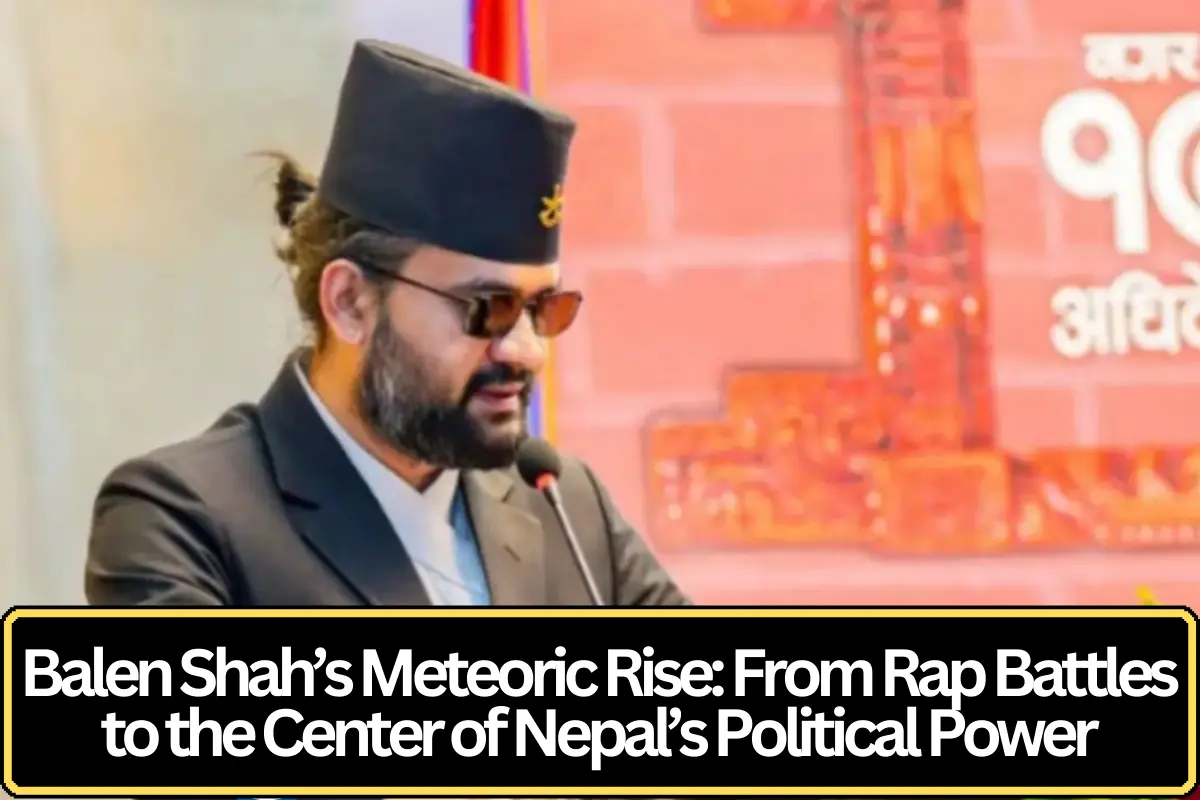
Balen Shah’s Meteoric Rise Is Reshaping Nepal’s Political Landscape
Nepal’s political scene has witnessed an unexpected and dramatic transformation in recent years, largely driven by the rise of Balen Shah. Once known primarily as a rapper and cultural figure within Nepal’s urban youth scene, Shah has rapidly evolved into one of the most influential and closely watched political figures in the country. His ascent from music stages and rap battles to the mayoral office of Kathmandu has sparked intense national discussion about the future of leadership in Nepal.
Shah’s rise reflects broader changes within Nepalese society, particularly among younger voters who increasingly seek alternatives to traditional political parties. His popularity highlights growing frustration with established political structures and a desire for new voices capable of addressing governance challenges with fresh ideas and a more direct connection to citizens.
As speculation grows about Shah’s future ambitions and potential national leadership, his journey from cultural celebrity to political power offers an important case study in how emerging leaders can reshape political narratives in South Asia.
From Rap Battles to Public Recognition
Before entering politics, Balen Shah built his reputation within Nepal’s vibrant music scene. Known for his sharp lyrical style and energetic performances, Shah became a recognizable figure in rap battles and underground music events that resonated with urban youth audiences.
His music often reflected themes of social change, inequality, and political frustration. These messages helped him cultivate a strong following among young listeners who saw his work as a reflection of their own concerns about corruption, unemployment, and limited opportunities.
Unlike many entertainers who remain within the cultural sphere, Shah gradually developed a reputation for engaging with civic issues. His public commentary on governance, urban planning, and national development began attracting attention beyond the music community.
This growing public engagement laid the groundwork for his transition from cultural influencer to political candidate.
Education and Professional Background
Shah’s appeal also stems from his educational and professional background. Trained as an engineer, he developed a technical understanding of infrastructure, urban systems, and planning challenges facing rapidly growing cities.
In Kathmandu, issues such as traffic congestion, waste management, and infrastructure development have long frustrated residents. Shah’s technical expertise, combined with his communication skills and youth appeal, positioned him as a candidate capable of bridging the gap between policy discussions and everyday concerns.
By presenting himself as both a problem-solver and a relatable public figure, he gained support from diverse segments of the population.
The Historic Kathmandu Mayoral Election
Shah’s political breakthrough came during the Kathmandu mayoral election, where he ran as an independent candidate against representatives of major political parties. The election was widely viewed as a test of whether voters were willing to break away from traditional political alliances.
Against expectations, Shah secured a decisive victory. His campaign relied heavily on grassroots mobilization, digital outreach, and a strong youth volunteer network. Social media played a particularly important role in spreading his message and mobilizing supporters.
The victory sent a powerful signal across Nepal’s political landscape. For decades, the country’s politics had largely been dominated by established parties with deep organizational networks. Shah’s win demonstrated that independent candidates could successfully challenge this system under the right circumstances.
For many young voters, the election represented a turning point that showed new leadership was possible outside traditional party structures.
A Campaign Focused on Urban Reform
Throughout the campaign, Shah emphasized practical governance reforms rather than ideological debates. His proposals focused heavily on improving urban infrastructure, addressing environmental issues, and modernizing city administration.
Key themes included:
Improving waste management systems
Reducing bureaucratic inefficiencies
Enhancing public transparency in municipal decision-making
Developing better urban planning strategies
These issues resonated strongly with Kathmandu residents who experience the daily challenges of living in a rapidly expanding capital city.
By focusing on concrete solutions rather than political rhetoric, Shah positioned himself as a pragmatic leader capable of delivering measurable results.
Governance Style as Kathmandu Mayor
Since taking office, Shah has pursued an energetic and highly visible approach to city governance. His leadership style combines direct communication with citizens, rapid response to local issues, and an emphasis on administrative accountability.
He frequently uses digital platforms to communicate policy decisions, provide updates on municipal initiatives, and respond to citizen concerns. This transparency has helped maintain strong public engagement with city governance.
Many observers note that Shah’s communication strategy reflects the habits of a digital-native generation that expects leaders to be accessible and responsive.
At the same time, his administration has faced the practical challenges that accompany governing a complex urban environment.
Urban Development Initiatives
One of Shah’s key priorities has been improving urban infrastructure in Kathmandu. The city faces numerous development challenges, including overcrowded roads, inconsistent waste collection systems, and outdated infrastructure.
Efforts under his leadership have focused on improving city management efficiency while exploring long-term solutions to infrastructure limitations.
These initiatives include strengthening municipal oversight mechanisms, introducing new administrative procedures, and exploring partnerships for infrastructure development.
Although many reforms require long-term planning and investment, Shah’s visible commitment to addressing these challenges has reinforced his reputation as an active and engaged mayor.
The Rise of Youth-Driven Politics in Nepal
Balen Shah’s success reflects a broader generational shift occurring within Nepal’s political environment. Younger citizens increasingly demand accountability, transparency, and tangible results from political leaders.
Digital platforms and social media have played a major role in amplifying these demands. Young voters now have more direct access to political information, enabling them to evaluate candidates independently of traditional party messaging.
This shift has opened the door for unconventional candidates who can connect directly with citizens rather than relying solely on party structures.
Shah’s campaign and governance style demonstrate how digital communication tools can transform political engagement and mobilization.
Public Frustration with Traditional Parties
Many analysts interpret Shah’s rise as a response to public dissatisfaction with established political parties. Nepal has experienced frequent government changes and coalition politics, which some citizens believe have slowed policy implementation and development progress.
In this context, independent figures who emphasize practical governance and transparency have gained increasing attention.
Shah’s image as an outsider to traditional political networks has been a key element of his appeal. Supporters often view him as a symbol of political renewal and institutional reform.
However, translating this popularity into long-term political transformation remains a complex challenge.
National Political Speculation
As Shah’s popularity continues to grow, speculation about his potential role in national politics has intensified. Some political observers suggest that his leadership style and public support could eventually position him for higher political office.
Although Shah has primarily focused on municipal governance, discussions about his long-term ambitions have become increasingly common within Nepal’s political circles.
The idea that a leader who began as a musician could eventually approach the national leadership stage illustrates how dramatically Nepal’s political dynamics may be evolving.
Such speculation also reflects the public appetite for leaders who appear independent from entrenched political structures.
Challenges of Transitioning to National Leadership
Despite his popularity, moving from city leadership to national politics presents significant challenges. National governance requires broader policy expertise, coalition building, and engagement with complex regional and international issues.
Political parties remain powerful institutions within Nepal’s parliamentary system, and independent leaders often face structural barriers when attempting to operate at the national level.
Additionally, sustaining public enthusiasm over time requires delivering visible results in current roles. Voters who supported Shah’s mayoral campaign will likely evaluate his long-term potential based on the success of his municipal reforms.
Whether Shah ultimately seeks national office remains uncertain, but his trajectory has already altered political expectations.
The Symbolism of Shah’s Political Journey
Balen Shah’s rise carries symbolic significance beyond his personal career. His journey represents the possibility of unconventional leadership paths emerging in modern democracies.
For many young Nepalis, Shah embodies the idea that individuals outside traditional political families or party hierarchies can still achieve significant leadership roles.
This perception has encouraged greater youth participation in political discussions and civic engagement.
At the same time, it has prompted established political parties to reconsider how they communicate with younger generations and address their priorities.
Nepal’s Political Future
Nepal remains a country navigating complex political transitions. Since adopting a federal democratic republic system, the nation has continued to refine its institutions and governance structures.
Emerging leaders like Balen Shah represent one of several forces shaping this evolving political environment.
Urbanization, technological change, and demographic shifts are all influencing how citizens interact with political systems. Leaders who can adapt to these changes while delivering practical governance solutions may play increasingly important roles in the future.
Whether Shah ultimately pursues national office or continues focusing on municipal leadership, his impact on Nepal’s political conversation is already significant.
His story illustrates how new leadership models can emerge in response to changing public expectations. As Nepal’s political landscape continues to evolve, the trajectory of figures like Balen Shah will remain closely watched by citizens, analysts, and regional observers alike.