Era of Political ‘Musical Chairs’ Over, Says Punjab Chief Minister Bhagwant Mann
Punjab Chief Minister Bhagwant Mann says the era of political power rotation is over, emphasizing governance focused on people-centric policies and accountability.
 SANJANA DUTTA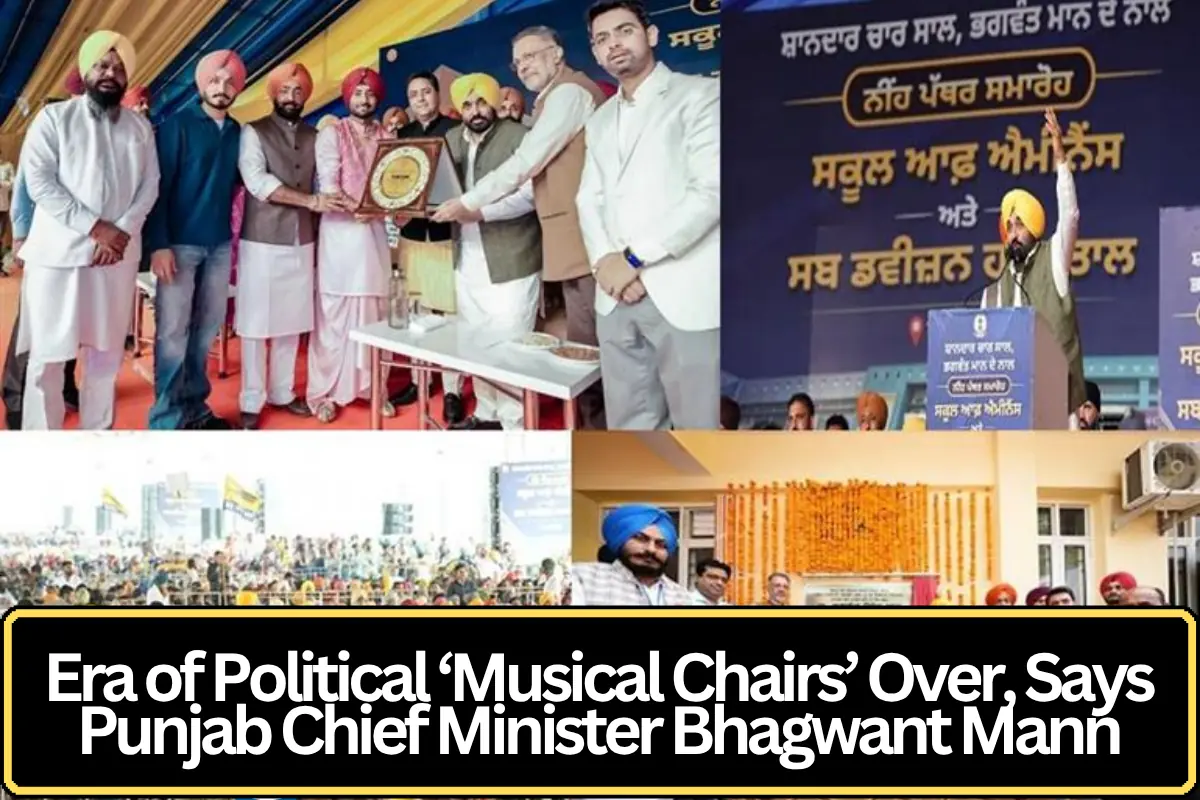
Mann Declares Shift Away from Traditional Power Politics
Punjab Chief Minister Bhagwant Mann has asserted that the era of political “musical chairs” and power rotation among parties is over, signaling a shift toward governance focused on public welfare and accountability. Speaking at a recent public event, Mann emphasized that political authority should no longer revolve around recurring power exchanges but instead prioritize the needs and aspirations of the people.
The statement comes amid ongoing political debates in Punjab, where governance models and leadership approaches have been under scrutiny. Mann’s remarks underline his administration’s effort to distinguish itself from past governments by projecting a more people-centric approach.
Focus on People-Centric Governance
Mann highlighted that his government aims to move beyond traditional political practices that often saw power alternating between parties without substantial changes in governance outcomes. He stressed that the current administration is committed to delivering tangible improvements in areas such as education, healthcare, infrastructure, and employment.
According to the chief minister, the emphasis is now on ensuring that policies directly benefit citizens rather than serving political interests. He reiterated that governance must be measured by its impact on everyday lives, rather than by electoral cycles or political rivalries.
This approach aligns with the broader narrative of administrative reform and accountability that has been a key theme in Punjab’s political discourse in recent years.
Criticism of Past Political Practices
In his address, Mann criticized what he described as a long-standing pattern of political power being shared or rotated among a limited set of parties. He argued that such practices often resulted in stagnation and failed to address systemic issues facing the state.
The chief minister suggested that previous governments were more focused on maintaining political control than implementing meaningful reforms. This, he said, contributed to persistent challenges in sectors such as agriculture, industry, and public services.
By contrasting his administration’s approach with that of its predecessors, Mann sought to reinforce the message that a new phase of governance has begun in Punjab.
Political Context in Punjab
Punjab has historically witnessed intense political competition, with power frequently shifting between major parties. This pattern has often been characterized by electoral battles that focus on leadership changes rather than structural reforms.
Mann’s remarks reflect an attempt to redefine this narrative by emphasizing continuity in governance objectives rather than cyclical political change. His statement also comes at a time when political parties are preparing for future electoral contests, making governance performance a central issue.
The evolving political landscape in the state has increased pressure on the current administration to deliver on its promises and demonstrate measurable progress.
Policy Initiatives and Governance Goals
The Punjab government has introduced several initiatives aimed at improving public services and strengthening economic development. These include efforts to enhance educational infrastructure, expand healthcare access, and support farmers through targeted policies.
Mann noted that such initiatives are designed to create long-term benefits rather than short-term political gains. He emphasized that sustainable development requires consistent policy implementation and a focus on addressing root causes of issues.
The administration has also highlighted transparency and accountability as key pillars of its governance strategy, aiming to build public trust and confidence.
Public Response and Political Reactions
Mann’s remarks have elicited mixed reactions from political observers and opposition parties. Supporters have welcomed the emphasis on people-centric governance, viewing it as a necessary shift from traditional political practices.
Critics, however, have questioned whether the administration can fully break away from established patterns of political competition. They argue that structural challenges and political dynamics may limit the extent of change.
The debate underscores the broader challenge of translating political messaging into effective governance outcomes.
Challenges Ahead for the Administration
Despite the optimistic tone of Mann’s statement, the government faces significant challenges in delivering on its commitments. Economic constraints, administrative hurdles, and evolving political dynamics all pose potential obstacles.
The state’s fiscal situation remains a concern, requiring careful management of resources to balance development goals with financial sustainability. Additionally, addressing long-standing issues in sectors such as agriculture and industry will require sustained efforts.
Maintaining public confidence while navigating these challenges will be crucial for the administration’s success.
Broader Implications for Indian Politics
Mann’s assertion about the end of political “musical chairs” reflects a broader trend in Indian politics, where voters are increasingly demanding performance-based governance. Across states, there is growing emphasis on accountability, transparency, and measurable outcomes.
This shift is influencing political strategies, with parties focusing more on governance records and policy delivery. The emphasis on people-centric approaches is becoming a key factor in shaping electoral outcomes.
Punjab’s experience could serve as an indicator of how such trends evolve and impact political dynamics in other regions.
Looking Ahead
The coming months will be critical in determining whether the Punjab government can translate its vision into concrete results. Policy implementation, public service delivery, and economic management will be key areas of focus.
Mann’s statement sets a clear expectation for governance that prioritizes citizens over political considerations. Meeting these expectations will require consistent effort and effective coordination across various levels of administration.
The success or failure of this approach could have lasting implications for the state’s political landscape.
Conclusion
By declaring the end of traditional power rotation politics, Bhagwant Mann has positioned his administration as a departure from past practices, emphasizing governance centered on public welfare.
Current Status
The Punjab government continues to implement its policy agenda while facing ongoing political scrutiny and expectations for measurable progress.