Biocon Plans to Scale Up Artificial Intelligence Focus to Drive Growth in Pharma Operations
Biocon plans to expand its use of artificial intelligence to boost drug development, improve efficiency, and drive growth in India’s pharmaceutical sector.
 Akanksha jain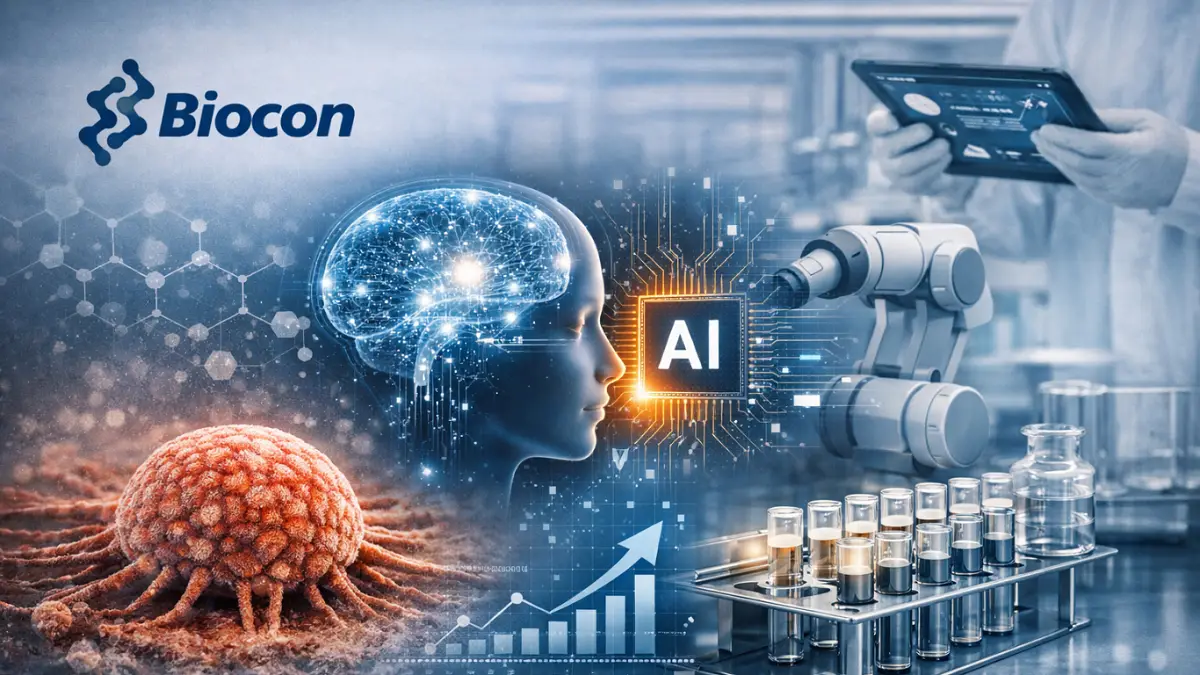
Biocon Ltd announced in April 2026 that it plans to significantly scale up its use of artificial intelligence (AI) across its operations, aiming to enhance drug development, improve efficiency, and unlock new growth opportunities in India’s rapidly evolving pharmaceutical sector.
The Bengaluru-based biopharmaceutical company said it is increasing investments in AI-driven technologies to streamline research, optimize manufacturing processes, and accelerate innovation. The move comes as global pharmaceutical companies increasingly adopt digital tools to remain competitive in a technology-driven healthcare landscape.
Strategic Shift Toward AI Integration
Biocon’s decision to expand its AI capabilities reflects a broader strategic shift toward digital transformation within the pharmaceutical industry. The company is focusing on integrating AI into multiple stages of the drug lifecycle, including discovery, clinical trials, and commercialization.
Executives indicated that AI can help reduce the time and cost associated with developing new drugs by enabling faster data analysis and more accurate predictions. By leveraging advanced algorithms, Biocon aims to identify promising drug candidates more efficiently and improve success rates in clinical research.
The initiative is part of the company’s long-term vision to strengthen its position as a leading biotechnology player in both domestic and global markets.
Enhancing Drug Discovery and Development
One of the key areas of focus for Biocon is the use of AI in drug discovery. Traditional drug development processes are often time-consuming and resource-intensive, requiring years of research and testing. AI technologies have the potential to transform this process by analyzing vast datasets to identify patterns and predict outcomes.
Biocon plans to use AI tools to accelerate the identification of molecular targets and optimize the design of new therapies. This approach could lead to faster development of treatments for complex diseases, including cancer, diabetes, and autoimmune disorders.
Industry experts note that AI-driven drug discovery is becoming a critical differentiator in the pharmaceutical sector, enabling companies to bring innovative therapies to market more quickly.
Improving Manufacturing and Supply Chain Efficiency
In addition to research and development, Biocon is exploring the use of AI to improve manufacturing processes and supply chain management. AI systems can analyze production data in real time, identify inefficiencies, and suggest improvements to enhance productivity.
The company aims to implement predictive maintenance and quality control systems powered by AI, reducing downtime and ensuring consistent product quality. These technologies can also help optimize inventory management and distribution, improving overall operational efficiency.
Such advancements are expected to support Biocon’s efforts to scale up production and meet growing demand for pharmaceutical products.
Leveraging Data for Better Decision-Making
Data analytics is a central component of Biocon’s AI strategy. The company is investing in platforms that can integrate and analyze large volumes of data from various sources, including clinical trials, patient records, and market trends.
By harnessing data-driven insights, Biocon aims to make more informed decisions across its operations. This includes identifying new market opportunities, optimizing pricing strategies, and improving patient outcomes through personalized treatment approaches.
Executives emphasized that data-driven decision-making will be a key factor in maintaining competitiveness in the global pharmaceutical market.
Growing Role of AI in the Pharma Industry
The pharmaceutical industry worldwide is increasingly adopting AI to address challenges such as rising development costs, regulatory complexities, and the need for faster innovation. Companies are investing heavily in digital technologies to enhance efficiency and improve patient care.
Biocon’s expanded focus on AI aligns with this global trend, positioning the company to compete with international players that are already leveraging advanced technologies. Analysts believe that early adoption of AI can provide a significant competitive advantage in the long term.
India’s pharmaceutical sector, in particular, is witnessing rapid digital transformation, with companies exploring new ways to integrate technology into their operations.
Investment and Talent Development
To support its AI initiatives, Biocon is expected to invest in building technological infrastructure and developing skilled talent. This includes hiring data scientists, AI specialists, and technology experts who can drive innovation within the organization.
The company may also collaborate with technology firms, research institutions, and startups to accelerate the development and implementation of AI solutions. Partnerships are seen as a key strategy for accessing expertise and staying ahead in a competitive market.
Training programs and upskilling initiatives for existing employees are also likely to be part of the company’s approach to integrating AI into its operations.
Challenges in AI Adoption
Despite its potential benefits, the adoption of AI in the pharmaceutical industry comes with challenges. These include data privacy concerns, regulatory requirements, and the need for robust validation of AI models.
Biocon will need to navigate these challenges carefully to ensure compliance with industry standards and maintain trust among stakeholders. Ensuring data security and transparency in AI-driven processes will be critical for successful implementation.
Experts note that while AI can significantly enhance efficiency, it should complement, rather than replace, human expertise in decision-making.
Impact on Healthcare and Patients
The increased use of AI in pharmaceutical operations has the potential to benefit patients by accelerating the development of new treatments and improving access to medicines. Faster drug development can lead to quicker availability of therapies for unmet medical needs.
AI-driven insights can also support personalized medicine, enabling treatments to be tailored to individual patient profiles. This approach can improve treatment outcomes and reduce the risk of adverse effects.
Healthcare providers may also benefit from improved data analytics, which can enhance clinical decision-making and patient care.
Future Outlook
Looking ahead, Biocon is expected to continue expanding its AI capabilities as part of its broader growth strategy. The company’s focus on innovation and technology is likely to play a key role in shaping its future trajectory in the pharmaceutical industry.
As competition intensifies, companies that successfully integrate AI into their operations are expected to gain a significant advantage. Biocon’s initiative reflects its commitment to staying at the forefront of technological advancements in healthcare.
Industry observers believe that the company’s AI-driven approach could set a benchmark for other pharmaceutical firms in India and beyond.
Conclusion
Biocon’s plan to scale up its artificial intelligence focus highlights the growing importance of digital transformation in the pharmaceutical sector, with the initiative expected to drive innovation, efficiency, and long-term growth.