BIRAC’s Evolution Drives India Toward $1 Trillion Bioeconomy Goal
India’s BIRAC is playing a key role in advancing the country’s bioeconomy toward the $1 trillion target through innovation, biotech funding, and healthcare research support.
 Akanksha jain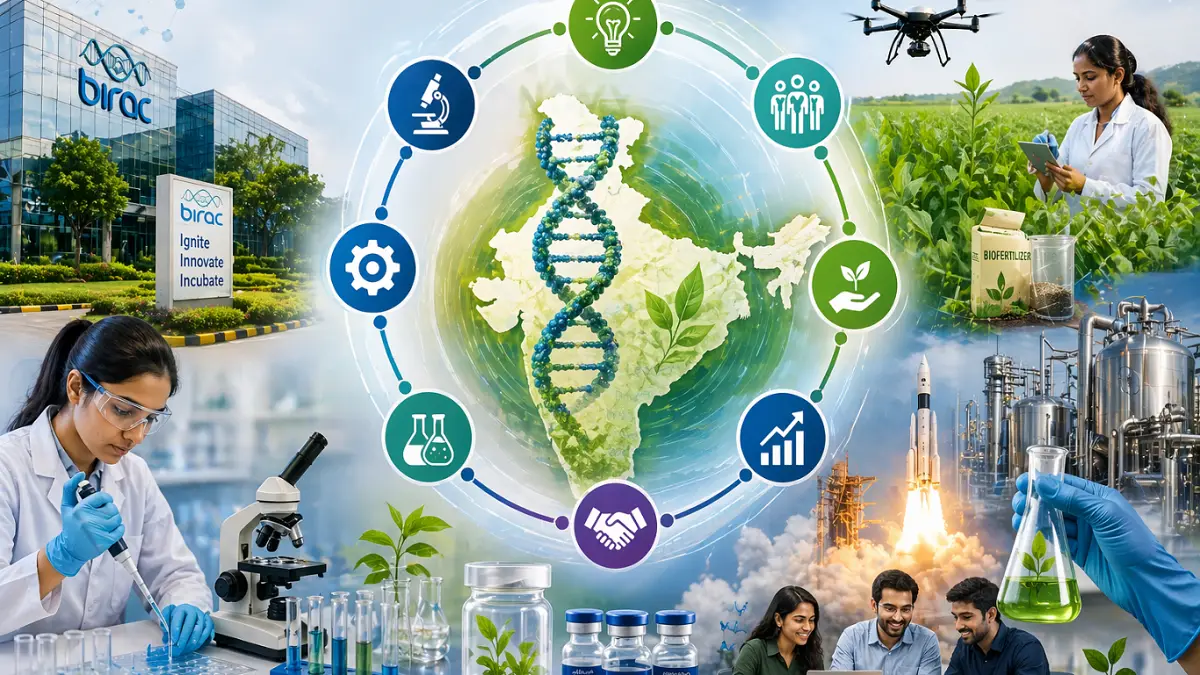
India’s Biotechnology Industry Research Assistance Council (BIRAC) is emerging as a central driver in the country’s push toward a $1 trillion bioeconomy, supporting innovation, startup development, and healthcare research, as policymakers and industry stakeholders intensify efforts to expand biotechnology capabilities and strengthen public health outcomes.
BIRAC, a government-backed agency, has played a pivotal role in fostering research and development across biotechnology sectors, including healthcare, pharmaceuticals, and diagnostics. Its evolution reflects a broader national strategy to transition India from a volume-driven pharmaceutical hub to a value-led innovation ecosystem.
Strengthening India’s Biotechnology Ecosystem
BIRAC has been instrumental in supporting startups, academic institutions, and industry collaborations, enabling the development of new technologies and healthcare solutions. Through funding programs, incubation support, and partnerships, the agency has contributed to building a robust biotech innovation pipeline.
The organization’s initiatives have facilitated the translation of scientific research into commercially viable products, particularly in areas such as vaccines, diagnostics, and therapeutics. This approach aligns with India’s broader ambition to enhance self-reliance in healthcare and reduce dependence on imports for critical medical technologies.
By promoting early-stage research and scaling innovations, BIRAC has helped bridge the gap between laboratory discoveries and market-ready solutions, a key challenge in biotechnology development.
Role in Advancing Healthcare Innovation
BIRAC’s contributions extend significantly into the healthcare sector, where it has supported the development of medical technologies aimed at addressing public health challenges. Its programs have enabled innovations in disease detection, treatment, and prevention, particularly in areas with high disease burden.
The agency has played a role in accelerating the development of affordable healthcare solutions, which are critical in a country with diverse healthcare needs and resource constraints. By backing research in diagnostics and therapeutics, BIRAC has contributed to improving access to medical technologies.
In addition, the organization has encouraged collaboration between public and private sectors, fostering a more integrated approach to healthcare innovation. This has supported the development of solutions tailored to local health challenges while maintaining global competitiveness.
Driving Toward a $1 Trillion Bioeconomy
India’s bioeconomy has been expanding rapidly, with biotechnology playing a key role in economic growth and healthcare advancement. BIRAC’s efforts are aligned with the government’s target of achieving a $1 trillion bioeconomy, a goal that encompasses sectors such as biopharmaceuticals, bio-agriculture, and industrial biotechnology.
The agency’s focus on innovation-driven growth marks a shift from traditional manufacturing-based models to research-led development. This transition is expected to enhance the value of India’s biotechnology output and strengthen its position in the global market.
Key areas of growth include biologics, biosimilars, and advanced therapies, where innovation and intellectual property play a critical role. BIRAC’s support for these areas is expected to contribute to long-term industry sustainability and competitiveness.
Policy Support and Strategic Initiatives
BIRAC operates within a broader policy framework aimed at promoting biotechnology and healthcare innovation in India. Government initiatives have focused on increasing investment in research and development, improving infrastructure, and creating a favorable regulatory environment.
The agency’s programs are designed to align with national priorities, including improving healthcare access, addressing unmet medical needs, and fostering innovation in critical sectors. By supporting a wide range of projects, BIRAC contributes to both economic development and public health improvement.
Its role also includes facilitating partnerships with global organizations, enabling knowledge exchange and access to international markets. This global engagement is essential for scaling innovations and ensuring that Indian biotechnology solutions meet international standards.
Challenges and Future Outlook
Despite significant progress, challenges remain in achieving the $1 trillion bioeconomy target. These include the need for sustained investment, regulatory efficiency, and stronger industry-academia collaboration. Addressing these issues will be critical to maintaining growth momentum.
Experts emphasize the importance of building a skilled workforce, enhancing research infrastructure, and ensuring equitable access to healthcare innovations. These factors will influence the long-term impact of biotechnology on public health and economic development.
BIRAC’s continued evolution is expected to play a crucial role in overcoming these challenges. By supporting innovation and fostering collaboration, the agency is positioned to contribute to the development of a more resilient and advanced biotechnology sector in India.
As the country moves toward its bioeconomy target, the integration of research, policy, and industry efforts will be essential in driving sustainable growth and improving healthcare outcomes across diverse populations.