BJD Rajya Sabha Setback Signals Possible Shift in Odisha’s Political Landscape
The Biju Janata Dal’s setback in the Rajya Sabha elections has triggered debate over shifting political dynamics in Odisha, with the BJP gaining ground and raising questions about future electoral alignments.
 SANJANA DUTTA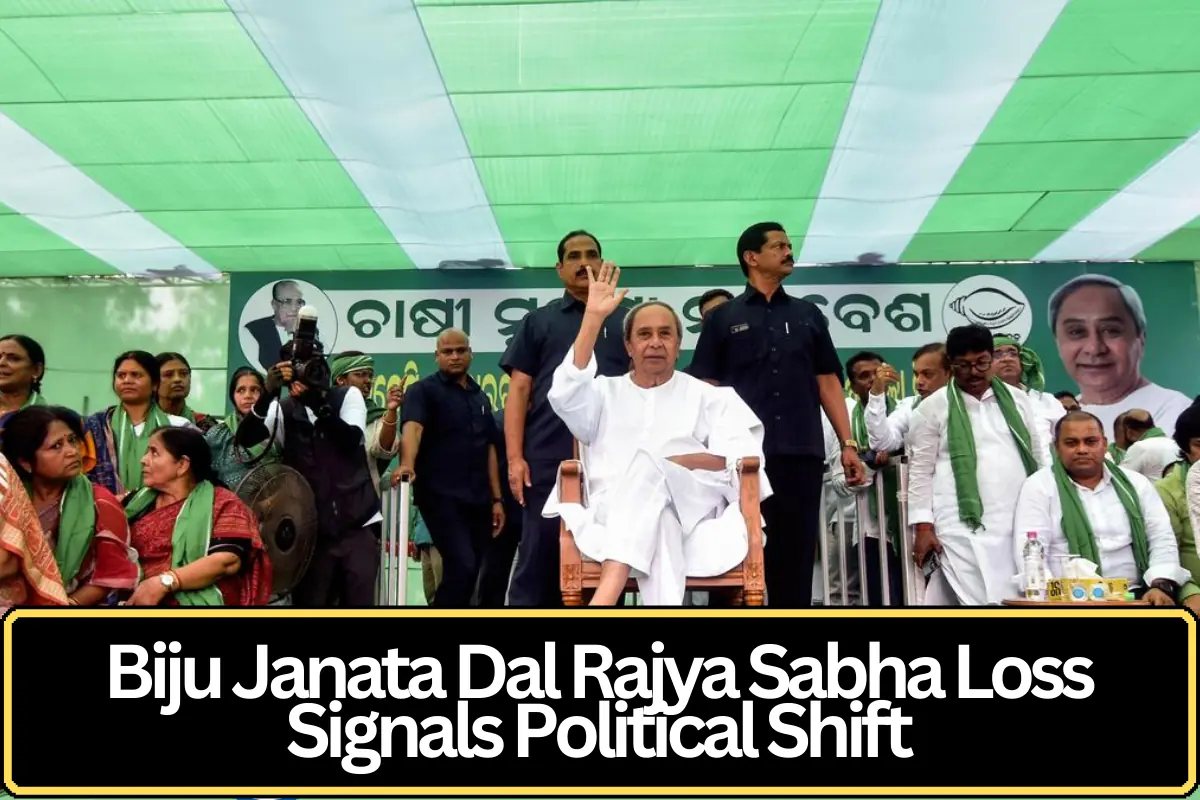
BJD Faces Political Test After Unexpected Rajya Sabha Outcome
The political landscape in Odisha appears poised for potential change after the Biju Janata Dal (BJD) suffered an unexpected setback in the recent Rajya Sabha elections, raising questions about the party’s political dominance in the state. The development comes after voting and counting concluded earlier this week, when the ruling alliance at the national level gained ground in contests held for several Upper House seats across multiple states, including Odisha. Political observers say the outcome may signal emerging shifts in alliances, voter loyalty, and legislative strength within the eastern state.
The Rajya Sabha election in Odisha drew significant attention because the BJD has historically maintained strong control over the state’s political institutions. However, reports of cross‑voting and unexpected support patterns in the Upper House contest have prompted renewed debate about whether the party’s long-standing grip on state politics may be weakening.
Importance of Rajya Sabha Elections in State Politics
Rajya Sabha elections are typically decided by elected members of state legislative assemblies rather than the general electorate. As a result, the outcome often reflects the internal cohesion of political parties and the stability of alliances within the legislature.
In Odisha, the BJD has enjoyed a comfortable majority in the state assembly for years, enabling it to secure most Upper House seats without difficulty. The latest result, however, introduced an element of uncertainty as the opposition Bharatiya Janata Party (BJP) managed to strengthen its position in the contest.
Political analysts note that even limited electoral setbacks in indirect elections such as the Rajya Sabha can have symbolic importance, especially when they occur in states where a single party has dominated the political landscape for extended periods.
Reports of Cross‑Voting and Internal Discontent
One of the most widely discussed aspects of the election has been reports of cross‑voting by legislators. Cross‑voting occurs when lawmakers vote for candidates outside their party’s official line, often reflecting internal dissatisfaction or shifting political calculations.
While the full details of voting patterns may take time to emerge, the episode has already sparked speculation about whether divisions exist within party ranks. Analysts say such developments can sometimes foreshadow broader political realignments or internal restructuring within major parties.
The possibility of cross‑voting has also intensified debate about the stability of party discipline in the Odisha Assembly. Although political leaders have not publicly confirmed the extent of the phenomenon, observers believe the incident could influence future legislative strategies and alliances.
BJP Seeks to Expand Influence in Odisha
The BJP has been steadily attempting to expand its presence in Odisha over the past decade. Although the party has achieved electoral success in several states across India, Odisha has remained a stronghold for the BJD under the leadership of Chief Minister Naveen Patnaik.
However, the BJP has gradually increased its vote share and organizational strength in the state, particularly during national parliamentary elections. The latest Rajya Sabha development is therefore being interpreted by some analysts as another sign that the party is seeking to consolidate its political base in the region.
For the BJP, gains in the Upper House are important not only for legislative arithmetic but also for signaling political momentum ahead of future electoral contests.
Longstanding Dominance of the BJD
The BJD has governed Odisha for more than two decades, with Chief Minister Naveen Patnaik maintaining one of the longest tenures among India’s state leaders. The party’s political strength has been built on a combination of welfare programs, administrative continuity, and a strong regional identity.
Over the years, the BJD has successfully positioned itself as a dominant regional force capable of balancing relations with both national political alliances. This strategy has often allowed the party to maintain autonomy while cooperating with central governments when necessary.
The recent Rajya Sabha election outcome, however, has prompted discussions about whether the political balance in Odisha could be gradually evolving as opposition parties intensify their efforts to expand their presence in the state.
Implications for Future Elections
Political analysts say the significance of the Rajya Sabha result will ultimately depend on whether it reflects a temporary development or a deeper shift in political sentiment. By‑elections, parliamentary contests, and future assembly elections will provide clearer indications of whether the BJD’s dominance remains secure.
Opposition parties are likely to interpret the outcome as an opportunity to challenge the ruling party more aggressively in upcoming electoral battles. Meanwhile, the BJD may seek to reinforce party unity and strengthen organizational networks in response to the unexpected result.
In many states, indirect elections such as those for the Rajya Sabha have occasionally served as early indicators of changing political dynamics. However, such signals do not always translate directly into shifts in voter behavior during general elections.
National Political Context
The Odisha development comes amid broader changes in the composition of the Rajya Sabha following elections for multiple seats across several states. The results have contributed to strengthening the position of the National Democratic Alliance at the national level.
Changes in the Upper House balance can influence the passage of legislation and policy initiatives, particularly when the government seeks to move bills that require support from multiple parties.
Although the Rajya Sabha election results do not directly affect the state government in Odisha, they can shape perceptions of political momentum and influence how parties plan their strategies for future elections.
Focus on Party Organization and Alliances
In the aftermath of the election, political observers expect parties in Odisha to focus closely on internal organization and coalition management. Maintaining party discipline in legislative votes and strengthening grassroots networks are likely to become priorities for both the ruling party and the opposition.
Analysts note that regional parties like the BJD have historically relied on strong leadership and organizational coherence to maintain their dominance. Any perception of internal divisions could therefore prompt efforts to reinforce unity and reassert political control.
At the same time, opposition parties may attempt to capitalize on the moment by expanding outreach and highlighting the possibility of political change in the state.
Current Status
With the Rajya Sabha election outcome drawing national attention, Odisha’s political environment is entering a period of renewed scrutiny as parties assess the implications of the BJD’s unexpected setback and prepare for future electoral contests.