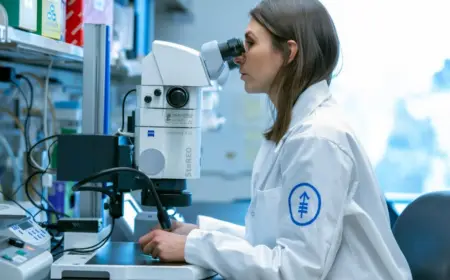
New Study Reveals Breakthrough Insights Into Brain’s Memory Formation Process
A new study uncovers how the brain forms and stores memories, offering potential pathways for treating neurological disorders.
 Akanksha jain
New Study Reveals Breakthrough Insights Into Brain’s Memory Formation Process
Scientists have uncovered new insights into how the human brain forms and stores memories, according to a study published in late March 2026, offering potential implications for the treatment of neurological disorders such as Alzheimer’s disease and other cognitive impairments. The research, conducted by an international team of neuroscientists, sheds light on the biological mechanisms that enable learning and memory retention.
The study focuses on the dynamic processes within neural circuits that allow the brain to encode, store, and retrieve information. Researchers used advanced imaging and molecular analysis techniques to observe how neurons interact during memory formation, providing a clearer understanding of how experiences are translated into lasting memories.
Understanding Memory Formation
Memory formation is a complex process involving the coordination of billions of neurons in the brain. When new information is encountered, neural connections—known as synapses—are strengthened or modified, enabling the brain to store that information for future use.
The study highlights how specific patterns of neural activity are associated with the encoding of memories. Researchers observed that certain groups of neurons become activated together, forming networks that represent specific pieces of information. These networks can be reactivated later, allowing individuals to recall past experiences.
This process, known as synaptic plasticity, is fundamental to learning and adaptation, enabling the brain to continuously update and refine its knowledge.
Key Discoveries in Neural Activity
One of the major findings of the study is the identification of previously unknown patterns of activity within neural circuits during memory formation. Researchers found that memory encoding involves not only the strengthening of connections but also precise timing and coordination between neurons.
These findings suggest that memory is not stored in a single location in the brain but is distributed across networks that work together to process and retain information. The study also indicates that the stability of these networks plays a crucial role in determining how long memories are retained.
By mapping these neural interactions, scientists are gaining a deeper understanding of how memories are formed at a cellular level.
Implications for Neurological Disorders
The research has significant implications for the treatment of neurological conditions that affect memory and cognitive function. Disorders such as Alzheimer’s disease, dementia, and other forms of cognitive decline are often associated with disruptions in neural connectivity and synaptic function.
By identifying the mechanisms underlying memory formation, scientists hope to develop targeted therapies that can restore or enhance these processes. This could lead to new treatments aimed at improving memory retention and slowing the progression of neurodegenerative diseases.
Researchers emphasize that while the findings are promising, further studies are needed to translate these insights into clinical applications.
Advances in Research Technology
The study was made possible by advances in imaging and analytical technologies that allow scientists to observe brain activity with unprecedented detail. Techniques such as high-resolution microscopy and real-time neural tracking have enabled researchers to study the brain’s inner workings more precisely than ever before.
These technologies have opened new avenues for exploring how the brain processes information, providing valuable data that can inform future research and innovation in neuroscience.
As technology continues to evolve, scientists expect to gain even deeper insights into the complexities of brain function.
The Role of Learning and Experience
The findings also highlight the role of experience in shaping memory. The brain’s ability to adapt and reorganize itself based on new information is a key aspect of learning, allowing individuals to acquire new skills and knowledge over time.
Researchers noted that repeated exposure to information strengthens neural connections, making memories more stable and easier to retrieve. This reinforces the importance of practice and repetition in learning processes.
The study suggests that environmental factors and lifestyle choices may also influence memory formation, although further research is needed to fully understand these relationships.
Challenges and Future Research
Despite the progress made, researchers acknowledge that many questions remain about how memory works. The brain’s complexity means that understanding its functions requires continued investigation and collaboration across scientific disciplines.
Future research will focus on exploring how different types of memory—such as short-term and long-term memory—are formed and maintained, as well as how these processes are affected by aging and disease.
Scientists are also interested in studying how external factors, such as stress and environmental conditions, influence memory formation and cognitive performance.
Potential for Therapeutic Applications
The insights gained from this study could pave the way for new therapeutic approaches aimed at enhancing memory and cognitive function. Potential applications include the development of drugs that target specific neural pathways or interventions designed to stimulate brain activity.
Such advancements could benefit individuals with memory-related disorders, as well as those seeking to improve cognitive performance in everyday life.
However, experts caution that translating basic research into practical treatments will require rigorous testing and validation.
Broader Impact on Cognitive Science
The study contributes to a broader understanding of cognitive science, offering valuable insights into how the brain processes information and adapts to new experiences. This knowledge has implications beyond healthcare, including education, psychology, and artificial intelligence.
Understanding how memory works can inform strategies for improving learning outcomes and developing technologies that mimic human cognition.
The research underscores the importance of interdisciplinary collaboration in advancing knowledge and addressing complex scientific challenges.
Conclusion
The latest findings provide a deeper understanding of the brain’s memory formation process, marking a significant step forward in neuroscience research and offering new possibilities for addressing cognitive disorders.