Chimpanzee Group Turns Violent in Uganda, 28 Killed After Split
A long-studied chimpanzee group in Uganda’s Kibale National Park split into rival factions, leading to coordinated attacks and 28 deaths, marking a rare case of lethal conflict within a single community.
 Shah Vaibhavi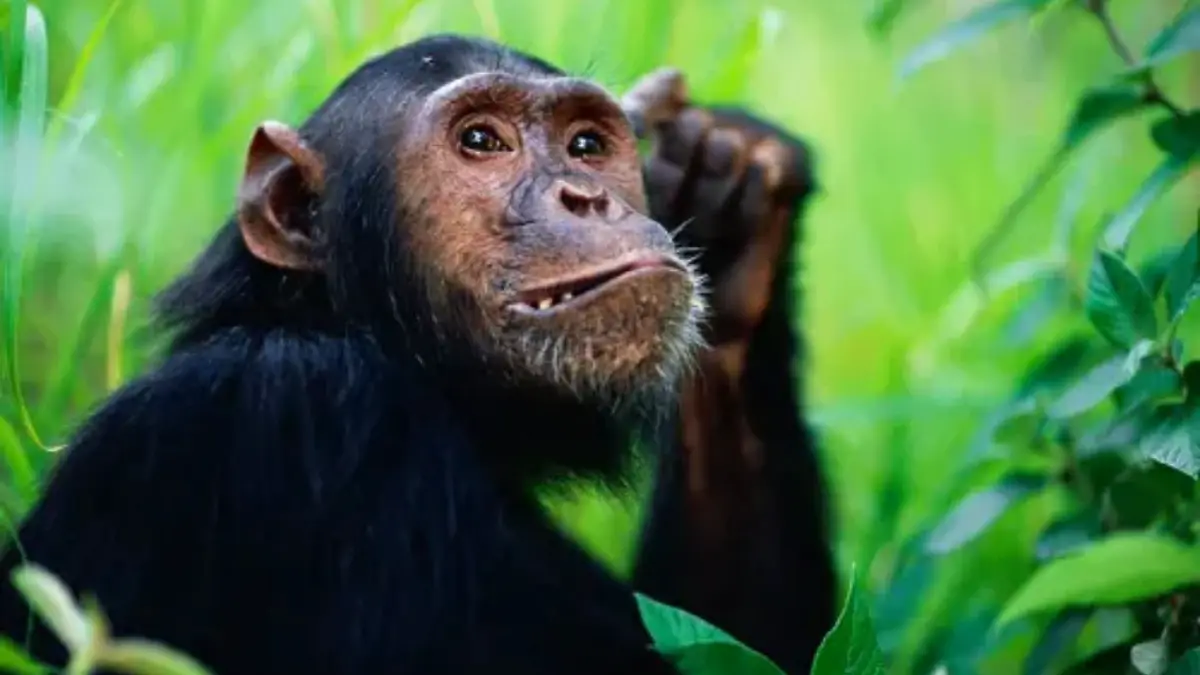
KIBALE NATIONAL PARK, Uganda, April 9, 2026 — A long-observed chimpanzee community in Uganda has fractured into rival factions, resulting in coordinated attacks that have killed at least 28 individuals since 2018, according to new research documenting an unprecedented case of sustained violence within a single wild chimpanzee group.
Group fragmentation triggered prolonged violence
The Ngogo chimpanzee community, located in Kibale National Park, had been studied continuously since 1995 and was once considered a stable and cohesive social group. At its peak, the community reached approximately 200 members, making it the largest known group of wild chimpanzees. Typically, such groups number around 50 individuals.
After more than two decades of relative stability, the community split into two factions — referred to as the Western and Central groups — by the end of 2017. Since then, the Western group has carried out repeated, coordinated attacks against members of the Central group, targeting both adult males and infants.
Researchers recorded 24 killings between 2018 and 2024, including seven adult males and 17 infants. Additional deaths in 2025 and 2026 — involving one adult male, one adolescent male and two infants — brought the confirmed death toll to 28. Several other chimpanzees have disappeared without confirmed causes, suggesting the actual number of fatalities may be higher.
Coordinated attacks and lethal outcomes
The violence involved multiple attackers overwhelming a single victim. Observations documented behaviors such as biting, dragging, kicking and repeated physical strikes. Adult males were the primary participants in these assaults, though some adult females were also involved.
Researchers noted that attacks on adult chimpanzees often lasted less than 15 minutes but resulted in fatal internal injuries rather than visible external trauma. Infants were killed more rapidly, often through blunt force or biting.
The Western faction, initially smaller in size and territory, eventually surpassed the Central group in both population and range. Notably, no casualties have been reported within the Western group during the period of observed conflict.
Possible causes behind the split
Scientists identified multiple factors that may have contributed to the breakdown of the once-cohesive community. The unusually large group size likely intensified competition for food resources and mating opportunities, particularly among males.
Health-related disruptions also played a role. In 2014, seven chimpanzees died following signs of illness, and in 2017, another outbreak killed 25 individuals, mostly infants. These events may have destabilized social bonds within the group.
Changes in leadership further contributed to tensions. Around 2015, a shift in the alpha male hierarchy occurred when a male named Jackson replaced the previous dominant individual. Around the same period, two social clusters within the group began avoiding each other, marking the early stages of division.
By late 2017, the separation had solidified into two distinct factions. The first recorded violent encounter occurred shortly thereafter, initiating a cycle of repeated aggression.
Rare case of intra-group conflict
While chimpanzees are known to attack members of neighboring groups, such aggression typically targets unfamiliar individuals. The Ngogo case is distinct because the violence occurred between individuals who had grown up together and shared long-standing social bonds.
This represents the first clearly documented example of a single wild chimpanzee community splitting into factions that subsequently engaged in sustained, lethal conflict. A similar case was reported in Tanzania in the 1970s, but that instance involved human intervention through feeding and lacked continuous observation.
In contrast, the Ngogo study was conducted under natural conditions with long-term monitoring, providing detailed insight into the dynamics of the split and subsequent violence.
Implications for primate behavior research
The findings offer new perspectives on social dynamics in primates, particularly the factors that can destabilize large, complex groups. The combination of population pressure, competition, disease and leadership changes appears to have played a critical role in triggering the conflict.
Despite the intensity of the violence, researchers caution against drawing direct comparisons between chimpanzee behavior and human conflict. While chimpanzees and bonobos are the closest evolutionary relatives to humans, their social systems and evolutionary paths have diverged significantly over millions of years.
The Ngogo case underscores the complexity of chimpanzee societies and highlights how environmental and social pressures can reshape group structures. The violence, which has continued through 2026, remains under observation as researchers seek to understand its long-term consequences for the surviving population.