China Approves First Brain-Computer Interface Medical Device for Market Use
China has approved the market launch of a brain-computer interface medical device, marking a significant milestone in the development of neurotechnology designed to assist patients with neurological conditions.
 Akanksha jain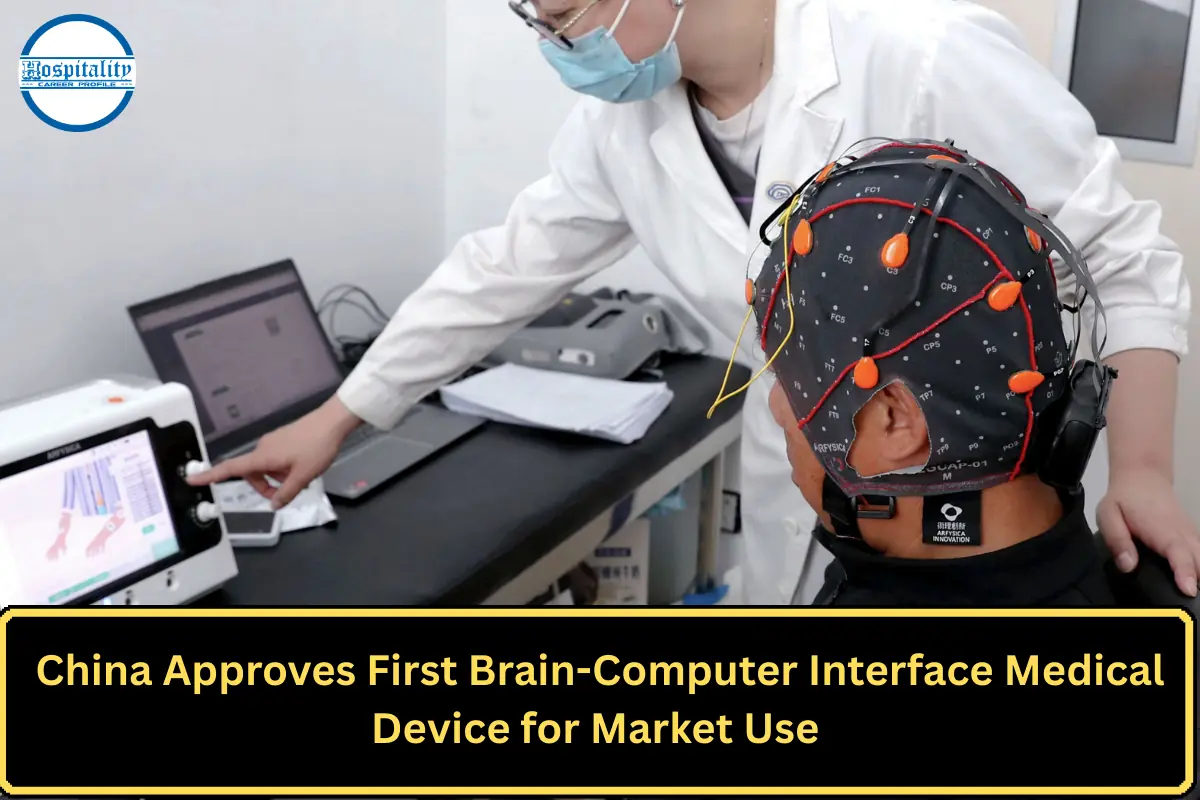
China Authorizes Market Launch of Brain-Computer Interface Medical Device
China has approved the market launch of a brain-computer interface medical device, marking a milestone in the country’s efforts to expand the use of advanced neurotechnology in healthcare. The approval was announced in March 2026 by Chinese authorities responsible for medical device regulation. The device is designed to enable direct communication between the human brain and external digital systems, offering potential medical applications for patients with neurological impairments.
The brain-computer interface, commonly known as a BCI, allows neural signals generated by the brain to be interpreted by computer systems. This technology can enable patients with certain neurological conditions to control digital devices, prosthetic limbs, or communication tools through brain activity alone. The newly approved system represents one of the first BCI medical devices to receive authorization for commercial medical use.
Officials and researchers say the approval highlights China’s increasing investment in emerging healthcare technologies and neurological research. The technology may help improve treatment options and rehabilitation methods for patients suffering from paralysis, spinal cord injuries, or other neurological disorders that limit physical movement and communication.
Understanding Brain-Computer Interface Technology
Brain-computer interface systems operate by detecting electrical signals generated by neurons in the brain and translating them into digital commands that can be interpreted by computers or external devices. These signals are typically captured through sensors placed on the scalp or implanted within neural tissue, depending on the design of the device.
Once captured, specialized software analyzes the neural signals and converts them into instructions capable of controlling external systems. For example, a patient may be able to move a cursor on a computer screen, operate assistive technologies, or control robotic devices using thought-based commands.
Researchers have been developing BCI technologies for several decades, but advances in neuroscience, computing power, and artificial intelligence have accelerated progress in recent years. Improved signal processing techniques allow modern systems to interpret brain activity with greater accuracy and reliability.
The newly approved device is expected to be used primarily for medical rehabilitation and assistive technology applications, particularly for individuals who have lost motor function due to neurological injury or disease.
Potential Medical Applications
Brain-computer interfaces are being studied for a variety of medical uses aimed at improving quality of life for patients with neurological disorders. Individuals who experience paralysis or severe motor impairment may benefit from technologies that allow them to interact with digital systems without relying on traditional physical movements.
BCI systems can potentially enable patients to control communication devices, operate wheelchairs, or interact with assistive technologies using brain signals. Such capabilities may provide greater independence for individuals living with conditions that affect mobility and communication.
Researchers are also exploring how brain-computer interfaces might be used in rehabilitation therapies. Some experimental systems allow patients to control robotic limbs or rehabilitation devices through neural signals, which may help stimulate brain activity and support recovery following neurological injuries.
Scientists believe that continued research may lead to expanded medical applications in areas such as stroke rehabilitation, neurodegenerative disease management, and assistive communication technologies.
Growth of Neurotechnology Research
The approval of a brain-computer interface device reflects broader global interest in neurotechnology and the study of brain-machine interactions. Governments, research institutions, and technology companies around the world are investing in efforts to better understand how the brain communicates with digital systems.
Neuroscience research has benefited from advances in imaging technologies, neural sensors, and data analysis methods that allow scientists to study brain activity in greater detail. Artificial intelligence and machine learning tools are also being used to analyze complex neural signals and improve the performance of BCI systems.
China has significantly increased funding for neuroscience and biomedical engineering research as part of its national science and technology development strategy. Academic institutions and research laboratories across the country are conducting studies aimed at improving neural interface technologies and exploring their potential medical uses.
Industry analysts say the approval of a BCI medical device could encourage further investment in neurotechnology development within China and internationally.
Regulatory Oversight and Safety Evaluation
Medical devices designed to interact with neural systems must undergo rigorous safety and performance evaluations before they can be approved for clinical use. Regulatory authorities typically require extensive testing to ensure that devices operate reliably and do not pose unacceptable risks to patients.
Clinical studies are often conducted to evaluate how effectively a device performs its intended function and whether it produces any adverse effects. These studies help regulators determine whether the benefits of a medical technology outweigh potential risks.
For brain-computer interface systems, safety considerations may include signal accuracy, device durability, and long-term interaction with neural tissue. Researchers must also ensure that the system can reliably interpret neural signals without producing errors that could affect device control.
The regulatory approval granted in China indicates that the device has met required evaluation standards for market introduction under the country’s medical device regulations.
Challenges and Ethical Considerations
While brain-computer interface technologies offer promising medical applications, researchers acknowledge that several technical and ethical challenges remain. Accurately interpreting neural signals can be complex because brain activity varies widely between individuals and across different conditions.
Developers must ensure that BCI systems remain reliable and easy for patients to use in real-world environments. Improving signal stability and reducing interference from external factors are ongoing areas of research within the field.
Ethical considerations also play an important role in the development of neurotechnology. Experts emphasize the importance of protecting patient privacy, ensuring informed consent, and maintaining strict safeguards when collecting and analyzing neural data.
Policymakers and researchers are increasingly discussing how regulatory frameworks should evolve to address the unique issues associated with technologies that interact directly with the human brain.
International Competition in Neurotechnology
Countries around the world are investing heavily in neurotechnology as part of broader efforts to develop advanced medical technologies. Research initiatives in the United States, Europe, and Asia are exploring various forms of brain-computer interfaces designed for medical, research, and assistive applications.
Major technology companies and biotechnology firms are also exploring commercial opportunities in neural interface technologies. These efforts aim to develop devices capable of restoring lost sensory or motor functions, improving communication for individuals with disabilities, and supporting neurological research.
Competition in this field has intensified as governments recognize the potential economic and medical benefits of advanced neurotechnology development. Investments in research infrastructure, academic collaborations, and private-sector partnerships are contributing to rapid technological progress.
Experts say continued international collaboration will also be important for establishing safety standards and sharing scientific knowledge related to neural interface technologies.
Future Outlook for Brain-Computer Interface Development
The approval of a brain-computer interface device for medical use represents an important step toward broader adoption of neural interface technologies in healthcare. Researchers expect continued improvements in sensor design, signal processing algorithms, and artificial intelligence systems that interpret neural activity.
Advances in these areas may enable future BCI systems to provide more precise control, improved reliability, and expanded functionality for patients requiring assistive technologies. Researchers are also investigating less invasive methods for capturing brain signals, which could make BCI systems easier to deploy in clinical settings.
Healthcare experts believe that brain-computer interfaces could become an increasingly important tool in neurological rehabilitation and assistive communication over the coming years. However, widespread clinical adoption will depend on further technological development, clinical validation, and regulatory oversight.
The approval of the device in China marks a significant milestone in the evolving field of neurotechnology, highlighting the growing role of brain-computer interfaces in modern medical research and healthcare innovation.