China Approves Market Launch of World’s First Brain-Computer Interface Medical Device
China has approved the commercial launch of what is described as the world’s first brain-computer interface medical device, marking a significant milestone in neurotechnology and medical innovation.
 Akanksha jain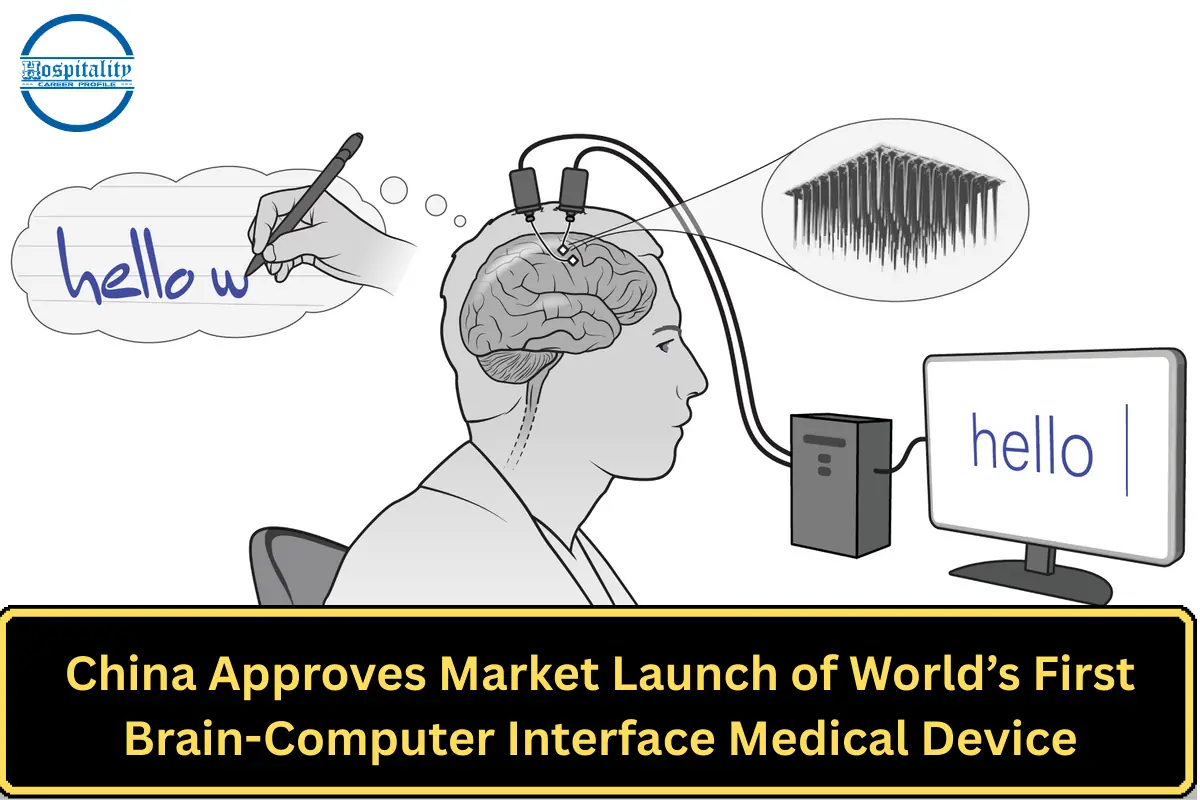
Chinese regulators have approved the market launch of what is being described as the world’s first brain‑computer interface (BCI) medical device, marking a significant milestone in the development of neurotechnology and advanced medical devices. The approval allows the device to enter the commercial market in China and represents a major step toward integrating brain‑computer interface systems into clinical healthcare applications.
The authorization was granted by Chinese regulatory authorities responsible for medical device oversight, enabling the technology to be used for medical purposes after undergoing regulatory review. Brain‑computer interface systems are designed to create direct communication pathways between the human brain and external devices, allowing signals generated by the brain to control computers or medical equipment.
The approval highlights China’s growing investment in emerging healthcare technologies and reflects increasing global interest in brain‑computer interfaces as potential tools for treating neurological disorders, restoring lost motor functions, and assisting patients with severe physical disabilities.
Understanding Brain-Computer Interface Technology
Brain‑computer interface technology enables direct interaction between the brain and digital systems by translating neural signals into commands that machines can interpret. Sensors or electrodes detect electrical activity generated by neurons in the brain, which is then processed using specialized software to produce usable outputs.
These outputs can control various devices, including computers, robotic systems, or medical equipment. In healthcare settings, the technology is often explored as a way to help individuals who have lost the ability to move or communicate due to neurological injuries or diseases.
Researchers have been studying brain‑computer interfaces for decades, but technological advancements in computing, signal processing, and neuroscience have accelerated progress in recent years. Improvements in artificial intelligence and machine learning have also contributed to the ability to decode complex neural signals more accurately.
The newly approved device represents an important step toward bringing these research innovations into real‑world medical use.
Potential Applications in Healthcare
Brain‑computer interface technology has the potential to transform treatment approaches for a range of neurological conditions. Medical researchers are exploring its use in helping patients with spinal cord injuries regain control of assistive devices, such as robotic limbs or computer systems used for communication.
Individuals affected by conditions that limit mobility, including certain neurodegenerative diseases, may benefit from BCI systems that allow them to interact with digital environments using only brain signals. Such technologies could enable patients to type messages, control wheelchairs, or operate assistive technologies without physical movement.
In addition to mobility assistance, scientists are investigating the potential use of brain‑computer interfaces in rehabilitation therapies. Some research focuses on using neural feedback to help patients retrain brain pathways following injuries such as strokes.
Clinical applications of BCI technology may also extend to monitoring brain activity for diagnostic or therapeutic purposes. By providing real‑time insights into neural function, these systems could support more personalized approaches to neurological treatment.
China’s Expanding Role in Medical Technology Innovation
The approval of the brain‑computer interface medical device reflects China’s increasing focus on developing advanced medical technologies. The country has invested heavily in research areas including artificial intelligence, biotechnology, and digital healthcare.
Government initiatives and partnerships between research institutions, technology companies, and healthcare providers have contributed to the growth of China’s medical technology sector. These collaborations aim to accelerate the development and commercialization of innovative healthcare solutions.
Regulatory approval for emerging technologies such as brain‑computer interfaces signals the willingness of authorities to support new approaches that may improve healthcare outcomes while maintaining oversight of safety and effectiveness.
Industry analysts note that China has become an important player in the global medical device market, with companies increasingly developing technologies that compete internationally.
Regulatory Oversight and Safety Considerations
Medical devices that interact directly with the brain require careful regulatory evaluation due to the complexity and sensitivity of neural systems. Authorities typically assess factors including device safety, reliability, clinical effectiveness, and potential long‑term impacts on patients.
The regulatory approval process often includes laboratory testing, clinical studies, and extensive technical reviews to ensure that devices meet safety standards before they are allowed to enter the market.
Brain‑computer interface technologies may involve implanted components or external sensors that detect neural signals. Both approaches require rigorous oversight to ensure that patients are protected from potential complications.
Medical experts emphasize that while the technology holds significant promise, continued monitoring and research will be essential as these systems move into wider clinical use.
Global Competition in Brain-Computer Interface Development
The race to develop practical brain‑computer interface technologies has attracted attention from researchers, technology companies, and healthcare organizations around the world. Several research groups and private companies are working on similar systems aimed at translating neural activity into digital commands.
Advances in neuroscience, computing power, and data analysis have made it increasingly feasible to interpret complex patterns of brain activity. As a result, the field has seen rapid progress in both experimental and clinical settings.
Some projects focus on non‑invasive devices that detect signals through sensors placed on the scalp, while others explore implanted technologies capable of capturing more detailed neural data. Each approach presents different technical challenges and potential benefits.
The approval of a brain‑computer interface medical device for commercial use represents a significant development in the global effort to transform experimental research into practical medical treatments.
Challenges and Future Development
Despite the progress made in brain‑computer interface technology, researchers acknowledge that many challenges remain before the technology becomes widely accessible. Neural signals can be complex and difficult to interpret accurately, requiring sophisticated algorithms and extensive calibration.
Long‑term durability and safety are also important considerations, particularly for implanted devices. Researchers continue to study how such technologies perform over extended periods and how they interact with biological tissue.
In addition, healthcare providers must consider how to integrate these systems into clinical practice. Training, infrastructure, and regulatory frameworks will play key roles in determining how quickly BCI technologies become widely adopted.
Cost and accessibility may also influence the pace of adoption, as advanced medical technologies often require specialized equipment and expertise.
Implications for the Future of Neurotechnology
The approval of the brain‑computer interface medical device represents a milestone in the evolving field of neurotechnology. By enabling direct interaction between the brain and digital systems, such technologies have the potential to reshape how certain neurological conditions are treated.
Researchers believe that continued advancements in artificial intelligence, neuroscience, and biomedical engineering will further expand the capabilities of brain‑computer interfaces. These developments could lead to new treatments that help restore independence and improve the quality of life for patients with severe neurological impairments.
International collaboration and ongoing research are expected to play important roles in refining these technologies and ensuring that they meet clinical safety standards.
As healthcare systems explore the possibilities of neurotechnology, regulatory approvals such as this one may signal the beginning of a new phase in the integration of brain‑computer interfaces into medical care.
With the device now approved for market launch in China, healthcare experts and researchers will closely monitor its real‑world performance as the technology moves from research laboratories into clinical practice.