Christopher Luxon Rejects Resignation Speculation Amid Falling Poll Numbers in New Zealand
New Zealand Prime Minister Christopher Luxon dismisses speculation about stepping down despite falling poll numbers for the National Party, insisting he has full support from his cabinet and caucus.
 SANJANA DUTTA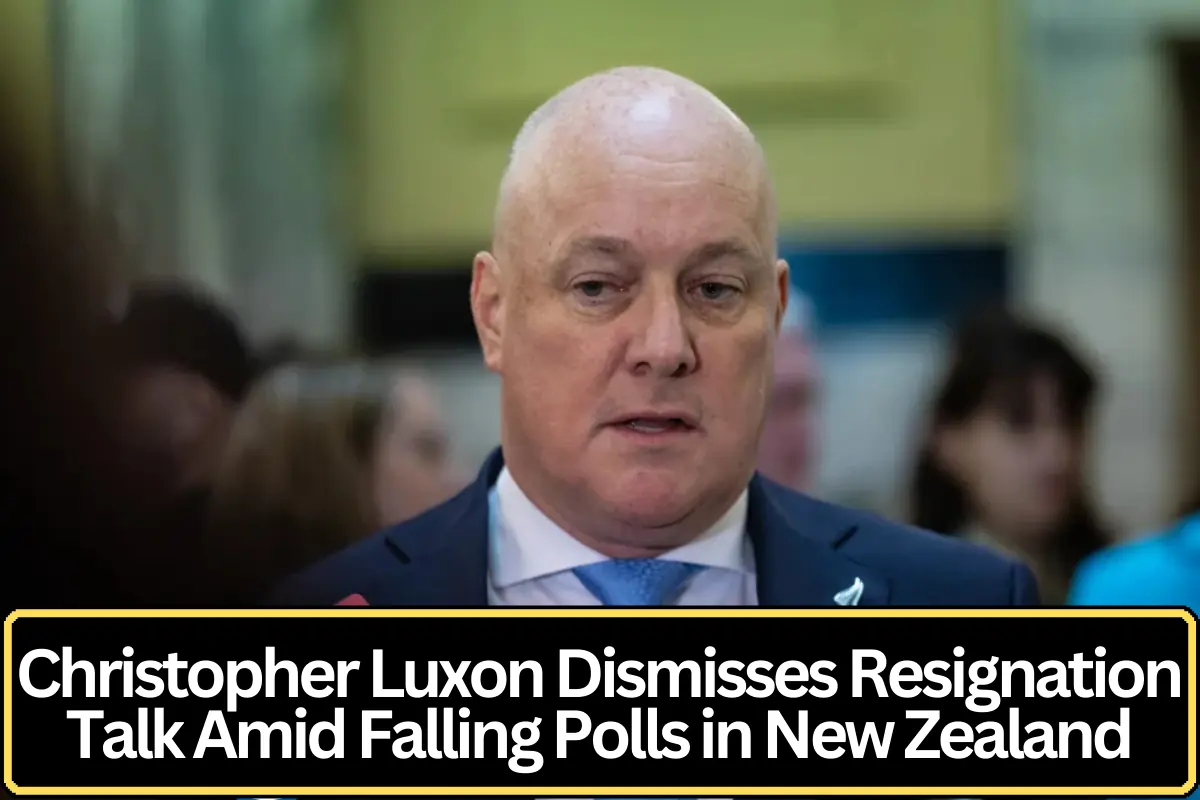
Christopher Luxon Dismisses Resignation Rumours as Political Pressure Intensifies
New Zealand Prime Minister Christopher Luxon has firmly rejected speculation that he may step down from his leadership role after recent opinion polls showed declining support for his National Party government. Luxon stated unequivocally that he is not considering resigning and insisted that he retains the full backing of his cabinet ministers and parliamentary caucus.
The debate around Luxon’s leadership intensified following the release of new polling data indicating a drop in support for the governing National Party. The results triggered political discussions across the country about the stability of the current coalition government and the potential implications for the next general election.
Despite the mounting speculation, Luxon has emphasized that his focus remains firmly on governing the country and addressing long-term national challenges rather than responding to short-term political narratives.
Poll Results Trigger Political Debate
The latest political survey revealed a noticeable decline in support for the National Party, which fell to approximately 28 percent. The poll showed the opposition Labour Party ahead, raising questions among political commentators about whether the governing coalition could maintain its parliamentary majority if the election were held under similar conditions.
While polling numbers frequently fluctuate during political cycles, the drop was enough to prompt speculation about Luxon’s leadership within his party. Media commentary and political analysts began discussing whether the National Party might face internal pressure to reconsider its leadership strategy.
However, Luxon responded directly to these discussions, saying that he had not considered stepping down and that no members of his cabinet had raised concerns about his position as leader.
Luxon’s Response to Leadership Speculation
In public comments addressing the speculation, Luxon said the only issue he is focused on is the long‑term future of the country and the wellbeing of future generations. He made it clear that speculation surrounding his leadership had been exaggerated and that his government remains committed to its policy agenda.
Luxon also highlighted that political polling is only one indicator of public opinion and that leadership decisions cannot be based solely on individual survey results. According to him, governments must continue working on policy implementation even during periods of political criticism.
He further explained that if serious concerns had arisen within his party about his leadership, those issues would be addressed internally through normal political processes. However, he insisted that no such conversations had taken place.
Support From Cabinet and Party Caucus
The Prime Minister has repeatedly emphasized that he enjoys the full support of his cabinet colleagues and members of the National Party caucus. According to Luxon, his team remains united in pursuing the government’s economic and social policy goals.
Political unity is considered particularly important for coalition governments such as New Zealand’s current administration. The National Party leads a governing coalition that includes smaller political partners, and maintaining cooperation among these groups is essential for legislative stability.
Luxon stated that his caucus continues to back his leadership and that ministers remain focused on delivering policy outcomes rather than engaging in internal leadership debates.
Political observers note that public expressions of unity from party members often serve as an important signal to voters and markets that a government remains stable despite challenging political circumstances.
Economic and Policy Challenges Facing the Government
The Luxon administration has faced a number of economic and policy challenges since taking office. Rising living costs, concerns about economic growth, and debates over public spending have dominated the political conversation in recent months.
Critics argue that the government must do more to address economic pressures facing households, while supporters of the administration say the government is working to stabilize the economy and promote long‑term growth.
Luxon has repeatedly argued that his government’s economic strategy requires time to produce results and that policy reforms should be judged over the course of a full political term rather than through short‑term polling data.
He has also highlighted infrastructure investment, economic development initiatives, and public service reforms as central pillars of his administration’s policy agenda.
Opposition Gains Momentum in Polling
The recent poll that sparked the leadership discussion also showed improved performance for opposition parties. Labour gained support, while other parties including the Greens and ACT also recorded slight increases.
The results suggested that a center‑left bloc could potentially form a government if the numbers were replicated in a general election. Such projections are significant because New Zealand operates under a mixed‑member proportional electoral system in which coalition arrangements determine governing majorities.
Political analysts note that shifts in polling often reflect changing public sentiment on economic issues, government performance, and leadership perception.
However, they also caution that individual polls should be interpreted carefully because political support can change rapidly over the course of an election cycle.
The Road to the Next Election
The leadership debate emerges as New Zealand prepares for its next general election scheduled for later in the political cycle. With parties beginning to position themselves for the campaign period, leadership stability will likely remain an important issue in public discourse.
For the National Party, maintaining unity and presenting a clear policy platform will be critical to retaining voter confidence. Meanwhile, opposition parties will continue to highlight polling results as evidence that the political landscape may be shifting.
Luxon has indicated that his administration will continue focusing on economic recovery, job creation, and infrastructure development as key priorities leading up to the election.
He has also emphasized the importance of long‑term planning and policy continuity, arguing that governments must remain focused on delivering results even during periods of political criticism.
Political Leadership Under Scrutiny
Leadership scrutiny is a common feature of democratic politics, particularly when polling numbers fluctuate. Political leaders frequently face questions about their performance and their ability to maintain public support.
In New Zealand, leadership challenges have occasionally reshaped party dynamics, especially when electoral prospects appear uncertain. However, such developments usually require strong internal pressure from party members before any leadership change occurs.
At present, there is no clear indication that the National Party intends to replace its leader. Luxon’s firm rejection of resignation speculation suggests that he intends to continue leading the government into the next phase of the political cycle.
Conclusion
Christopher Luxon’s decision to dismiss speculation about stepping down reflects his determination to maintain leadership stability despite falling poll numbers and increasing political scrutiny. By emphasizing the support of his cabinet and caucus, Luxon aims to project confidence and unity within the governing coalition.
As the political environment evolves and parties prepare for the next election, leadership debates will likely remain a central theme in New Zealand’s political discourse. For now, however, the prime minister has made it clear that he intends to remain in office and continue leading his government through the challenges ahead.