Cloud Forest Mammals Share Tree Latrines in Costa Rica Study
Study in Costa Rica finds 17 mammal species using shared tree latrines in strangler fig canopies, revealing new cross-species communication behavior.
 Shah Vaibhavi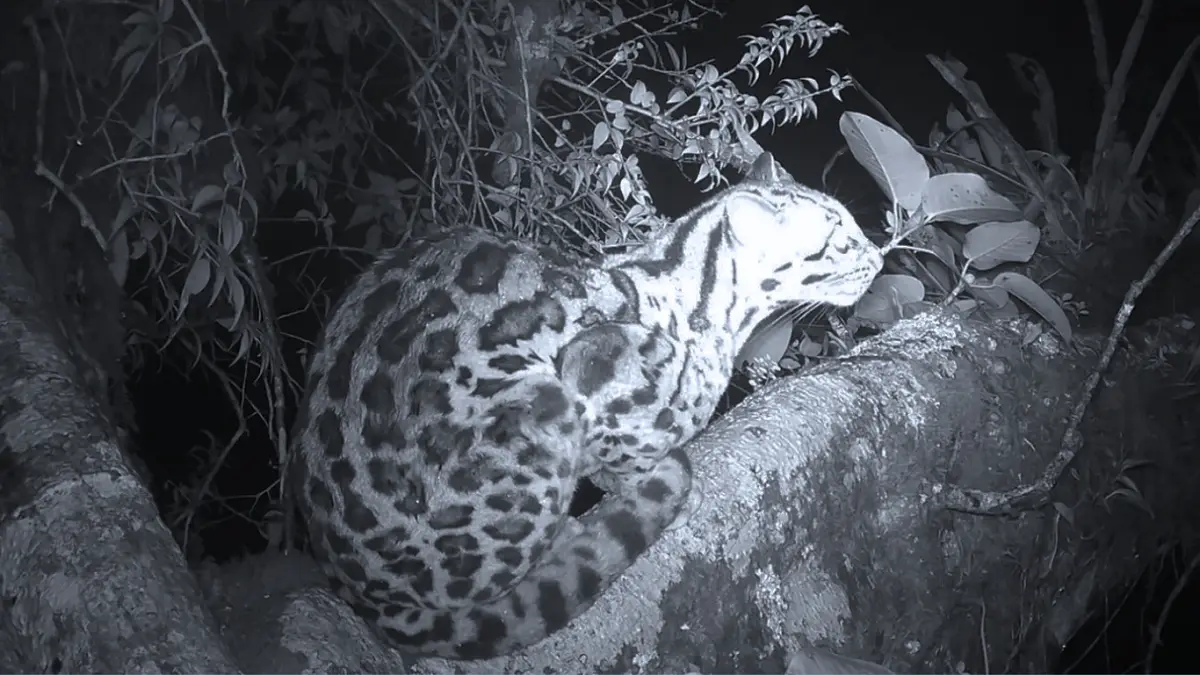
Costa Rica, April 16, 2026 — A new study in the country’s cloud forests has identified that multiple tree-dwelling mammal species share common defecation sites high in the canopy, with researchers recording 17 species visiting a single tree-based latrine, suggesting these locations may function as cross-species communication hubs.
Shared latrines identified in strangler fig trees
Researchers surveyed 169 trees across 29 species in Costa Rica’s cloud forests and identified 11 latrine sites. All of these were located in the branch junctions of strangler fig trees (Ficus tuerckheimii), with 73 percent of surveyed fig trees containing at least one such site. These latrines were formed in wide, flat platforms created where large branches meet, often filled with soil, plant material and animal waste.
The findings, published March 16 in Ecology and Evolution, highlight a previously undocumented pattern of arboreal mammals repeatedly using the same elevated locations for defecation. While ground-based latrines have been observed in tropical ecosystems, this study is among the first to document consistent use of canopy-level sites by multiple species.
Camera traps record 17 mammal species
A camera trap installed at one of the identified latrines recorded an average of three mammal visits per day over a two-month period. In total, 17 different species were observed using the same site. The most frequent visitors included Mexican hairy dwarf porcupines, along with kinkajous, opossums, coatis, pocket mice and capuchin monkeys.
The study also documented rarer visits from margays, a nocturnal arboreal cat species, which appeared at the site primarily for scent marking. Notably, two separate visits were recorded from Hoffmann’s two-toed sloths, a species typically believed to descend to the forest floor to defecate.
Tree structure linked to latrine formation
Researchers attribute the formation of these latrines to the unique architecture of strangler fig trees. The species develops a crown-like branching structure, where multiple limbs extend outward from a central junction. These junctions create flat, stable platforms that can extend up to one meter in width, providing a surface that accumulates soil and organic material.
This structure may offer conditions similar to ground-level environments, making them suitable for defecation. The physical accessibility of these platforms, combined with the fig tree’s role as a habitat and food source, likely contributes to repeated use by different species.
Evidence of cross-species communication behavior
The concentration of multiple species at the same latrine sites suggests these locations may serve functions beyond waste disposal. Observations showed animals not only defecating and urinating, but also scent-marking and, in some cases, rolling in the material. This behavior indicates the sites could act as information exchange points within the canopy ecosystem.
Researchers noted that such multispecies interactions could enable animals to detect the presence, activity patterns or reproductive status of others through scent cues. This expands the understanding of how communication occurs in dense forest canopies, where visibility is limited.
Importance of strangler fig trees in forest ecosystems
The study reinforces the ecological significance of strangler fig trees, already considered a keystone species in tropical forests. These trees provide food resources, shelter cavities and interconnected pathways that facilitate movement for arboreal animals.
The addition of latrine sites further highlights their multifunctional role within the ecosystem. By acting as feeding grounds, shelter hubs and now potential communication centers, strangler fig trees support a wide range of biodiversity within the cloud forest canopy.
The discovery adds a new dimension to canopy ecology research, emphasizing the complexity of interactions occurring above ground level. Researchers indicate that further investigation is needed to determine why this behavior is limited to specific tree species and how it influences ecosystem dynamics.