New Study Highlights Community-Based Strategies to Strengthen Public Health Outcomes Globally
A new study explores how community-based strategies can improve public health outcomes through localized interventions and stronger healthcare engagement.
 Akanksha jain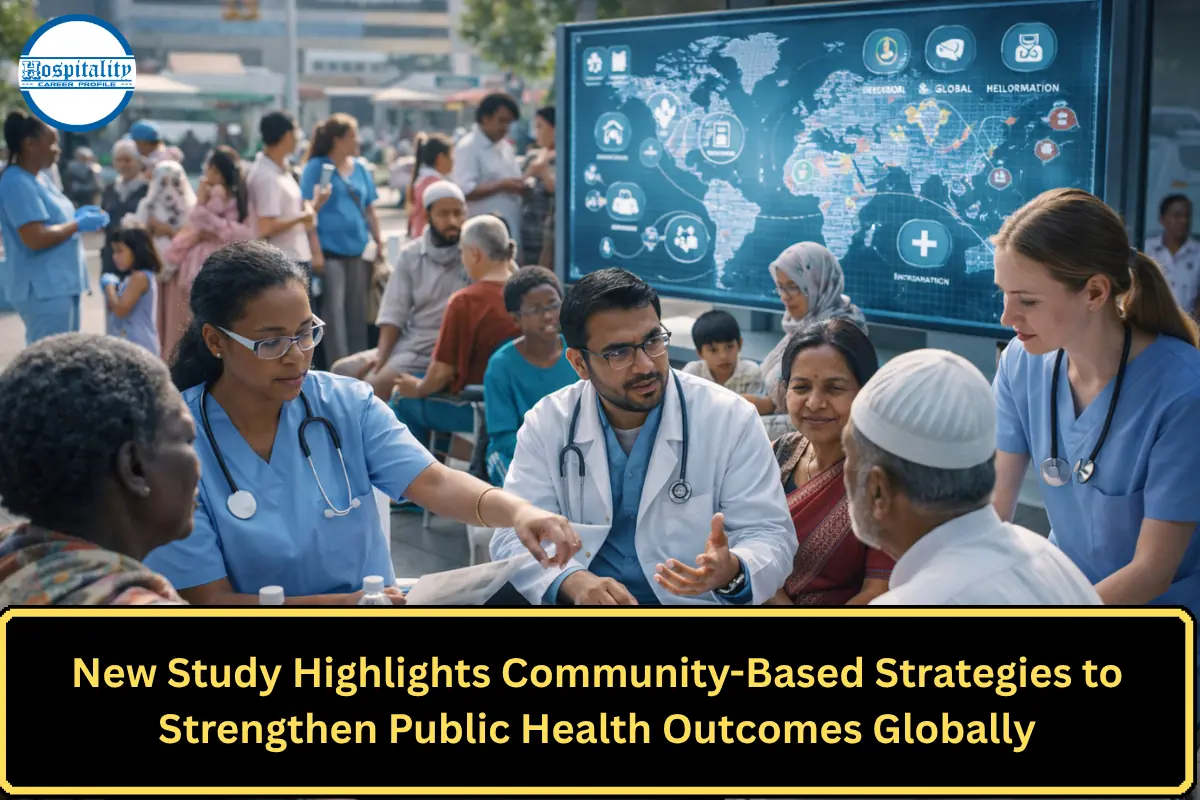
New Study Highlights Community-Based Strategies to Strengthen Public Health Outcomes Globally
A new study published in March 2026 has underscored the importance of community-based strategies in improving public health outcomes worldwide, highlighting how localized interventions, early engagement, and inclusive healthcare approaches can significantly enhance population health. Conducted by a team of public health researchers, the study examines how community-driven models can address health disparities and strengthen healthcare delivery systems across diverse regions.
The research comes at a time when global health systems are facing increasing pressure from rising disease burdens, resource constraints, and the need for more equitable healthcare access. The study emphasizes that community-level interventions play a critical role in bridging gaps between healthcare systems and the populations they serve.
Role of Community Engagement in Healthcare
The study highlights community engagement as a cornerstone of effective public health strategies. By involving local populations in health initiatives, programs can be better tailored to meet specific needs and cultural contexts. Community participation also fosters trust, which is essential for the successful implementation of health interventions.
Researchers found that when communities are actively involved in planning and delivering healthcare services, there is a higher likelihood of improved health outcomes and sustained program success. Engagement strategies include community health workers, local partnerships, and grassroots awareness campaigns.
Such approaches help ensure that health messages are understood and accepted, leading to greater compliance and participation.
Improving Access to Preventive Care
Access to preventive care is a key focus of the study, with community-based strategies shown to be effective in promoting early detection and reducing disease burden. Preventive measures such as screenings, vaccinations, and health education can be delivered more efficiently through local networks.
The research indicates that decentralized healthcare delivery models can overcome barriers such as distance, cost, and limited infrastructure, particularly in underserved areas. By bringing services closer to communities, healthcare systems can reach populations that might otherwise remain excluded.
Early intervention not only improves individual health outcomes but also reduces long-term healthcare costs.
Addressing Health Inequalities
Health inequalities remain a major challenge globally, with disparities in access, quality, and outcomes across different populations. The study emphasizes that community-based approaches can play a significant role in reducing these inequalities by targeting vulnerable and marginalized groups.
Programs designed with an understanding of local socioeconomic and cultural factors are more effective in addressing specific barriers to healthcare access. Tailored interventions can help ensure that no population is left behind in public health efforts.
Researchers stress that equity-focused strategies are essential for achieving broader health goals.
Integration with Primary Healthcare Systems
The study highlights the importance of integrating community-based strategies with primary healthcare systems to create a more cohesive and efficient approach to healthcare delivery. Collaboration between community programs and formal healthcare institutions can enhance service coverage and continuity of care.
Primary healthcare providers can work alongside community health workers to identify health needs, deliver services, and monitor outcomes. This integrated model supports a more comprehensive approach to managing both acute and chronic conditions.
Such coordination is particularly important in resource-limited settings where healthcare infrastructure may be constrained.
Use of Data and Local Insights
Data collection and analysis at the community level are critical for designing effective health interventions. The study emphasizes the use of local data to identify health trends, monitor program performance, and inform decision-making.
Community-based data systems can provide real-time insights into health challenges, enabling timely responses and targeted interventions. Researchers highlight the importance of combining quantitative data with qualitative insights from community members.
This approach ensures that interventions are both evidence-based and contextually relevant.
Impact on Health Education and Awareness
Health education is a central component of community-based strategies, with the study showing that localized education programs can significantly improve awareness and health behaviors. Community-led initiatives are particularly effective in addressing misconceptions and promoting healthy practices.
Educational campaigns delivered through trusted local channels can increase understanding of disease prevention, treatment options, and the importance of regular health check-ups. These efforts contribute to long-term improvements in public health.
Empowering individuals with knowledge is seen as a key driver of sustainable health outcomes.
Challenges in Implementation
Despite the benefits, the study identifies several challenges in implementing community-based health strategies. These include limited funding, lack of trained personnel, and difficulties in scaling successful programs to larger populations.
Coordination between different stakeholders, including governments, non-governmental organizations, and local communities, can also be complex. Ensuring consistency and quality across programs remains a significant challenge.
Researchers emphasize the need for strong policy support and investment to overcome these barriers.
Policy Implications and Global Relevance
The findings have important implications for policymakers and global health organizations. The study calls for increased investment in community health programs and the development of policies that support localized healthcare delivery.
Governments are encouraged to prioritize community engagement and integrate these strategies into national health plans. International organizations can also play a role in providing technical support and funding for community-based initiatives.
Such efforts are essential for building resilient health systems capable of addressing current and future challenges.
Future Outlook
Looking ahead, the study suggests that community-based strategies will become increasingly important in addressing global health challenges. As healthcare systems evolve, there is a growing recognition of the value of localized and participatory approaches.
Advancements in digital health and data analytics are expected to further enhance the effectiveness of community-based interventions. These technologies can support better communication, monitoring, and coordination of health programs.
Continued research and innovation will be key to optimizing these strategies and maximizing their impact.
Conclusion
The study underscores that community-based strategies are essential for improving public health outcomes, with localized interventions and strong community engagement playing a vital role in building more equitable and effective healthcare systems worldwide.