Debate Grows Over Constitutional Limits on Use of Force and Political Accountability
A growing legal debate examines whether constitutional frameworks place limits on governments’ use of force against states, raising questions about political accountability and democratic oversight.
 SANJANA DUTTA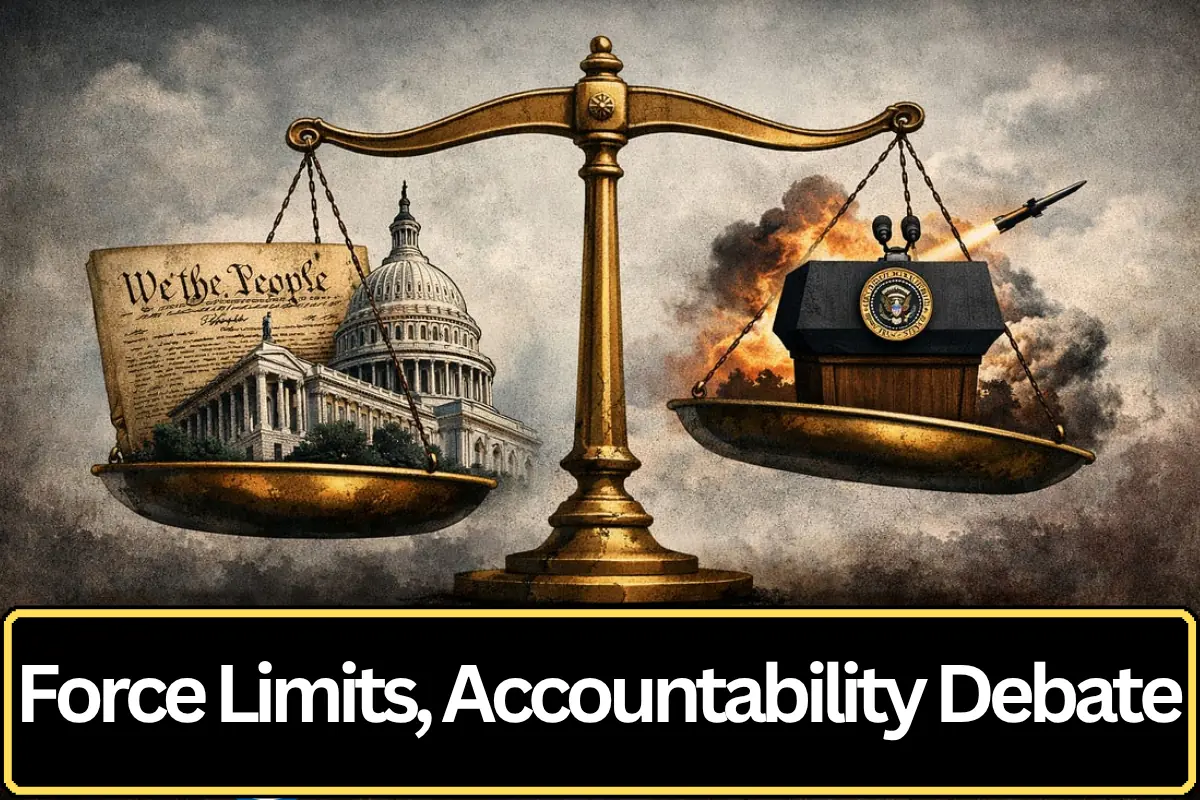
Debate Intensifies on Constitutional Constraints Over Use of Force
A renewed debate is emerging among legal scholars and political analysts over whether constitutional systems impose effective limits on governments’ use of military force against other states, raising broader questions about political accountability, democratic oversight, and the balance of power. The discussion has gained prominence in March 2026 amid ongoing global conflicts, where executive decisions on military action are increasingly scrutinized.
The issue centers on how constitutions in democratic systems regulate war powers—specifically, whether elected representatives or executive leaders hold ultimate authority in decisions involving armed force. The debate is being driven by concerns that modern conflicts are often initiated without sufficient legislative approval or public accountability.
Separation of Powers and War Authority
In many constitutional systems, the authority to declare war or approve military action is divided between the executive and legislative branches. Traditionally, parliaments or congresses are granted the power to authorize war, while executives are tasked with implementing defense and foreign policy decisions.
However, experts note that in practice, executives often exercise broad discretion in deploying military force, sometimes bypassing formal legislative approval. This shift has prompted questions about whether constitutional safeguards are being effectively upheld.
Legal scholars argue that the concentration of decision-making power in the executive branch can undermine democratic principles, particularly when military actions are undertaken without transparent debate or consent from elected representatives.
Challenges in Modern Warfare Context
The nature of modern warfare has further complicated the issue. Unlike traditional wars, contemporary conflicts often involve rapid responses, covert operations, and non-state actors, making it difficult to apply conventional legal frameworks.
Governments frequently justify unilateral action on the grounds of national security and urgency, arguing that delays caused by legislative processes could compromise strategic objectives. Critics, however, contend that such justifications risk eroding constitutional checks and balances.
The evolving security environment has led to calls for updated legal interpretations that address the realities of modern conflict while preserving democratic accountability.
Role of Political Representation
Central to the debate is the role of political representation in decisions involving the use of force. Democracies are built on the principle that elected representatives reflect the will of the people, particularly in matters of national importance such as war.
When legislative bodies are excluded from decision-making processes, critics argue that citizens are effectively denied a voice in actions that can have far-reaching consequences, including loss of life and economic impact.
Supporters of stronger legislative oversight emphasize that involving parliaments ensures broader deliberation and helps prevent misuse of military power.
Judicial Oversight and Legal Limits
Another aspect of the debate concerns the role of the judiciary in reviewing decisions related to the use of force. In some systems, courts have the authority to assess whether executive actions comply with constitutional provisions.
However, courts often exercise restraint in such cases, citing the political nature of foreign policy and national security decisions. This has led to criticism that judicial oversight is insufficient to act as a meaningful check on executive power.
Legal experts suggest that clearer constitutional provisions or legislative frameworks may be needed to define the scope of permissible action and enhance accountability.
International Law and Domestic Frameworks
The relationship between international law and domestic constitutional systems also plays a key role in shaping the debate. International norms, including those governing the use of force, are intended to provide a framework for state behavior.
However, the extent to which these norms are incorporated into domestic law varies across countries. In some cases, governments may act in ways that align with domestic authority but raise questions under international legal standards.
This intersection highlights the complexity of regulating military action in a globalized world, where legal obligations operate at multiple levels.
Implications for Democratic Governance
The debate over constitutional limits on the use of force has significant implications for democratic governance. At its core, the issue reflects broader concerns about transparency, accountability, and the distribution of power within political systems.
Critics warn that unchecked executive authority in military matters can lead to overreach and weaken democratic institutions. They argue that robust oversight mechanisms are essential to maintaining public trust and ensuring responsible decision-making.
Proponents of executive flexibility, on the other hand, emphasize the need for swift and decisive action in response to security threats, suggesting that excessive constraints could hinder effective governance.
Calls for Reform and Clarification
In response to these concerns, some experts have called for reforms aimed at clarifying the roles of different branches of government in decisions involving the use of force. Proposals include strengthening legislative approval requirements, enhancing transparency, and establishing clearer legal standards.
Others advocate for greater public engagement in discussions about military policy, arguing that informed debate is essential for democratic accountability. These efforts aim to strike a balance between security needs and constitutional principles.
The debate is also influencing academic and policy discussions, with growing interest in comparative analysis of how different countries manage war powers.
Global Context and Ongoing Relevance
The relevance of this debate has been underscored by ongoing conflicts around the world, where decisions to use force continue to shape international relations and domestic politics. As geopolitical tensions persist, questions about authority and accountability are likely to remain central.
Observers note that the outcomes of these discussions could have lasting implications for how democracies approach military action in the future, particularly in an era of complex and rapidly evolving threats.
The interplay between legal frameworks, political dynamics, and security considerations will continue to define the contours of this issue.
Conclusion
The growing debate over constitutional limits on the use of force reflects broader concerns about the balance of power and the role of democratic institutions in critical decision-making processes.
Current Status
Discussions on war powers and political accountability continue to gain traction globally, with calls for clearer constitutional safeguards and stronger oversight mechanisms remaining at the forefront.