
DJI Launches Avata 360 Drone, Aiming to Redefine Immersive FPV Flying Experience
 Taniska Kumari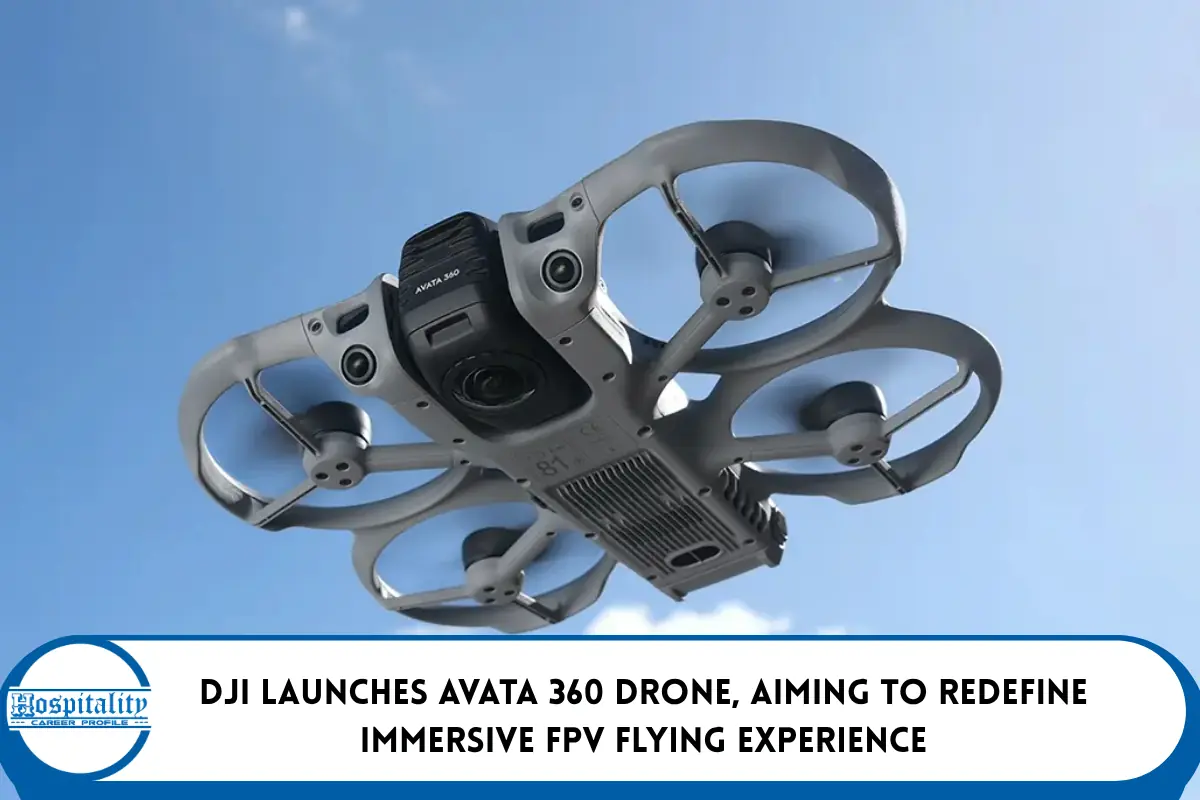
DJI has launched its new Avata 360 drone in 2026, introducing an advanced first-person view (FPV) flying experience with full 360-degree immersive capabilities, as the company seeks to expand its footprint in the consumer and professional drone market. The launch, announced globally, highlights DJI’s push toward next-generation aerial imaging and interactive flight technology designed for content creators, filmmakers, and drone enthusiasts.
New Benchmark in FPV Drone Technology
The Avata 360 represents a significant evolution in FPV drone design, combining immersive flight control with 360-degree video capture. Unlike traditional drones that rely on fixed camera angles, the new system enables users to capture footage in all directions simultaneously, offering greater flexibility in post-production and storytelling.
DJI stated that the drone is designed to deliver a more engaging and intuitive flying experience, allowing pilots to feel fully immersed in their environment through enhanced visual feedback and control responsiveness.
Immersive 360-Degree Video Capabilities
One of the standout features of the Avata 360 is its ability to record spherical video, enabling users to capture complete surroundings in a single flight. This capability allows creators to reframe shots after recording, eliminating the need for multiple takes and complex camera setups.
The 360-degree capture system is expected to appeal to filmmakers, vloggers, and virtual reality content creators who require dynamic and flexible footage for immersive storytelling experiences.
Enhanced FPV Flying Experience
The drone integrates advanced FPV technology that provides real-time video transmission directly to the pilot’s headset or controller display. This setup offers a first-person perspective of the flight, making navigation more intuitive and engaging.
DJI has also improved latency and signal stability, ensuring smoother control even in complex environments. These enhancements are aimed at both beginners and experienced pilots seeking precision and reliability during flight.
Design and Performance Upgrades
The Avata 360 features a compact and durable design optimized for agile movement and high-speed flight. The drone is equipped with upgraded motors and flight stabilization systems, enabling it to perform complex maneuvers while maintaining video quality.
Battery efficiency has also been improved, allowing for longer flight times compared to previous models. This enables users to capture extended footage without frequent interruptions, a key factor for professional applications.
Safety and Navigation Features
Safety remains a priority in the Avata 360, with DJI incorporating advanced obstacle detection and avoidance systems. These features help prevent collisions and enhance flight safety, particularly in challenging environments such as urban areas or indoor spaces.
The drone also includes automated return-to-home functionality and real-time monitoring systems, providing additional layers of security for users during operation.
Targeting Content Creators and Professionals
DJI is positioning the Avata 360 as a versatile tool for a wide range of users, from hobbyists to professional filmmakers. The combination of immersive FPV control and 360-degree capture is expected to open new creative possibilities in industries such as media production, advertising, and virtual reality.
The drone’s ability to simplify complex शूटिंग processes could make it a valuable asset for creators looking to produce high-quality content efficiently.
Growing Demand for Immersive Content
The launch comes at a time when demand for immersive and interactive content is rising, driven by advancements in virtual reality and digital media platforms. Consumers are increasingly seeking experiences that go beyond traditional video formats, creating opportunities for technologies like 360-degree drones.
DJI’s latest offering reflects this shift, aiming to provide tools that align with evolving content consumption trends.
Competitive Landscape in Drone Market
The global drone market continues to grow, with manufacturers introducing new features to differentiate their products. DJI remains a dominant player in the sector, and the Avata 360 is part of its strategy to maintain leadership by focusing on innovation and user experience.
Competitors are also exploring immersive technologies, making the segment increasingly competitive as companies race to deliver advanced capabilities to consumers.
Challenges and Considerations
Despite its advanced features, the adoption of 360-degree FPV drones may face challenges, including higher costs, learning curves for new users, and regulatory restrictions in certain regions. Drone usage remains subject to local laws, which can impact how and where such devices are operated.
Additionally, the large حجم of 360-degree video files may require significant storage and processing capabilities, particularly for professional users.
Future of FPV and 360 Drone Technology
Industry experts believe that the integration of FPV and 360-degree imaging represents a key direction for the future of drone technology. As hardware and software continue to improve, these systems are expected to become more accessible and widely adopted.
DJI is likely to continue investing in research and development to refine its offerings and expand its product lineup in response to market demand.
Conclusion
The launch of the Avata 360 underscores DJI’s commitment to innovation in drone technology, as it introduces new possibilities for immersive aerial content creation and sets the stage for further advancements in FPV flying experiences.