Dr Reddy’s Receives US FDA Inspection Report for Srikakulam API Facility, Signals Regulatory Progress
Dr Reddy’s Laboratories has received a US FDA inspection report for its Srikakulam API plant, marking a key regulatory development for the facility.
 Akanksha jain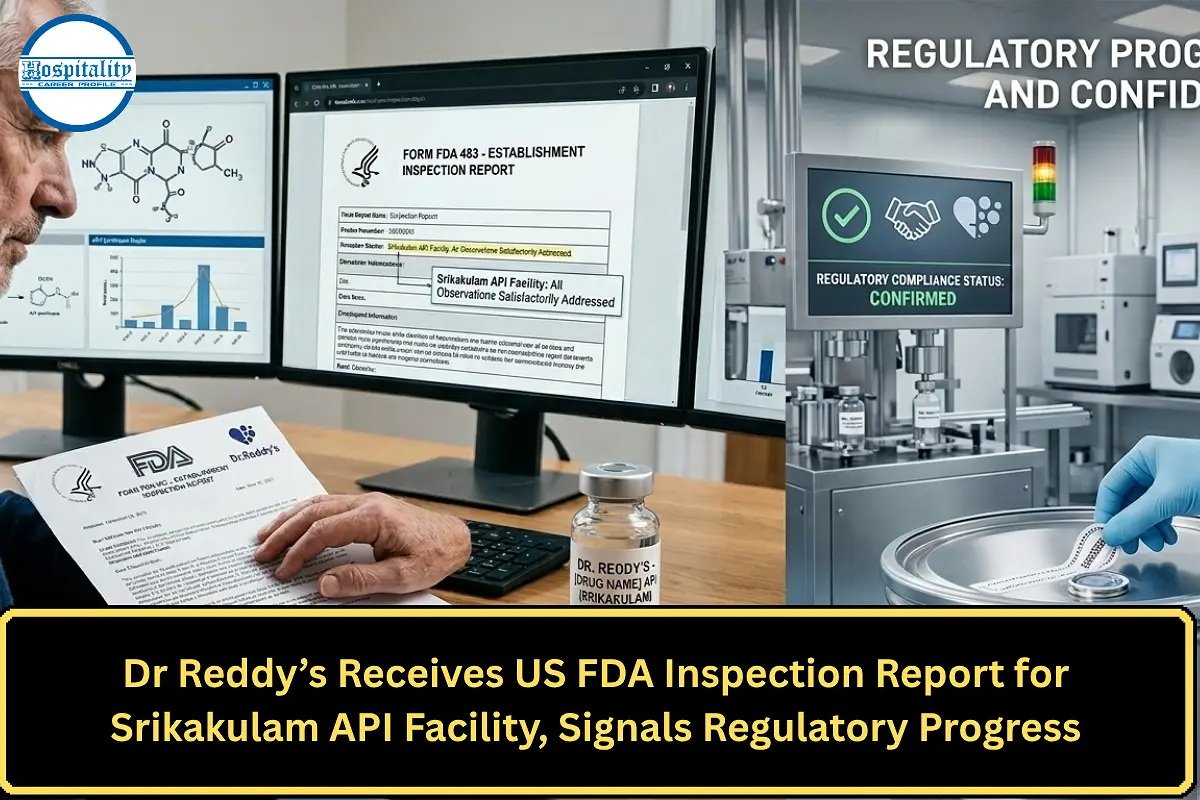
Dr Reddy’s Receives US FDA Inspection Report for Srikakulam API Facility, Signals Regulatory Progress
Dr. Reddy’s Laboratories has received an inspection report from the United States Food and Drug Administration (US FDA) for its active pharmaceutical ingredient (API) manufacturing facility located in Srikakulam, India, the company confirmed in a regulatory update in April 2026. The development follows a recent inspection by the US regulator and provides an update on the compliance status of the plant, which plays a key role in the company’s global supply chain.
The inspection report, issued after the completion of the FDA’s review, outlines observations related to manufacturing practices and quality systems at the facility. While the receipt of the report marks progress in the regulatory process, the company is expected to address any observations highlighted by the agency to ensure continued compliance with international standards.
Overview of the Srikakulam Facility
The Srikakulam plant is one of Dr. Reddy’s key API manufacturing sites, supplying pharmaceutical ingredients for a range of generic and specialty medicines distributed in global markets, including the United States. Facilities such as this are subject to periodic inspections by international regulators to verify adherence to current Good Manufacturing Practices (cGMP).
Maintaining compliance with these standards is critical for pharmaceutical companies, as it ensures the quality, safety, and efficacy of medicines produced for patients worldwide. Any regulatory observations identified during inspections must be addressed promptly to avoid potential disruptions in production or supply.
The outcome of such inspections can also influence a company’s ability to secure approvals for new products and maintain its presence in regulated markets.
Details of the FDA Inspection Process
The US FDA conducts routine and for-cause inspections of pharmaceutical manufacturing facilities to assess compliance with regulatory requirements. These inspections evaluate various aspects of operations, including production processes, quality control systems, documentation practices, and data integrity.
Following an inspection, the agency may issue a Form 483 outlining observations if any deficiencies are identified. Companies are then required to respond with corrective and preventive action plans. The final inspection report reflects the regulator’s review of these responses and may include further recommendations.
In this case, the issuance of the inspection report indicates that the review process has progressed, although the company must continue engaging with the regulator to address any remaining concerns.
Regulatory Significance for Dr Reddy’s
The receipt of the inspection report is an important step for Dr. Reddy’s as it works to maintain regulatory compliance across its manufacturing network. The company has a significant presence in regulated markets such as the United States, where adherence to FDA standards is essential for sustaining business operations.
Regulatory outcomes at key facilities can have broader implications for the company’s product pipeline, including approvals for generic drugs and active ingredients. Positive inspection results can support business continuity, while unresolved issues may lead to restrictions or delays.
Industry analysts note that ongoing compliance is particularly important in the competitive generics market, where supply reliability and regulatory track record are critical factors.
Company Response and Next Steps
Dr. Reddy’s is expected to review the observations detailed in the inspection report and implement necessary corrective actions. These may include improvements in manufacturing processes, quality assurance systems, or documentation practices to align with regulatory expectations.
The company will likely continue to engage with the FDA to provide updates on its remediation efforts and demonstrate compliance. Timely resolution of observations is essential to avoid potential escalation to more serious regulatory actions, such as warning letters or import alerts.
Pharmaceutical companies typically prioritize swift and thorough responses to inspection findings to maintain regulatory standing and operational stability.
Impact on Operations and Supply Chain
The Srikakulam facility is a critical component of Dr. Reddy’s manufacturing infrastructure, and its regulatory status can influence the company’s global supply chain. Ensuring uninterrupted operations at the plant is important for meeting demand in key markets.
Any delays in addressing regulatory observations could affect production schedules and supply commitments. Conversely, successful resolution of issues can reinforce the reliability of the company’s manufacturing network and support future growth.
The pharmaceutical industry places a strong emphasis on supply chain resilience, particularly in the context of increasing global demand for medicines.
Broader Industry Context
Regulatory inspections by agencies such as the US FDA are a routine part of the pharmaceutical industry, reflecting the high standards required for drug manufacturing. Indian pharmaceutical companies, which are major suppliers of generic medicines globally, frequently undergo such inspections as part of their international operations.
The ability to consistently meet regulatory expectations is a key differentiator in the industry, influencing partnerships, market access, and investor confidence. Companies that maintain strong compliance records are better positioned to capitalize on growth opportunities in regulated markets.
Recent years have seen increased scrutiny of manufacturing practices, with regulators placing greater emphasis on data integrity and quality management systems.
Investor and Market Perspective
Regulatory updates related to FDA inspections are closely monitored by investors and market participants, as they can impact a company’s financial performance and outlook. The receipt of an inspection report is generally viewed as a procedural milestone, but the nature of the observations and the company’s response are critical factors.
Positive outcomes or timely resolutions can support investor confidence, while prolonged regulatory challenges may raise concerns about operational risks. As a result, transparency and effective communication are important in managing stakeholder expectations.
Dr. Reddy’s continued engagement with the FDA will be closely watched as the company works to address the findings and maintain compliance.
Ensuring Long-Term Compliance
For pharmaceutical manufacturers, maintaining long-term compliance with regulatory standards requires ongoing investment in quality systems, employee training, and process improvements. Continuous monitoring and internal audits are essential to identify and address potential issues before they are flagged by regulators.
Companies are increasingly adopting advanced technologies, including digital quality management systems, to enhance compliance and operational efficiency. These measures can help reduce the risk of regulatory observations and improve overall performance.
Strengthening compliance frameworks is a strategic priority for companies operating in highly regulated markets.
Conclusion
The receipt of the US FDA inspection report for Dr. Reddy’s Srikakulam API facility marks a key step in the regulatory review process, with the company now focused on addressing observations and ensuring continued compliance with global manufacturing standards.