New Research Suggests Early Kidney Disease May Be Missed Even When Test Results Appear Normal
New research suggests that early kidney disease may go undetected even when standard kidney tests appear normal, highlighting the need for more personalized screening methods.
 Akanksha jain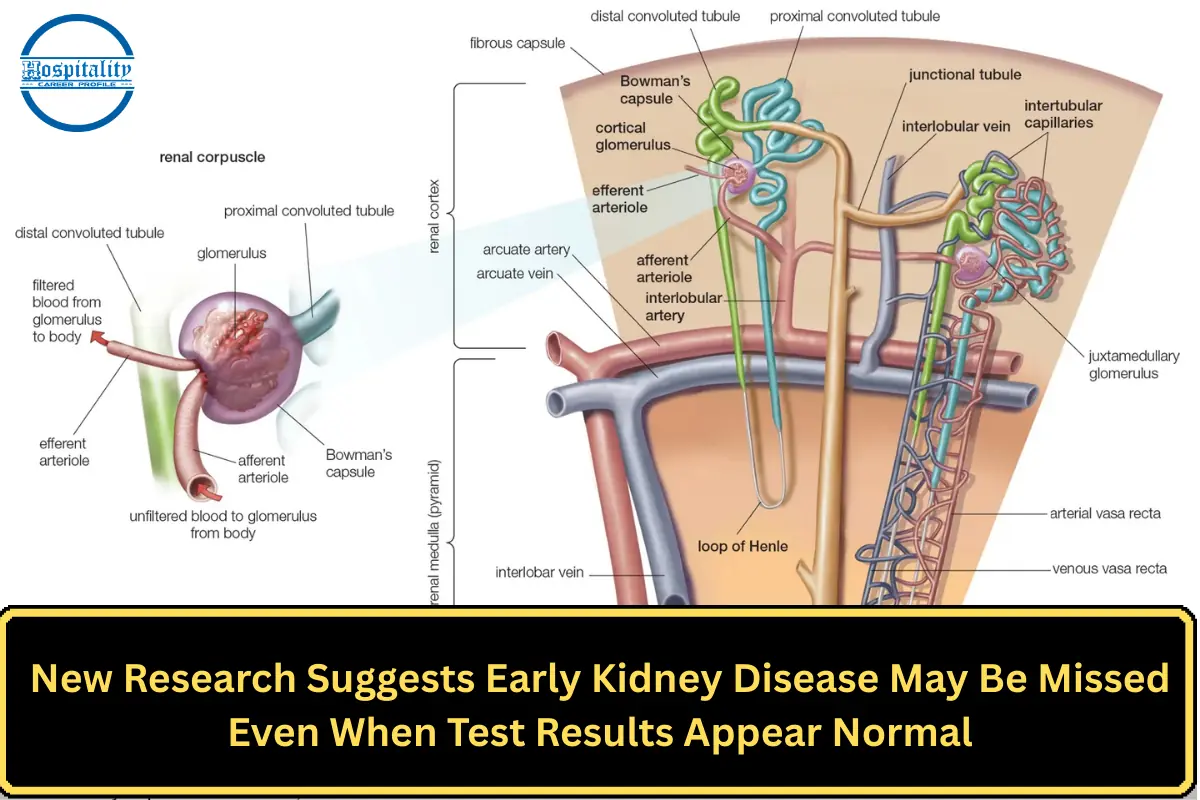
Early signs of kidney disease may be going unnoticed in many patients, even when routine medical tests suggest that kidney function is within a “normal” range, according to new research.
The study highlights a potential gap in how doctors assess kidney health and suggests that more personalized approaches to interpreting test results could help identify individuals at risk earlier.
The challenge of detecting early kidney disease is that it
often develops slowly and without noticeable symptoms, which means many patients are not diagnosed until significant damage has already occurred.
Researchers say that current medical assessments rely heavily on a measurement called estimated glomerular filtration rate (eGFR), which indicates how well the kidneys filter waste from the blood. However, a single “normal” value may not fully reflect an individual’s risk.
The new research suggests that kidney function values considered normal overall could still signal elevated risk if they are unusually low compared with those of others of the same age and sex.
Why Current Tests May Miss Risk
In many cases, clinicians use a fixed threshold to determine whether kidney function is healthy. But the study’s findings show that people whose kidney function falls significantly below the average for their demographic group may face a higher likelihood of developing kidney failure later in life—even if their results remain within standard limits.
For example, someone with a seemingly healthy test score could still have an elevated long‑term risk if that score places them in a lower percentile compared with peers of the same age and sex.
Researchers also found that many patients with slightly reduced kidney function do not receive additional follow‑up testing, such as urine albumin checks, which can detect early kidney damage.
A New Tool to Help Doctors Identify Risk Earlier
To address this issue, scientists developed population‑based reference charts that allow doctors to compare a patient’s kidney function with typical values for people of the same demographic group.
The team also introduced an online tool designed to help clinicians interpret test results more accurately and identify individuals who may benefit from earlier monitoring or preventive care.
Researchers believe this approach could help close a major diagnostic gap, enabling doctors to intervene sooner and potentially slow the progression of kidney disease before serious damage occurs.
A Growing Global Health Concern
Kidney disease is a major and growing global health challenge. Experts estimate that between 10% and 15% of adults worldwide are affected, and the condition is projected to become one of the leading causes of years of life lost by 2040.
By identifying risk earlier and improving screening strategies, researchers hope to improve long‑term outcomes for millions of people who may otherwise develop kidney disease without warning.