Election Commission Allocates Digital Vouchers for Free Broadcast to Political Parties Ahead of Assembly Polls
The Election Commission of India has introduced digital vouchers for political parties, enabling free broadcast and telecast on Doordarshan and All India Radio ahead of upcoming assembly elections.
 SANJANA DUTTA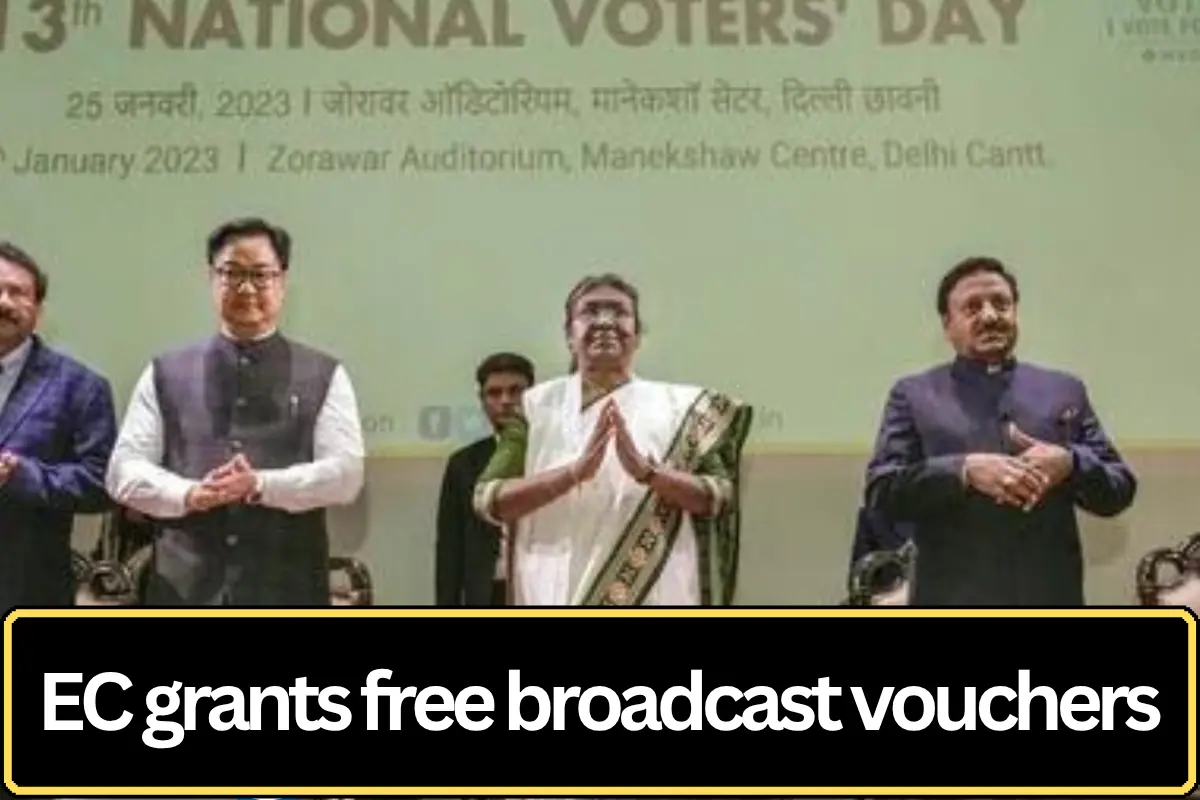
ECI Introduces Digital Voucher System for Political Broadcasts
The Election Commission of India (ECI) has announced the allocation of digital vouchers to recognized political parties, allowing them free access to broadcast and telecast time on state-run media platforms Doordarshan and All India Radio ahead of upcoming assembly elections. The move, unveiled on March 23, 2026, aims to ensure equitable media access, promote fair campaigning, and strengthen transparency in the electoral process across multiple states preparing for polls.
The initiative is part of the ECI’s broader efforts to modernize election practices and maintain a level playing field for political parties, regardless of their financial capacity or media reach.
Ensuring Equal Access to Public Broadcasting
Under the new system, recognized national and state political parties will receive digital vouchers that can be used to secure designated airtime slots on Doordarshan and All India Radio. These slots will enable parties to broadcast campaign messages, policy outlines, and appeals directly to voters.
The ECI emphasized that the allocation of airtime will follow established guidelines, ensuring fairness and proportional representation based on party recognition and electoral performance. The introduction of digital vouchers replaces earlier manual or less streamlined systems, making the process more efficient and transparent.
Officials noted that public broadcasters remain a critical platform for reaching diverse audiences, including rural and remote populations where access to private media or digital platforms may be limited.
Focus on Transparency and Fair Campaigning
The digital voucher system is designed to enhance transparency in political advertising by standardizing access to public broadcasting resources. By providing free airtime, the ECI seeks to reduce disparities in campaign spending and prevent undue influence of money in electoral communication.
The Commission reiterated its commitment to conducting free and fair elections, stating that equitable media access is a cornerstone of democratic processes. The move is also expected to reduce reliance on expensive private media campaigns, particularly benefiting smaller and regional parties.
In addition, the ECI has outlined strict guidelines for content broadcast under the scheme, ensuring compliance with the Model Code of Conduct and other regulatory frameworks governing election campaigns.
Integration with Digital Election Management Systems
The introduction of digital vouchers reflects the ECI’s ongoing push toward digitization of election management processes. The vouchers are expected to be integrated with existing digital platforms used by the Commission, enabling seamless allocation, tracking, and utilization of broadcast slots.
This integration is likely to improve administrative efficiency and minimize disputes related to airtime allocation. Political parties will be able to access and manage their allotted slots through digital interfaces, enhancing convenience and accountability.
The move aligns with broader government efforts to leverage technology in governance, including electoral processes, to improve transparency and service delivery.
Role of Doordarshan and All India Radio
Doordarshan and All India Radio, as public service broadcasters, play a vital role in disseminating information during elections. Their extensive reach across urban and rural areas makes them a key channel for political communication.
By utilizing these platforms, the ECI aims to ensure that voters receive direct information from political parties, helping them make informed decisions. The availability of free airtime is particularly significant in regions where alternative media options are limited.
Both broadcasters are expected to coordinate closely with the ECI to schedule and manage the telecast of campaign content, ensuring adherence to guidelines and smooth execution of the initiative.
Impact on Political Campaign Strategies
The allocation of digital vouchers is expected to influence campaign strategies, with parties likely to place greater emphasis on crafting impactful broadcast messages. Access to free airtime provides an opportunity to reach a wide audience without incurring additional costs.
Political analysts suggest that this could lead to more policy-focused communication, as parties utilize the platform to present their agendas and connect with voters. The standardized format may also encourage more structured and disciplined campaign messaging.
However, parties will still need to complement these broadcasts with ground-level campaigning and digital outreach to maximize voter engagement.
Challenges and Implementation Considerations
While the initiative has been widely welcomed, its implementation will require careful monitoring to ensure fairness and effectiveness. Key challenges include managing scheduling conflicts, ensuring content compliance, and addressing any technical issues that may arise.
The ECI is expected to establish clear protocols for resolving disputes and maintaining transparency throughout the process. Continuous monitoring will be essential to prevent misuse or violations of election norms.
Additionally, ensuring that all parties are adequately informed about the system and its usage will be crucial for its success.
Broader Electoral Reforms Context
The introduction of digital vouchers is part of a series of reforms aimed at strengthening India’s electoral framework. The ECI has been actively exploring ways to enhance transparency, reduce costs, and improve voter engagement through technological innovations.
Previous initiatives have included digital voter services, improved monitoring mechanisms, and stricter enforcement of campaign regulations. The voucher system adds another dimension to these efforts by addressing media access and campaign equity.
Experts believe that such measures can contribute to a more inclusive and balanced electoral process, ensuring that all parties have an opportunity to communicate their messages effectively.
Outlook Ahead of Assembly Elections
As assembly elections approach in several states, the implementation of the digital voucher system is expected to play a significant role in shaping campaign dynamics. Political parties are likely to begin preparations to utilize their allotted airtime effectively.
The initiative also reflects the ECI’s proactive approach to adapting to evolving media landscapes and addressing emerging challenges in election management. By leveraging public broadcasting platforms, the Commission aims to uphold democratic principles and ensure fair competition.
Observers note that the success of the system could influence future electoral practices, potentially leading to further innovations in campaign regulation and media access.
Conclusion
The ECI’s decision to allocate digital vouchers for free broadcast marks a significant step toward enhancing transparency, fairness, and inclusivity in India’s electoral process.
Current Status
The digital voucher system has been announced and is set to be implemented ahead of upcoming assembly elections, with political parties preparing to utilize the allotted broadcast time.