Eli Lilly to Acquire Boston’s Kelonia for Up to $7 Billion to Expand Cancer Pipeline
Eli Lilly plans to acquire Boston-based Kelonia for up to $7 billion to strengthen its cancer treatment pipeline and expand oncology research capabilities.
 Akanksha jain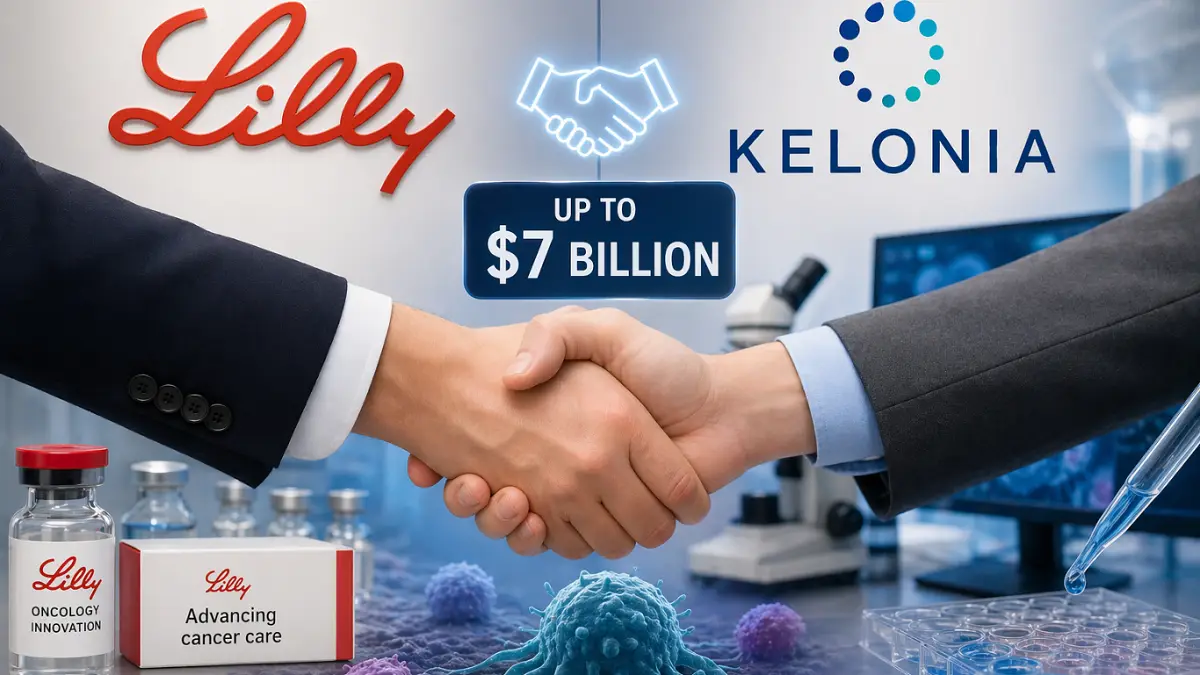
Eli Lilly has announced plans to acquire Boston-based biotech firm Kelonia for up to $7 billion in April 2026, aiming to strengthen its oncology pipeline and expand capabilities in developing targeted cancer therapies as pharmaceutical companies intensify investments in advanced cancer treatment technologies.
The deal includes an upfront payment along with additional milestone-based payouts tied to development, regulatory, and commercial progress, reflecting a growing trend of high-value acquisitions in the oncology segment where innovation remains a key driver of growth.
Acquisition Aims to Strengthen Oncology Portfolio
The proposed acquisition is focused on enhancing Eli Lilly’s presence in cancer research by integrating Kelonia’s technology and pipeline into its broader oncology strategy. The move aligns with the company’s efforts to expand its portfolio of targeted therapies designed to address complex and difficult-to-treat cancers.
Kelonia is known for its work in developing advanced therapeutic platforms, particularly in areas that involve precision medicine approaches. These technologies aim to target cancer cells more effectively while minimizing damage to healthy tissue, an ongoing challenge in oncology treatment.
By acquiring Kelonia, Eli Lilly seeks to accelerate the development of next-generation cancer therapies and strengthen its competitive position in a rapidly evolving market.
Focus on Innovation in Cancer Treatment
The oncology sector has seen significant investment in recent years, driven by advances in molecular biology, immunotherapy, and gene-based treatments. Pharmaceutical companies are increasingly focusing on therapies that target specific genetic and cellular mechanisms involved in cancer progression.
Kelonia’s capabilities are expected to complement Eli Lilly’s existing research efforts by providing access to novel platforms that can be applied across multiple cancer types. These technologies may support the development of more personalized treatment options, improving outcomes for patients with complex conditions.
The acquisition reflects the broader shift toward precision oncology, where treatments are tailored based on individual patient profiles and tumor characteristics.
Growing Trend of High-Value Pharma Deals
The transaction highlights the continued momentum in mergers and acquisitions within the pharmaceutical industry, particularly in high-growth therapeutic areas such as oncology. Companies are increasingly pursuing strategic deals to access innovative technologies and expand their pipelines.
High-value acquisitions allow large pharmaceutical firms to integrate cutting-edge research from smaller biotech companies, accelerating drug development timelines and enhancing their ability to bring new therapies to market.
The structure of the deal, which includes milestone-based payments, reflects a common approach in the industry, balancing upfront investment with performance-based incentives tied to clinical and commercial success.
Implications for Cancer Research and Patients
Investments in oncology research are critical as cancer continues to be a leading cause of morbidity and mortality worldwide. Advances in treatment have improved survival rates for certain cancers, but significant unmet needs remain, particularly for aggressive and rare forms of the disease.
The integration of innovative platforms from biotech firms like Kelonia has the potential to accelerate the development of new therapies that target previously untreatable cancer pathways. Such progress could contribute to improved patient outcomes and expanded treatment options.
However, the success of the acquisition will depend on the outcomes of ongoing and future clinical trials, as well as regulatory approvals required before new therapies can be made widely available.
Next Steps and Industry Outlook
Following the announcement, the acquisition will proceed through regulatory and closing processes, after which Eli Lilly is expected to integrate Kelonia’s operations into its research and development framework. The focus will be on advancing pipeline candidates and leveraging combined expertise to drive innovation.
The deal underscores the importance of strategic partnerships and acquisitions in shaping the future of cancer treatment, as pharmaceutical companies continue to invest heavily in research aimed at addressing complex diseases.
As the oncology landscape evolves, such collaborations are likely to play a central role in bringing new therapies to patients, supporting ongoing efforts to improve survival and quality of life for individuals affected by cancer.