Elon Musk Pushes Tesla Toward Robot Workforce as Silicon Valley Accelerates Automation Race
Elon Musk is accelerating Tesla’s push into robotics, aiming to build a robot workforce as Silicon Valley companies ramp up investments in automation technologies.
 RUKAIYA KADIVAL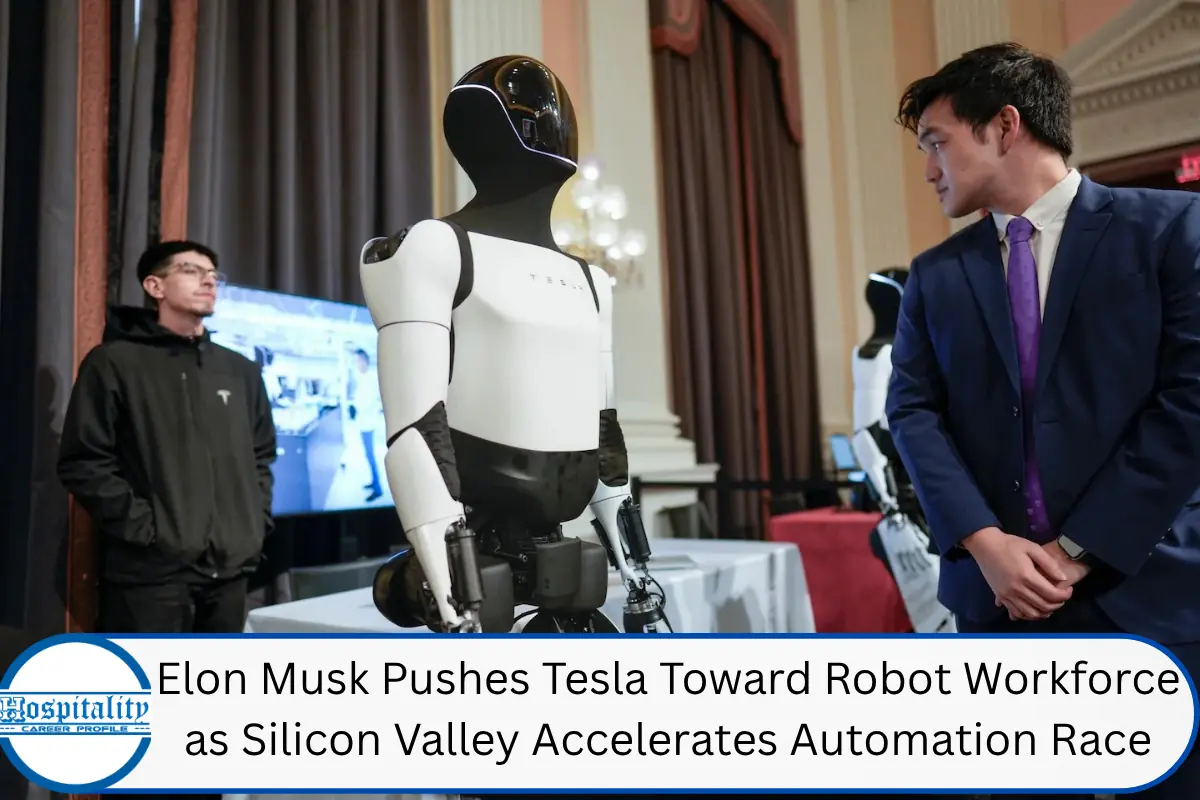
Elon Musk Pushes Tesla Toward Robot Workforce as Silicon Valley Accelerates Automation Race
Elon Musk is accelerating Tesla’s efforts to develop a large-scale robot workforce, signaling a major shift in the company’s long-term strategy as Silicon Valley firms intensify their focus on automation and artificial intelligence, according to recent reports. The push, gaining momentum in 2026, highlights Tesla’s ambition to expand beyond electric vehicles into robotics, with potential implications for industries ranging from manufacturing to logistics.
Tesla’s initiative centers on its humanoid robot program, which aims to create machines capable of performing repetitive and labor-intensive tasks. The company has been investing heavily in artificial intelligence, sensors, and hardware to build robots that can operate efficiently in real-world environments. Musk has indicated that such robots could eventually be deployed at scale, transforming productivity and reshaping the workforce.
The development comes as technology companies across Silicon Valley ramp up investments in robotics and automation, viewing the sector as a key driver of future economic growth. The convergence of AI advancements and improved hardware capabilities has accelerated progress, making large-scale deployment of robots increasingly feasible.
Tesla’s Vision for a Robot Workforce
Tesla’s humanoid robot project represents a significant evolution in the company’s technological ambitions. Initially known for its electric vehicles, Tesla has expanded its focus to include artificial intelligence and robotics, leveraging its expertise in software, hardware integration, and data processing.
The robots are designed to perform tasks that are considered dangerous, repetitive, or undesirable for humans. These could include assembly line work, warehouse operations, and basic service roles. By automating such functions, Tesla aims to improve efficiency while reducing reliance on human labor in certain areas.
Musk has suggested that the long-term potential of robotics could surpass that of electric vehicles, positioning the technology as a central pillar of Tesla’s future growth. The company’s strategy involves continuous iteration, with improvements in mobility, dexterity, and decision-making capabilities expected over time.
Silicon Valley Joins the Automation Race
Tesla is not alone in pursuing robotics and automation. Companies across Silicon Valley, including major technology firms and startups, are investing in similar initiatives, creating a competitive landscape focused on innovation and scalability.
The increasing interest in robotics is driven by several factors, including labor shortages, rising costs, and the need for greater efficiency in industrial operations. Advances in artificial intelligence have enabled robots to perform more complex tasks, expanding their potential applications.
Industry analysts note that the race to develop advanced robotics is becoming as significant as the competition in artificial intelligence, with companies seeking to establish leadership in a rapidly evolving market.
Technological Foundations Driving Progress
The rapid progress in robotics is supported by advancements in key technologies such as machine learning, computer vision, and sensor systems. These innovations allow robots to perceive their environment, make decisions, and adapt to changing conditions.
Tesla’s approach leverages its existing AI capabilities, particularly those developed for autonomous driving. By applying similar technologies to robotics, the company aims to accelerate development and improve performance.
High-performance computing and data processing also play a crucial role, enabling robots to analyze large amounts of information in real time. This capability is essential for tasks that require precision and adaptability.
Implications for the Workforce
The expansion of robotics raises important questions about the future of work. While automation has the potential to increase productivity and reduce costs, it may also lead to shifts in employment patterns, particularly in sectors that rely on manual labor.
Experts suggest that while some jobs may be replaced by automation, new roles could emerge in areas such as robotics maintenance, programming, and system management. The transition is expected to require significant investment in education and training to equip workers with the necessary skills.
Musk has emphasized that robots should complement human workers rather than replace them entirely, highlighting the potential for collaboration between humans and machines.
Economic and Industry Impact
The adoption of robotics at scale could have far-reaching economic implications, influencing productivity, cost structures, and global competitiveness. Companies that successfully integrate automation into their operations may gain a significant advantage in terms of efficiency and output.
Industries such as manufacturing, logistics, healthcare, and retail are likely to be among the earliest adopters of advanced robotics. The technology could streamline operations, reduce errors, and enable new business models.
However, the pace of adoption will depend on factors such as cost, regulatory frameworks, and societal acceptance. Governments and organizations are likely to play a role in shaping the deployment of robotics through policies and guidelines.
Challenges and Risks
Despite the potential benefits, the development and deployment of robotics face several challenges. Technical limitations, such as achieving human-like dexterity and decision-making, remain significant hurdles.
There are also concerns about safety, ethics, and the potential misuse of advanced robotics. Ensuring that robots operate reliably and responsibly will be critical to gaining public trust and regulatory approval.
Additionally, the high costs associated with research, development, and production could limit accessibility, particularly for smaller companies.
Future Outlook for Robotics
Looking ahead, the robotics industry is expected to grow rapidly, driven by ongoing advancements in technology and increasing demand for automation. Tesla’s efforts to build a robot workforce highlight the scale of ambition within the sector and the potential for transformative change.
As competition intensifies, companies are likely to accelerate innovation, leading to more sophisticated and capable robots. Collaboration between industry players, research institutions, and governments may also play a role in advancing the technology.
The success of these initiatives will depend on the ability to balance innovation with practical implementation, ensuring that robotics delivers tangible benefits across industries.
Conclusion
Elon Musk’s push to develop a robot workforce at Tesla underscores the growing importance of automation in the global economy, as Silicon Valley intensifies its focus on robotics and artificial intelligence, setting the stage for a new era of technological transformation.