EMA Validates Application to Expand Use of Tryngolza for Severe Hypertriglyceridemia
The EMA has validated an application to expand the use of Tryngolza (olezarsen) for treating severe hypertriglyceridemia, advancing regulatory review in Europe.
 Akanksha jain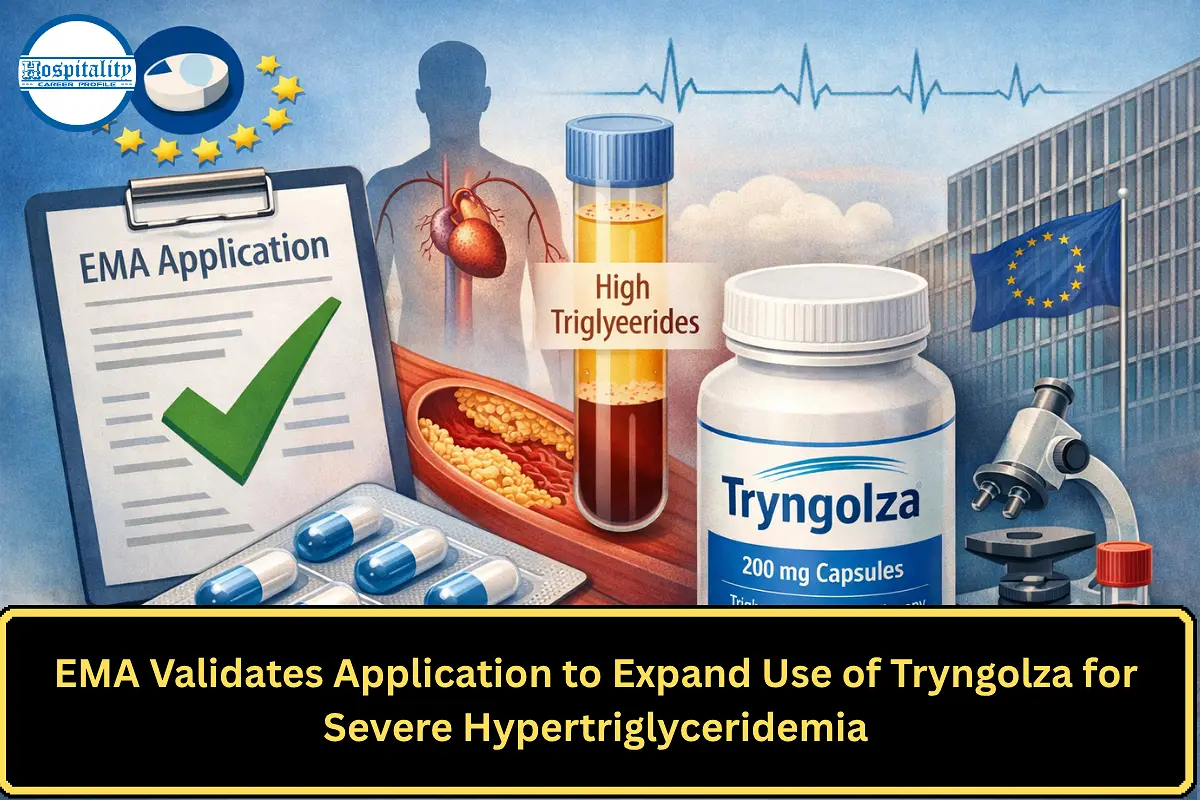
EMA Validates Application to Expand Use of Tryngolza for Severe Hypertriglyceridemia
The European Medicines Agency (EMA) has validated an application seeking to expand the indication of Tryngolza (olezarsen) for the treatment of severe hypertriglyceridemia (SHTG), marking a key step in the regulatory review process, according to an announcement in March 2026. The application aims to broaden access to the therapy for patients with elevated triglyceride levels who face increased risk of cardiovascular complications.
The validation confirms that the application is complete and ready for formal assessment by the EMA’s Committee for Medicinal Products for Human Use (CHMP). If approved, the expanded indication would allow the drug to be used in a wider patient population suffering from severe lipid disorders.
Addressing a High-Risk Condition
Severe hypertriglyceridemia is a condition characterized by extremely high levels of triglycerides in the blood, which can lead to serious health complications such as pancreatitis and increased cardiovascular risk. Patients with this condition often require specialized treatment beyond lifestyle changes and standard lipid-lowering therapies.
Medical experts note that managing triglyceride levels is critical for reducing the risk of acute and long-term complications. However, treatment options remain limited, particularly for patients with genetic or treatment-resistant forms of the condition.
The potential expansion of Tryngolza’s indication is expected to address this unmet medical need by providing an additional therapeutic option.
Mechanism and Therapeutic Potential
Tryngolza (olezarsen) is designed to target specific pathways involved in lipid metabolism, helping to reduce triglyceride levels in the bloodstream. The therapy utilizes advanced molecular approaches to inhibit the production of proteins that regulate lipid levels, offering a targeted strategy for managing the condition.
Clinical studies have demonstrated that the drug can significantly lower triglyceride levels in patients with severe hypertriglyceridemia, including those with underlying genetic disorders. Researchers have also reported improvements in associated biomarkers linked to cardiovascular risk.
These findings have supported the submission for an expanded indication, highlighting the drug’s potential benefits in a broader patient population.
Regulatory Review Process
The EMA’s validation of the application marks the beginning of a comprehensive evaluation process. The CHMP will assess the safety, efficacy, and overall benefit-risk profile of the therapy based on clinical trial data and supporting evidence.
The review process typically involves multiple stages, including scientific assessment, questions to the applicant, and potential requests for additional data. The timeline for a final decision can vary depending on the complexity of the application.
If the CHMP issues a positive opinion, the European Commission will make the final decision on whether to grant approval for the expanded indication across European Union member states.
Implications for Patients and Healthcare Providers
The potential approval of an expanded indication for Tryngolza could have significant implications for patients and healthcare providers. For patients, it may provide access to a new treatment option that offers improved control of triglyceride levels and reduces the risk of complications.
Healthcare providers may benefit from having an additional tool to manage complex lipid disorders, particularly in cases where existing therapies are insufficient. The availability of targeted treatments is increasingly important in addressing individual patient needs.
Experts emphasize that early and effective management of severe hypertriglyceridemia is essential for preventing serious health outcomes.
Growing Focus on Lipid Disorders
The development of therapies like olezarsen reflects a broader focus on addressing lipid disorders and cardiovascular risk factors. Advances in understanding the molecular mechanisms of lipid metabolism have led to the development of more targeted and effective treatments.
Pharmaceutical companies are investing in research to identify new therapeutic targets and improve outcomes for patients with complex metabolic conditions. These efforts are contributing to a more personalized approach to cardiovascular care.
Regulatory agencies are also supporting innovation in this area through streamlined pathways for promising therapies.
Market and Industry Perspective
The global market for lipid-lowering therapies is expanding, driven by the increasing prevalence of cardiovascular diseases and metabolic disorders. New treatments that offer improved efficacy and safety profiles are expected to play a key role in shaping the market.
The potential expansion of Tryngolza’s indication could strengthen its position within this competitive landscape, particularly if it demonstrates clear benefits over existing therapies. Market adoption will depend on factors such as clinical effectiveness, cost, and accessibility.
Industry analysts anticipate continued growth in this segment, supported by ongoing research and innovation.
Challenges and Considerations
Despite the promising outlook, challenges remain in the treatment of severe hypertriglyceridemia. These include variability in patient response, the need for long-term safety data, and ensuring access to advanced therapies.
Regulatory scrutiny will be critical in evaluating the therapy’s safety profile, particularly for chronic use. Healthcare systems will also need to assess cost-effectiveness and integration into existing treatment guidelines.
Addressing these challenges will be essential for maximizing the benefits of new therapies for patients.
Future Outlook
The validation of the application represents an important milestone in the development of Tryngolza, with further progress dependent on the outcome of the EMA’s review. Positive results could pave the way for broader use of the therapy in Europe and potentially other regions.
Ongoing research is expected to continue exploring the drug’s potential in additional indications and patient populations. Advances in lipid management are likely to contribute to improved cardiovascular outcomes in the coming years.
Stakeholders will be closely monitoring the regulatory process and upcoming data releases to assess the therapy’s impact.
Conclusion
The EMA’s validation of the application to expand Tryngolza’s use marks a significant step forward in addressing severe hypertriglyceridemia, with a final decision pending as the regulatory review process continues.