Europe Criticizes U.S. Decision to Ease Russian Oil Sanctions Amid Ukraine War
European leaders have criticized the United States after Washington temporarily eased sanctions on Russian oil shipments, raising concerns about the impact on the Ukraine war and international pressure on Moscow.
 SANJANA DUTTA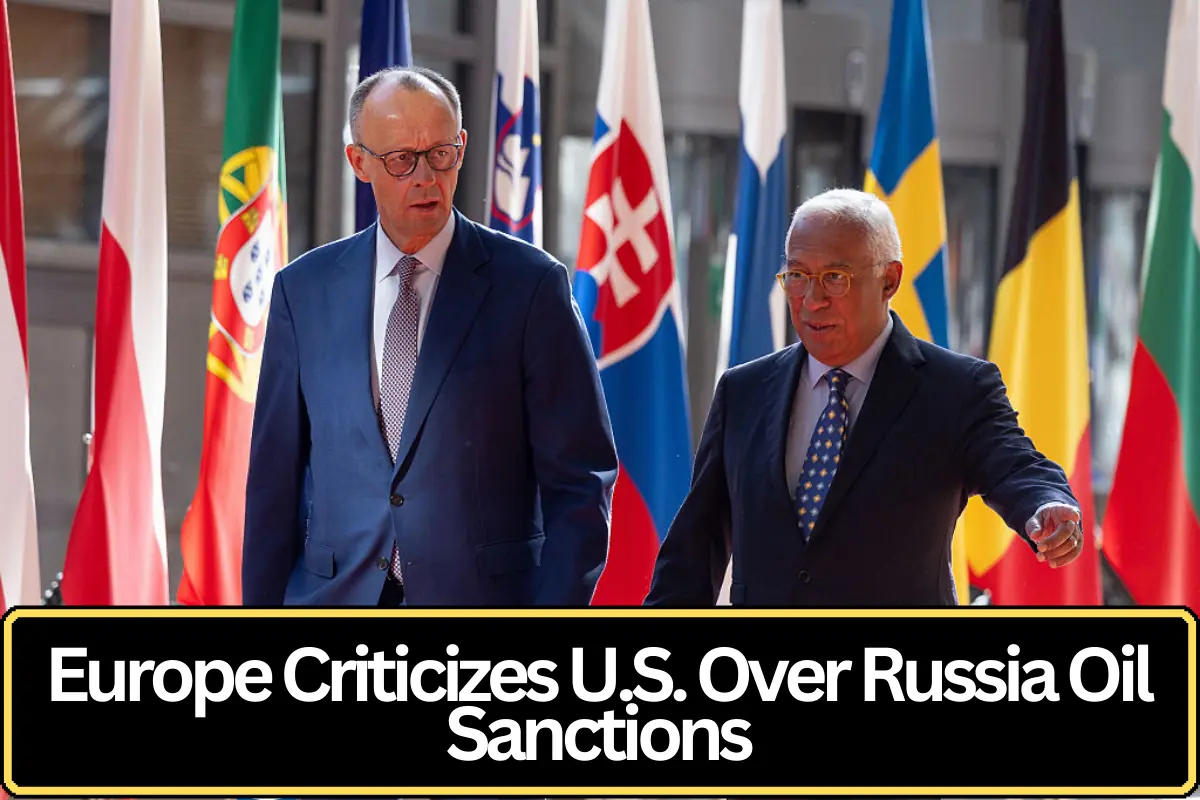
Europe Criticizes U.S. Decision to Ease Russian Oil Sanctions
Several European governments have voiced concern after the United States temporarily eased certain sanctions on Russian oil shipments. The move, designed to stabilize global energy markets, has triggered criticism from European officials who argue that relaxing restrictions could weaken international pressure on Russia during the ongoing war in Ukraine.
The policy adjustment allows previously loaded shipments of Russian oil to be delivered to international buyers. U.S. officials said the decision was made to prevent disruptions in global energy supply and avoid sudden increases in oil prices. However, leaders and policymakers across Europe have warned that any step perceived as easing sanctions could undermine efforts to limit Russia’s economic resources.
The disagreement highlights growing tensions among Western allies over how to balance economic stability with continued pressure on Moscow.
Background of Sanctions on Russian Energy
Since the start of Russia’s full-scale invasion of Ukraine in 2022, Western governments have imposed extensive sanctions targeting Russia’s financial institutions, technology sector, and energy exports. Oil and gas revenue is a central pillar of the Russian economy, and limiting these exports has been a key strategy in the international response to the conflict.
The United States, the European Union, and several allied nations introduced measures designed to reduce Moscow’s income from oil sales. These actions included price caps on Russian crude oil, restrictions on shipping and insurance services, and financial penalties for companies involved in Russian energy trade.
The sanctions aimed to reduce Russia’s ability to finance military operations while avoiding severe disruptions to global energy markets. Policymakers attempted to maintain a delicate balance between economic pressure on Russia and stability in global fuel supply.
U.S. Decision Linked to Energy Market Stability
The recent decision by the United States to allow certain Russian oil shipments to proceed was presented as a limited and temporary measure. U.S. officials stated that the policy applies only to oil cargoes that had already been loaded before sanctions restrictions came into force.
By allowing those shipments to reach their destinations, authorities sought to prevent logistical complications that could disrupt international energy markets. Officials warned that forcing tankers to remain stranded at sea could create supply shortages and contribute to rising oil prices.
Energy analysts say global oil markets remain highly sensitive to geopolitical developments. Conflicts in the Middle East, instability in shipping routes, and broader economic uncertainty have all contributed to fluctuations in energy prices.
The U.S. administration argued that completing shipments already in transit would reduce pressure on supply chains without significantly increasing Russia’s long-term oil revenue.
European Governments Express Concern
Despite those explanations, several European officials have expressed frustration with the decision. Policymakers in the European Union say the sanctions regime must remain consistent and coordinated in order to maintain effective pressure on Russia.
Some European leaders warned that easing restrictions, even temporarily, could send the wrong signal to Moscow and weaken the credibility of the international sanctions system.
European governments have invested significant political and economic effort into enforcing restrictions on Russian energy exports. Many EU countries have reduced their dependence on Russian oil and gas over the past several years in order to support sanctions policy.
As a result, European officials remain cautious about any steps that might be interpreted as softening the Western approach toward Moscow.
Impact on Western Unity
The debate over sanctions highlights broader challenges in maintaining unity among Western allies during a prolonged conflict. The United States and European Union generally coordinate closely on sanctions policy, but economic pressures and regional priorities can lead to differences in approach.
Energy policy has been one of the most sensitive areas of cooperation since the beginning of the Ukraine war. Europe faced significant energy shortages after reducing imports of Russian gas and oil, leading governments to accelerate investment in alternative supplies and renewable energy sources.
Although energy security has improved in recent years, global market instability continues to influence policy decisions. Governments must balance political objectives with the need to ensure stable fuel supplies for domestic economies.
These competing priorities sometimes create tensions within the alliance.
Russia’s Oil Sector Remains Economically Critical
Oil exports remain one of the most important sources of revenue for the Russian government. The energy sector provides a significant share of state income and plays a major role in financing public spending and military operations.
Even under sanctions, Russia has continued to export oil to several countries, particularly in Asia. Nations such as China and India have increased purchases of Russian crude at discounted prices, helping Moscow maintain export volumes despite Western restrictions.
To sustain these exports, Russia has relied on alternative shipping arrangements and networks of tanker fleets that operate outside traditional Western insurance and regulatory systems.
Despite these adaptations, sanctions have reduced Russia’s profit margins and limited its access to international financial services.
Energy Markets React to Geopolitical Risks
Global oil markets are closely watching developments related to sanctions and supply disruptions. Energy prices are influenced by a wide range of factors including geopolitical tensions, production levels, and transportation routes.
In recent months, concerns about regional conflicts and attacks on shipping routes have raised fears of potential supply interruptions. Markets often respond quickly to these risks, causing sudden increases in oil prices.
The United States and other major economies remain sensitive to fuel price volatility because energy costs affect inflation, transportation expenses, and industrial production.
By allowing previously loaded Russian oil shipments to proceed, policymakers hope to prevent additional pressure on already unstable markets.
European Energy Policy After the Ukraine War
The war in Ukraine forced European governments to rethink their long-standing dependence on Russian energy. For decades, Russia supplied large portions of Europe’s natural gas and oil imports.
After the invasion of Ukraine, the European Union launched a strategy to reduce reliance on Russian energy. Governments increased imports of liquefied natural gas from other suppliers, expanded renewable energy projects, and implemented energy-saving measures.
These policies have gradually reduced the role of Russian fuel in European markets. However, the transition has also involved economic costs and infrastructure changes across the continent.
As a result, European leaders remain committed to maintaining sanctions that limit Russia’s energy revenue.
Political Debate Continues in Washington and Brussels
The sanctions waiver has also sparked discussion among policymakers in the United States. Some lawmakers argue that economic stability and energy affordability should remain key priorities for the government.
Others believe that sanctions should remain as strict as possible to maintain pressure on Russia over its actions in Ukraine.
In Europe, similar debates are taking place about how to maintain a unified strategy toward Moscow while protecting national economic interests.
Officials from both sides of the Atlantic continue to emphasize the importance of coordination between the United States and European allies.
Diplomatic and Strategic Implications
The disagreement over Russian oil sanctions reflects broader questions about how the international community should manage economic pressure during long-term conflicts. Sanctions are designed to influence political decisions by restricting economic activity, but their effectiveness often depends on global cooperation.
Maintaining unity among major economies is considered essential for sanctions to work effectively. Differences in policy or enforcement can create opportunities for targeted countries to bypass restrictions.
Diplomatic discussions between the United States and European partners are expected to continue as both sides seek to align their strategies.
Officials say the shared objective remains ending the conflict in Ukraine and maintaining stability in international markets.
Conclusion
The decision by the United States to temporarily allow certain Russian oil shipments has triggered criticism from European leaders concerned about maintaining strong sanctions against Moscow. While Washington argues the move is necessary to stabilize global energy markets, European officials warn that easing restrictions could weaken pressure on Russia.
The debate highlights the complex relationship between energy security, economic stability, and international political strategy during the ongoing war in Ukraine. As global tensions continue, Western governments will likely face ongoing challenges in coordinating sanctions while managing the risks affecting global energy supply.