FMCG Companies Acquire Ayurveda Startups to Tap Growing Demand for Natural Health Products
FMCG companies are increasingly acquiring Ayurveda startups to expand into the fast-growing natural health and wellness market.
 Akanksha jain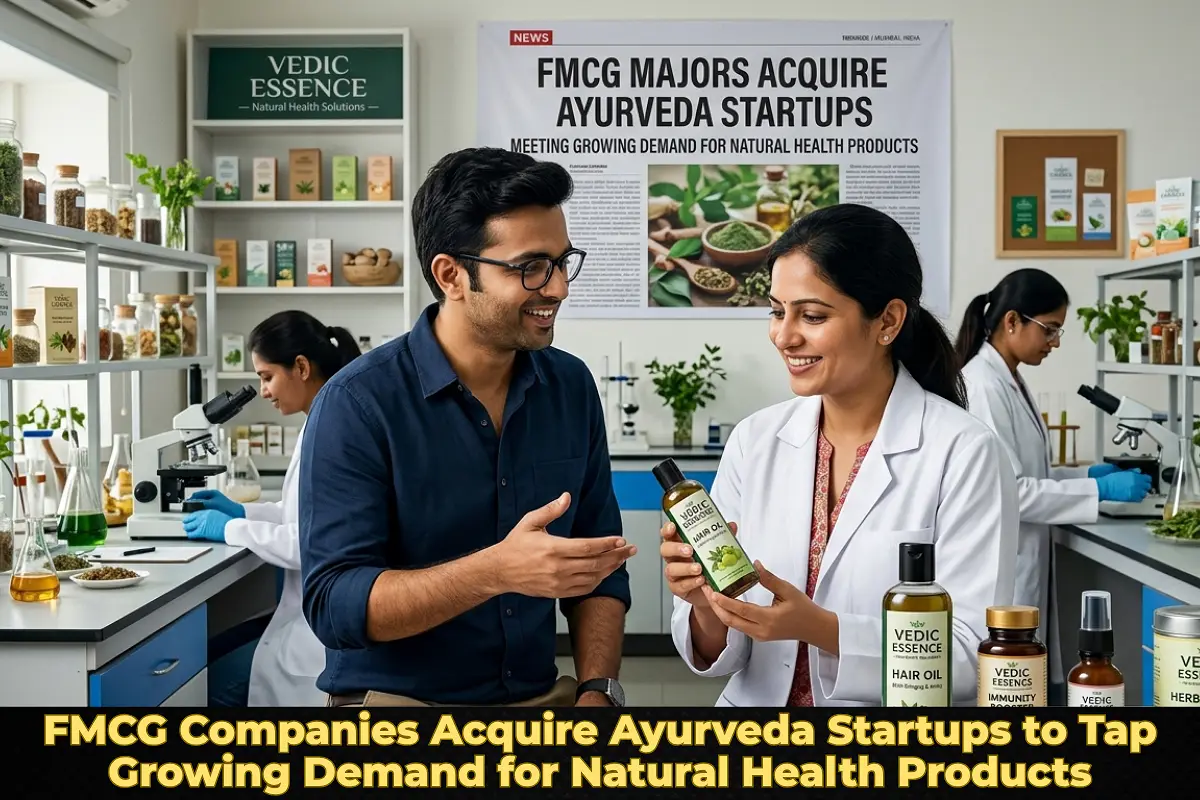
FMCG Companies Acquire Ayurveda Startups to Tap Growing Demand for Natural Health Products
Fast-moving consumer goods (FMCG) companies in India are increasingly acquiring Ayurveda-based startups as demand for natural and herbal health products surges, industry analysts said in April 2026. The trend reflects a strategic shift by major consumer brands seeking to expand their portfolios in response to changing consumer preferences toward traditional, plant-based, and wellness-oriented products.
Leading FMCG firms are targeting emerging Ayurveda startups with established product lines and niche consumer bases, aiming to integrate these businesses into their larger distribution and marketing networks. The acquisitions are taking place across segments such as personal care, dietary supplements, immunity boosters, and herbal remedies, signaling a broader transformation in the health and wellness market.
Rising Demand for Natural and Herbal Products
Consumer demand for Ayurveda and natural health products has grown significantly in recent years, driven by increased awareness of holistic wellness, preventive healthcare, and concerns about synthetic ingredients. The COVID-19 pandemic further accelerated this trend, with consumers seeking immunity-boosting and traditional remedies.
Ayurveda, a centuries-old system of medicine rooted in Indian traditions, has gained renewed attention both domestically and globally. Products based on herbal formulations, natural extracts, and plant-based ingredients are increasingly preferred by consumers looking for perceived safer and more sustainable alternatives.
This shift in consumer behavior has created a lucrative opportunity for FMCG companies to diversify their offerings and capture a share of the expanding wellness market.
Strategic Acquisitions and Market Expansion
FMCG companies are leveraging acquisitions as a faster route to enter the Ayurveda segment rather than building products from scratch. By acquiring startups, companies gain access to existing formulations, brand recognition, and customer loyalty, reducing time-to-market and development costs.
Startups in the Ayurveda space often bring innovation, agility, and authenticity, which are valuable assets for larger corporations aiming to strengthen their positioning in the natural products category. These collaborations also allow startups to scale operations, expand distribution, and access greater financial resources.
Industry experts note that such acquisitions are becoming a key strategy for FMCG players to remain competitive in an evolving market landscape.
Integration into FMCG Supply Chains
Once acquired, Ayurveda startups are typically integrated into the supply chains of larger FMCG firms, enabling wider reach across urban and rural markets. Established distribution networks allow products to be made available through supermarkets, pharmacies, e-commerce platforms, and traditional retail outlets.
Marketing capabilities of FMCG companies further enhance brand visibility, helping Ayurveda products reach a broader audience. This integration also facilitates standardization, quality control, and compliance with regulatory requirements.
However, maintaining the authenticity and traditional appeal of Ayurveda products while scaling production remains a key challenge for companies.
Competition Intensifies in Wellness Segment
The growing interest in Ayurveda has intensified competition among FMCG companies, as well as between established brands and new entrants. Companies are investing in product innovation, research, and branding to differentiate themselves in a crowded marketplace.
In addition to acquisitions, firms are launching new product lines inspired by traditional formulations, targeting segments such as skincare, haircare, nutrition, and functional foods. The convergence of healthcare and consumer goods sectors is further blurring industry boundaries.
Experts suggest that the wellness segment will continue to witness strong growth, driven by evolving consumer preferences and increased disposable incomes.
Regulatory and Quality Considerations
As the Ayurveda market expands, regulatory oversight and quality assurance have become increasingly important. Authorities are focusing on ensuring that products meet safety standards, are accurately labeled, and are supported by appropriate scientific evidence where required.
FMCG companies entering the Ayurveda space must navigate regulatory frameworks governing traditional medicines and consumer products. Compliance with these regulations is essential to maintain consumer trust and avoid legal challenges.
Industry stakeholders emphasize the need for transparency, standardized formulations, and rigorous testing to ensure product safety and efficacy.
Global Opportunities for Ayurveda Brands
The rising global interest in natural and alternative medicine presents opportunities for Indian Ayurveda brands to expand internationally. FMCG companies with global presence are well-positioned to introduce Ayurveda products to new markets, leveraging their distribution networks and brand recognition.
Export potential is particularly strong in regions where consumers are increasingly seeking herbal and organic products. However, companies must also comply with international regulations and standards, which may vary across countries.
Experts believe that successful global expansion could further strengthen India’s position as a leader in traditional wellness systems.
Challenges in Scaling Ayurveda Startups
Despite the growth opportunities, scaling Ayurveda startups within large FMCG structures presents challenges. Balancing traditional knowledge with modern manufacturing processes, ensuring consistent quality of raw materials, and maintaining brand authenticity are key concerns.
Supply chain complexities, including sourcing of herbs and maintaining sustainable practices, also require careful management. Companies must invest in research and development to validate product claims and enhance credibility among consumers.
Addressing these challenges will be critical to sustaining long-term growth in the Ayurveda segment.
Future Outlook for the Sector
The trend of FMCG companies acquiring Ayurveda startups is expected to continue as demand for natural and wellness products remains strong. Analysts predict increased consolidation in the market, with more partnerships and acquisitions likely in the coming years.
Innovation, branding, and consumer trust will play key roles in determining the success of companies in this space. The integration of traditional knowledge with modern business practices is expected to shape the future of the industry.
As competition intensifies, companies that effectively combine authenticity with scalability are likely to emerge as market leaders.
Conclusion
The growing acquisition of Ayurveda startups by FMCG companies underscores a strategic shift toward natural health products, as firms seek to capitalize on rising consumer demand while navigating the challenges of scaling and regulation.