Fresenius Medical Care India Trains 200 Dialysis Technicians Under First Certification Programme
Fresenius Medical Care India has trained 200 dialysis technicians under its first certification program to strengthen kidney care services and address workforce gaps.
 Akanksha jain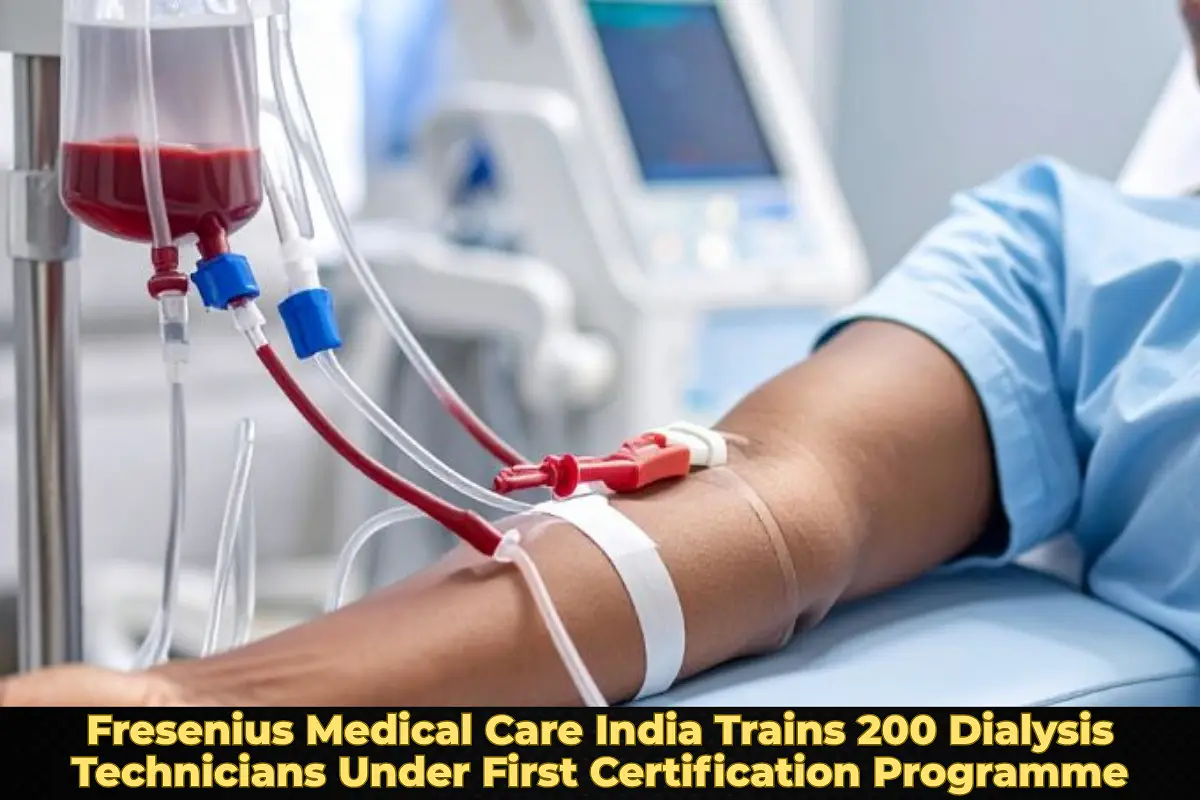
Fresenius Medical Care India Trains 200 Dialysis Technicians Under First Certification Programme
Fresenius Medical Care India has trained 200 dialysis technicians under its first structured certification program, the company said in April 2026, aiming to strengthen kidney care services and address the growing demand for skilled professionals in the country’s healthcare system.
The initiative, launched to enhance the quality and availability of dialysis services, comes at a time when India is witnessing a rising burden of chronic kidney disease (CKD) and increasing demand for renal care. The program is designed to equip technicians with standardized clinical skills, practical training, and industry-recognized certification to improve patient outcomes.
Addressing Workforce Gaps in Dialysis Care
India faces a significant shortage of trained dialysis technicians, which has been a major challenge in expanding access to quality renal care services. With the number of patients requiring dialysis steadily increasing, healthcare providers have been under pressure to scale up both infrastructure and human resources.
Fresenius Medical Care India’s certification program aims to bridge this gap by creating a pool of qualified professionals capable of supporting dialysis procedures in hospitals and specialized care centers. The training focuses on both theoretical knowledge and hands-on experience, ensuring that participants are prepared to handle real-world clinical scenarios.
Experts note that strengthening the workforce is essential to improving access to timely and effective treatment for patients with kidney disease.
Structured Training and Certification
The program includes a comprehensive curriculum covering key aspects of dialysis care, including patient management, equipment handling, infection control, and emergency response protocols. Trainees undergo rigorous assessments to ensure competency and adherence to clinical standards.
Participants who complete the program receive certification that validates their skills and enhances their employability in the healthcare sector. The initiative is aligned with broader efforts to standardize training and improve the quality of allied healthcare services in India.
Industry observers say such structured programs are critical in maintaining consistency in care delivery across different healthcare settings.
Rising Burden of Kidney Disease
Chronic kidney disease is a growing public health concern in India, driven by factors such as diabetes, hypertension, and lifestyle-related conditions. As the disease progresses, many patients require regular dialysis to sustain life, placing increased demand on the healthcare infrastructure.
The expansion of dialysis services has been a priority for both public and private healthcare providers. However, the availability of trained personnel remains a key limiting factor in meeting patient needs.
Initiatives like this certification program are expected to support the scaling up of dialysis services and improve access in underserved regions.
Industry and Healthcare Impact
The training of 200 dialysis technicians represents a step toward building a more robust healthcare workforce capable of supporting specialized treatments. By investing in skill development, healthcare companies can help improve service quality and patient safety.
Hospitals and dialysis centers are likely to benefit from the availability of certified technicians, which can enhance operational efficiency and reduce the risk of complications during procedures. Standardized training also helps ensure adherence to best practices and regulatory requirements.
Healthcare experts emphasize that workforce development is a critical component of strengthening the overall healthcare system.
Collaboration and Future Expansion
Fresenius Medical Care India indicated that the program may be expanded in the future to train more technicians and address regional disparities in access to skilled professionals. Collaboration with healthcare institutions and training organizations is expected to play a key role in scaling the initiative.
Efforts are also being made to align the program with national healthcare priorities and skill development frameworks, ensuring that it contributes to broader policy goals.
Industry stakeholders have welcomed the initiative, noting its potential to support long-term improvements in renal care services.
Enhancing Patient Outcomes
Improving the quality of dialysis care directly impacts patient outcomes, including reduced complications and improved quality of life. Skilled technicians play a crucial role in monitoring patients, managing equipment, and ensuring the safe delivery of treatment.
By standardizing training and certification, the program aims to raise the overall standard of care provided to patients undergoing dialysis. This is particularly important in high-volume centers where efficiency and precision are critical.
Patients and healthcare providers alike stand to benefit from the availability of well-trained professionals.
Role of the Private Sector in Healthcare Training
The initiative highlights the role of private healthcare companies in addressing workforce challenges through targeted training programs. As the demand for specialized healthcare services grows, private sector participation in skill development is becoming increasingly important.
Such programs complement government efforts to expand healthcare access and improve service quality. Public-private collaboration is seen as a key strategy for addressing gaps in the healthcare system.
Experts believe that continued investment in training and education will be essential to meet the evolving needs of the healthcare sector.
Conclusion
Fresenius Medical Care India’s training of 200 dialysis technicians under its first certification program marks a significant step toward strengthening the renal care workforce as the country continues to address rising demand for quality dialysis services.