Fuel Duty Cut Sparks Political Debate as Rajiv Shukla Questions Motives
Congress leader Rajiv Shukla has raised questions over the government’s fuel duty cut, calling it politically motivated amid rising debate over economic and electoral implications.
 SANJANA DUTTA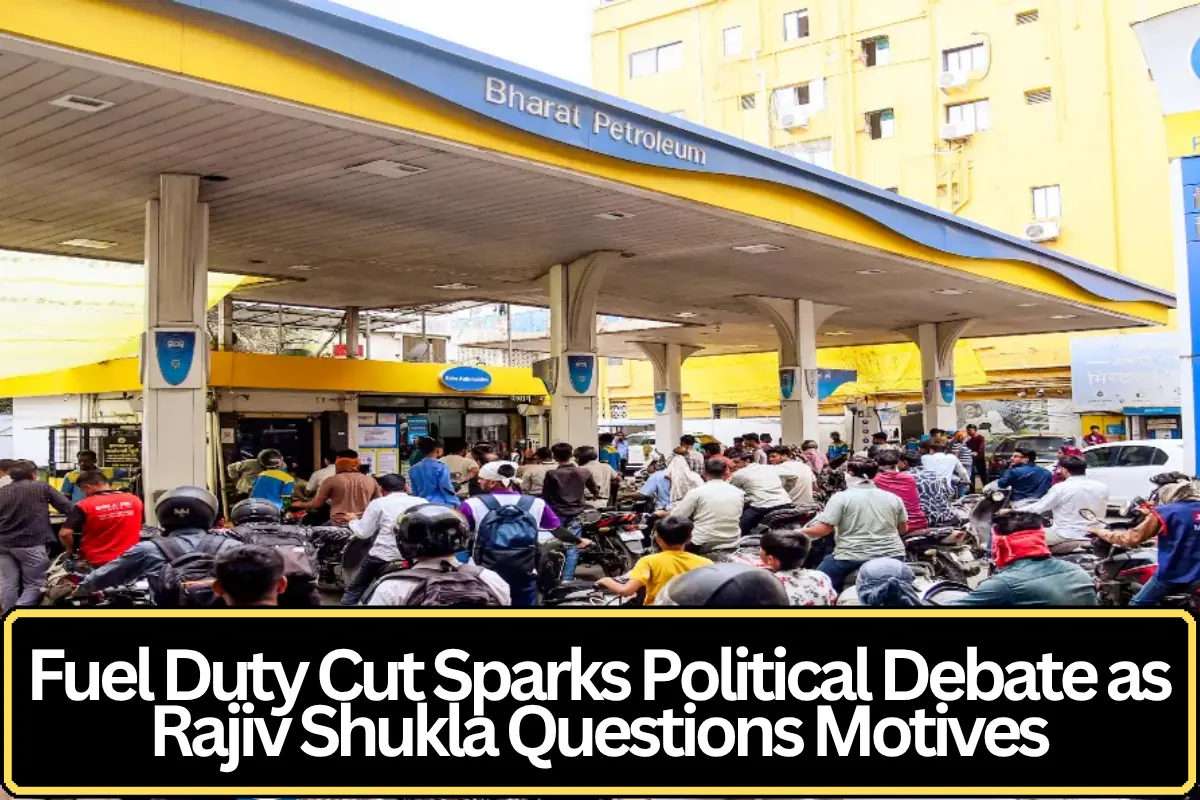
Fuel Duty Reduction Triggers Political Controversy
NEW DELHI, March 27, 2026 — A recent reduction in fuel duties has sparked a political debate in India, with Congress leader Rajiv Shukla alleging that the move is driven by political considerations rather than economic necessity. The decision, which affects petrol and diesel prices, has come at a time when political activity is intensifying across several states, prompting questions about its timing and intent.
The government announced the duty cut as part of efforts to provide relief to consumers facing rising fuel costs and inflationary pressures. However, opposition leaders have argued that the move is strategically timed to influence public sentiment ahead of upcoming elections.
Opposition Questions Timing and Intent
Rajiv Shukla criticized the government’s decision, suggesting that the reduction in fuel duties is politically motivated and aimed at garnering voter support. He argued that such measures are often implemented selectively, particularly during periods of heightened political activity.
According to Shukla, the government has had opportunities to reduce fuel prices earlier but chose to act only now, raising concerns about the consistency and transparency of policy decisions. He emphasized that economic policies should be guided by long-term considerations rather than short-term political gains.
Other opposition figures have echoed similar sentiments, calling for a more stable and predictable approach to fuel pricing that prioritizes consumer welfare without political influence.
Government Defends Consumer Relief Measures
The government has defended the duty cut, stating that it is part of a broader effort to ease the financial burden on citizens amid fluctuating global oil prices. Officials have highlighted that fuel prices are influenced by a combination of international market trends, exchange rates, and domestic taxation policies.
They maintain that the decision reflects responsiveness to economic conditions and the need to support households and businesses facing cost pressures. The government has also pointed to previous instances where similar measures were taken to stabilize prices and manage inflation.
Supporters of the move argue that reducing fuel duties can have a cascading effect on the economy by lowering transportation costs and moderating the prices of essential goods.
Economic Context and Policy Implications
The debate over fuel duty cuts comes against the backdrop of a complex economic environment characterized by global uncertainty and domestic challenges. International crude oil prices have remained volatile, influenced by geopolitical tensions and supply dynamics.
In India, fuel taxes constitute a significant portion of government revenue, making any reduction a sensitive policy decision. While duty cuts can provide immediate relief to consumers, they also have implications for fiscal balance and public spending.
Economists note that striking a balance between revenue generation and consumer affordability is a key challenge for policymakers. Decisions on fuel taxation often involve trade-offs that must be carefully managed to ensure economic stability.
Impact on Consumers and Businesses
For consumers, the reduction in fuel duties translates into lower prices at the pump, offering some relief amid broader cost-of-living concerns. Rising fuel prices have been a major contributor to inflation, affecting household budgets and spending patterns.
Businesses, particularly those in transportation and logistics, stand to benefit from reduced fuel costs, which can improve operational efficiency and profitability. Lower input costs may also help stabilize prices for goods and services, benefiting the broader economy.
However, the extent of these benefits depends on the magnitude of the duty cut and the overall trajectory of global oil prices. Analysts caution that sustained relief requires consistent policy measures and favorable market conditions.
Political Significance Ahead of Elections
The timing of the fuel duty cut has added a political dimension to the economic decision. With elections approaching in several regions, policy measures that directly impact voters are likely to attract heightened scrutiny.
Opposition parties have framed the move as an attempt to influence electoral outcomes, while the government has rejected such claims, emphasizing its commitment to public welfare. The debate reflects broader tensions between political narratives and policy objectives.
Political analysts suggest that fuel prices are a sensitive issue with significant electoral implications, as they affect a wide cross-section of the population. As a result, decisions related to fuel taxation often become focal points in political discourse.
Calls for Transparent Policy Framework
The controversy has renewed calls for a more transparent and consistent framework for fuel pricing in India. Experts argue that clear guidelines on taxation and pricing mechanisms can help reduce uncertainty and build public trust.
Some have proposed linking fuel taxes more closely to global price trends, allowing for automatic adjustments that minimize the scope for political influence. Others have emphasized the need for better communication of policy decisions to ensure that the rationale is clearly understood.
Such measures could contribute to a more predictable policy environment, benefiting both consumers and businesses.
Broader Debate on Economic Governance
The discussion around fuel duty cuts is part of a larger debate on economic governance and the role of politics in policy-making. Balancing economic objectives with political considerations is a common challenge in democratic systems, where public opinion plays a significant role in shaping decisions.
Critics argue that short-term measures driven by political considerations can undermine long-term economic planning, while proponents contend that responsive policies are essential to address immediate public needs.
This tension underscores the complexity of policy-making in a dynamic and interconnected economy, where decisions have far-reaching implications.
Conclusion
The fuel duty cut has become a focal point of political and economic debate, highlighting differing perspectives on policy priorities and governance.
Current Status
The government continues to defend its decision as a necessary relief measure, while opposition leaders maintain that political considerations have influenced the move, keeping the debate active in the public and political sphere.