Global Foreign Aid Drops 23% in 2025 on U.S. Cuts: OECD
Global foreign aid declined 23.1% in 2025 to $165.5 billion, driven largely by sharp U.S. cuts, according to OECD data.
 Tripti Srivastava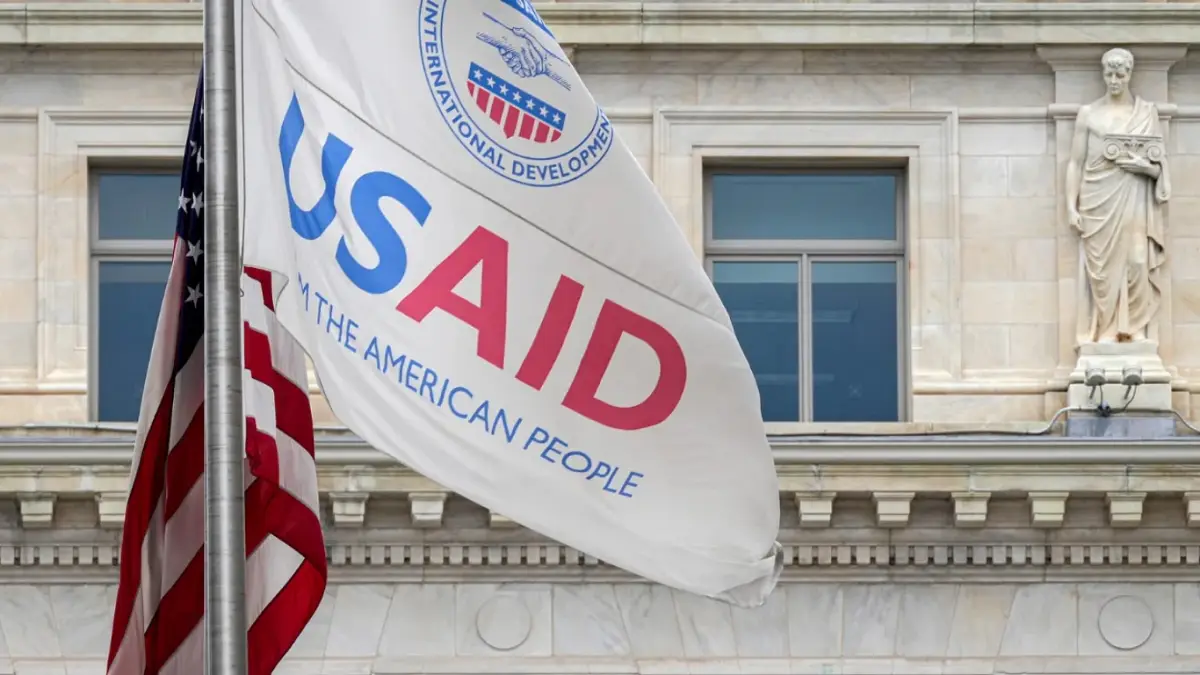
Global official development assistance fell sharply by 23.1% to $165.5 billion in 2025, marking the steepest annual decline on record, as deep reductions in U.S. foreign aid spending drove a broad contraction across major donor nations, according to preliminary data released by the Organisation for Economic Cooperation and Development.
The OECD reported that total foreign aid from 33 major donor countries dropped to $165.5 billion in real terms in 2025, extending a second consecutive year of decline. The contraction represents a significant reversal from the strong growth period between 2019 and 2023, when aid volumes rose by 32.7%.
The data highlights a shift in global funding priorities, with official development assistance now standing 4.2% below pre-pandemic levels recorded in 2019. The downturn reflects mounting fiscal pressures and changing political priorities among advanced economies.
U.S. Cuts Drive Majority of Decline
The United States accounted for the largest share of the reduction, contributing approximately three-quarters of the total decline in global aid. U.S. foreign aid fell 56.9% year-on-year to $28.2 billion, following policy changes under President Donald Trump.
The cuts were linked to the dismantling of the U.S. Agency for International Development in July 2025, a move justified by the administration as an effort to reduce spending on overseas programmes deemed inconsistent with national interests.
The OECD noted that the five largest aid providers — Germany, the United States, the United Kingdom, Japan, and France — together accounted for more than 95% of the overall drop in assistance.
Shift in Global Donor Rankings
Germany emerged as the largest provider of foreign aid in 2025 for the first time, with total assistance reaching $29.1 billion in nominal terms, narrowly exceeding the United States’ $29.0 billion.
The United Kingdom ranked third with $17.2 billion in aid contributions, followed by Japan at $16.2 billion, which recorded a 1.7% decline. France completed the top five donors with total assistance of $14.5 billion.
The reshuffling of donor rankings underscores how shifts in U.S. policy have altered the global aid landscape, allowing European economies to take a more prominent role in development financing.
The OECD attributed the earlier expansion in foreign aid between 2019 and 2023 to extraordinary spending in response to the COVID-19 pandemic and support measures linked to geopolitical crises, including Russia’s war in Ukraine.
However, that growth has now reversed as donor countries face tighter budgets, inflationary pressures, and competing domestic priorities. The agency described the decline as a structural shift rather than a temporary fluctuation.
The Development Assistance Committee, which includes 33 nations and the European Union, is now experiencing a broad pullback in funding commitments, reflecting changing fiscal realities across advanced economies.
Outlook Points to Further Decline
The OECD projected that global foreign aid could fall by an additional 5.8% in 2026, even before factoring in the potential economic strain from ongoing geopolitical tensions in the Middle East.
The outlook suggests continued pressure on development financing, particularly as global conflicts and economic uncertainty reshape government spending priorities. Analysts note that reduced aid flows could have implications for emerging economies that rely heavily on external funding for infrastructure, healthcare, and social programs.
The data indicates a shift in international development assistance, with donor nations adjusting their commitments in response to changing economic and political conditions.