Google Employees Embrace ‘Agent Smith’ AI Tool to Automate Coding Tasks via Smartphones
 Taniska Kumari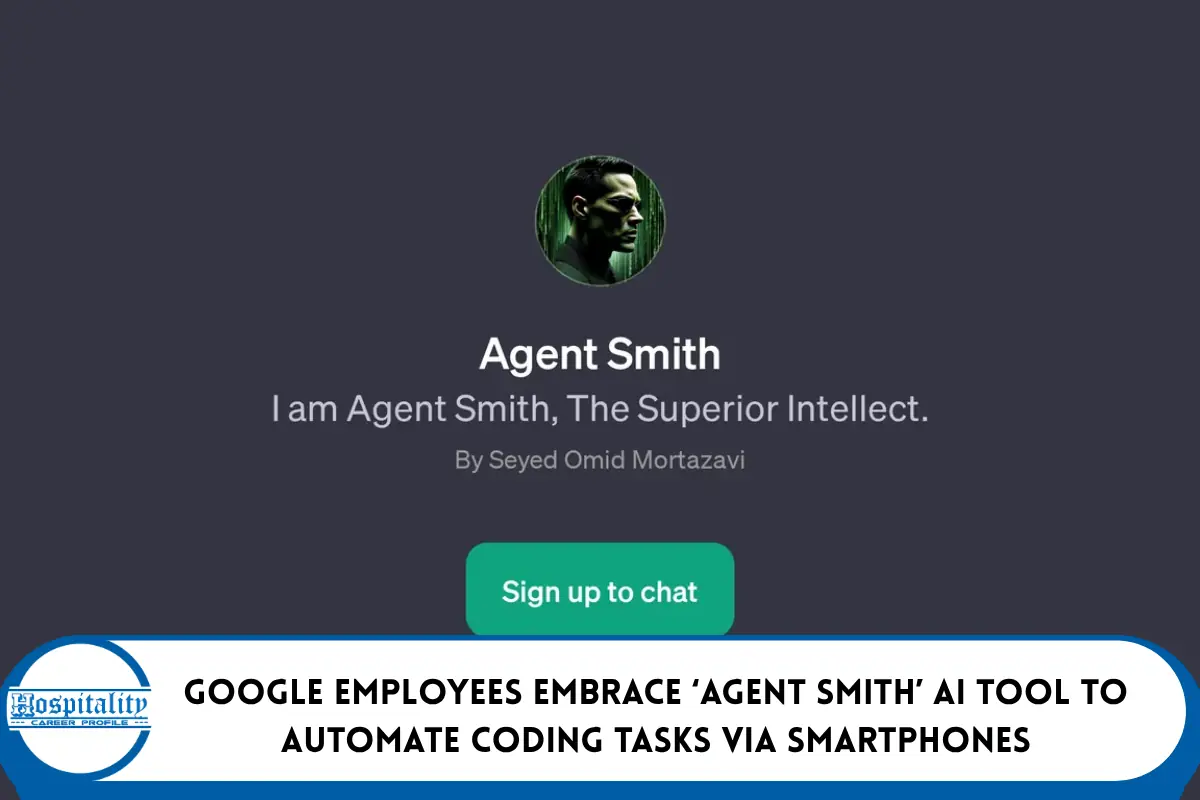
Google employees are increasingly adopting an internal artificial intelligence tool known as “Agent Smith” to automate coding tasks directly from their smartphones in 2026, signaling a shift toward mobile-first AI-assisted software development, according to recent reports. The tool, backed by Google’s AI initiatives under CEO Sundar Pichai, allows engineers to write, edit, and manage code remotely, reflecting the company’s broader push to integrate AI deeper into everyday workflows.
AI Coding Moves to Mobile Platforms
The growing use of Agent Smith marks a significant evolution in how software development is conducted within one of the world’s largest technology companies. Traditionally, coding has required powerful desktop environments, but the introduction of AI-driven tools capable of functioning on smartphones is changing that paradigm.
With Agent Smith, engineers can perform a range of programming tasks, including writing code snippets, debugging issues, and reviewing changes, all from mobile devices. This shift is aimed at improving productivity and enabling developers to work more flexibly, without being tied to traditional workstations.
Integration with Google’s AI Ecosystem
Agent Smith is part of Google’s broader strategy to expand the role of artificial intelligence across its operations. The tool leverages advanced machine learning models to understand programming languages, suggest optimizations, and automate repetitive coding tasks.
The integration of such tools into daily workflows reflects the company’s ongoing investment in AI as a core driver of innovation. By embedding AI into development processes, Google aims to streamline operations and accelerate the pace of software delivery.
Boosting Developer Productivity
One of the primary advantages of Agent Smith is its ability to enhance developer productivity. By automating routine tasks such as code generation and error detection, the tool allows engineers to focus on more complex and creative aspects of software development.
Developers using the tool can quickly generate functional code based on prompts, reducing the time required to complete standard programming tasks. This capability is particularly useful for addressing minor issues or making quick updates without needing to access a full development environment.
Remote Work and Flexibility
The adoption of mobile AI tools like Agent Smith aligns with broader trends in remote work and flexible employment practices. As organizations continue to adapt to hybrid work models, the ability to perform critical tasks from anywhere has become increasingly valuable.
By enabling coding from smartphones, Google is providing its employees with greater flexibility, allowing them to remain productive even when away from their desks. This approach also supports faster response times for addressing urgent issues or deploying updates.
Security and Access Controls
While the convenience of mobile coding is clear, it also raises important questions about security and data protection. Accessing sensitive codebases from mobile devices introduces potential risks, requiring robust authentication and encryption measures.
Google is believed to have implemented strict security protocols to ensure that the use of Agent Smith does not compromise the integrity of its systems. These measures likely include secure connections, multi-factor authentication, and controlled access to repositories.
Industry Implications
The rise of mobile AI coding tools could have significant implications for the broader technology industry. If widely adopted, such tools may redefine how developers interact with code, making programming more accessible and flexible.
Other technology companies are also investing in AI-powered development tools, indicating a broader trend toward automation in software engineering. The ability to code on mobile devices could lower barriers to entry and enable a more diverse range of users to participate in software development.
Challenges and Limitations
Despite its advantages, mobile-based coding tools are not without limitations. Smartphones may lack the processing power and screen size required for more complex development tasks, making them better suited for quick edits and minor changes rather than full-scale projects.
Additionally, reliance on AI-generated code introduces concerns about accuracy and quality. Developers must still review and validate outputs to ensure that the code meets required standards and does not introduce errors or vulnerabilities.
Leadership Perspective
Google CEO Sundar Pichai has consistently emphasized the importance of artificial intelligence in shaping the future of the company. The adoption of tools like Agent Smith reflects this vision, demonstrating how AI can be integrated into core business functions.
Pichai has highlighted the potential of AI to transform productivity and innovation, positioning it as a key component of Google’s long-term strategy. The success of internal tools like Agent Smith could influence how the company develops and deploys similar technologies externally.
Future of AI in Software Development
The increasing reliance on AI tools in software development suggests that the role of human programmers is evolving. Rather than writing code manually, developers are increasingly acting as supervisors and collaborators with AI systems.
As these tools continue to improve, they may become capable of handling more complex tasks, further transforming the development process. The integration of AI into mobile platforms represents just one step in this ongoing evolution.
Conclusion
The growing adoption of Agent Smith among Google employees highlights a broader shift toward AI-driven, mobile-first software development, as companies explore new ways to enhance productivity and flexibility in an increasingly digital world.