Google Launches Lyria 3 Pro AI Model Capable of Generating Full-Length Music Tracks
 Taniska Kumari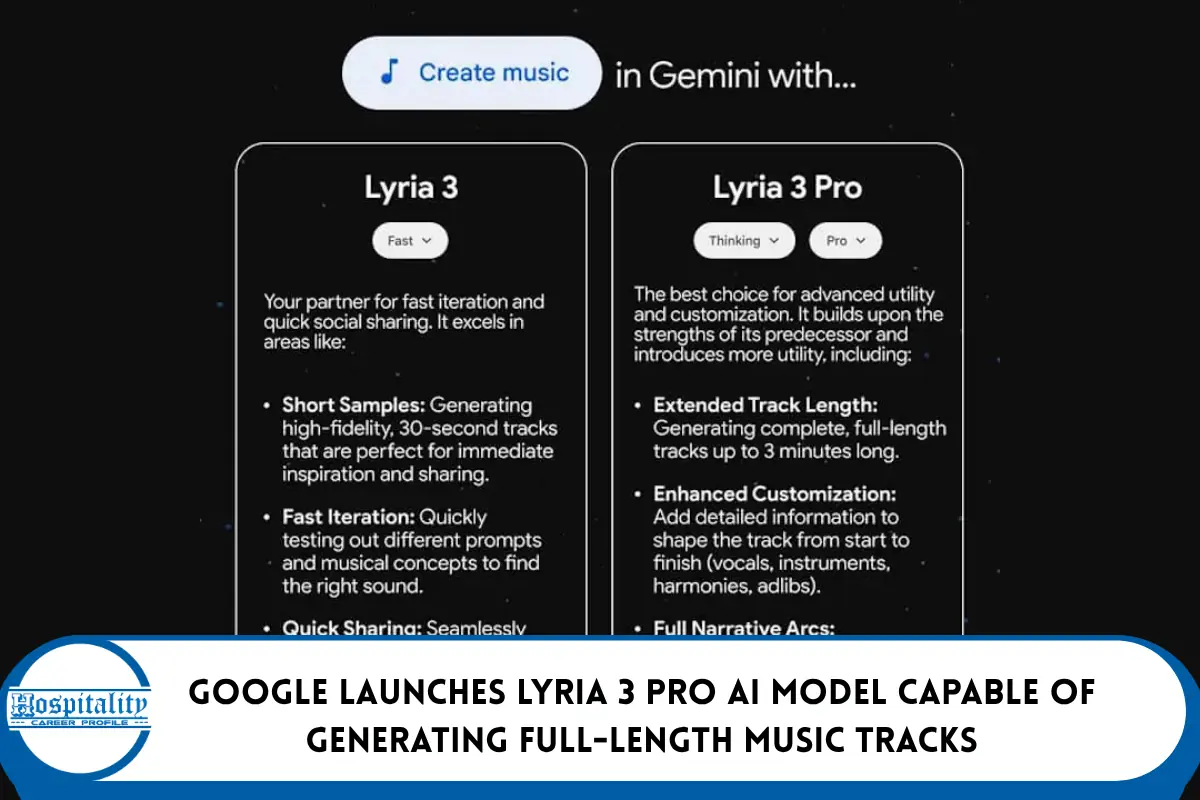
Google has launched its latest artificial intelligence music model, Lyria 3 Pro, capable of generating full-length music tracks of up to three minutes, marking a significant advancement in AI-driven content creation. The announcement was made in March 2026, as the company expands its generative AI capabilities into the music industry, aiming to provide creators and businesses with new tools for audio production.
Introduction of Lyria 3 Pro
Lyria 3 Pro represents Google’s most advanced AI music generation model to date. Designed to create complete music tracks rather than short clips, the model can generate compositions with structure, rhythm, and consistency over extended durations. This development positions Google as a key player in the rapidly evolving field of AI-powered creative tools.
The model builds on earlier versions of Lyria, improving its ability to understand musical patterns and produce coherent outputs that resemble professionally produced tracks. By enabling longer compositions, Google is addressing a major limitation seen in earlier AI music systems.
Capabilities and Features
Lyria 3 Pro can generate music tracks lasting up to three minutes, a notable increase compared to previous models that were limited to shorter segments. The AI is designed to handle various musical styles and genres, offering flexibility for users with different creative needs.
The system leverages advanced machine learning techniques to analyze patterns in music, including melody, harmony, and rhythm. This allows it to produce compositions that maintain consistency throughout the track, creating a more natural listening experience.
Target Users and Applications
Google’s new AI model is expected to be used by a wide range of users, including content creators, marketers, developers, and media companies. By automating parts of the music creation process, Lyria 3 Pro can help reduce production time and costs.
Potential applications include background music for videos, advertising campaigns, gaming soundtracks, and digital content production. The tool may also be used by independent creators who lack access to traditional music production resources.
Impact on the Music Industry
The launch of Lyria 3 Pro is likely to have a significant impact on the music industry, particularly in areas related to production and distribution. AI-generated music could change how content is created, offering faster and more scalable solutions for producing audio.
However, the technology also raises questions about originality, copyright, and the role of human creativity. Industry stakeholders may need to address these challenges as AI-generated content becomes more prevalent.
Competition in AI Music Technology
Google’s entry into advanced AI music generation intensifies competition with other companies developing similar technologies. Firms specializing in AI-driven audio tools are increasingly focusing on improving quality and expanding capabilities to meet growing demand.
By introducing a model capable of generating longer tracks, Google may gain a competitive edge in the market, particularly among enterprise users and content platforms seeking scalable solutions.
Ethical and Legal Considerations
The use of AI in music creation brings several ethical and legal considerations. Questions around copyright ownership, licensing, and the use of training data are central to discussions about generative AI.
Regulators and industry groups are likely to examine how such technologies are deployed, ensuring that they comply with existing laws and protect the rights of artists and creators.
Integration with Google Ecosystem
Lyria 3 Pro is expected to be integrated into Google’s broader AI ecosystem, potentially connecting with tools used for video creation, advertising, and cloud services. This integration could enhance its usability and expand its reach across different industries.
By embedding the model into its existing platforms, Google aims to provide a seamless experience for users looking to incorporate AI-generated music into their workflows.
Future Developments
The launch of Lyria 3 Pro suggests that further advancements in AI music generation are likely. Future updates may focus on improving audio quality, expanding genre capabilities, and offering greater customization options for users.
As technology evolves, AI-generated music could become more sophisticated, potentially rivaling traditional production methods in certain contexts.
Industry Response
Initial reactions from the industry indicate a mix of excitement and caution. While many see the potential for innovation and efficiency, others are concerned about the implications for musicians and the creative process.
The balance between technological progress and artistic integrity will be a key factor in determining how widely such tools are अपन
Conclusion
Google’s launch of Lyria 3 Pro marks a major step forward in AI-driven music generation, highlighting the growing role of artificial intelligence in creative industries as the technology continues to evolve.