Study Finds Gut Bacteria Can Reach the Brain in Mice Through Possible Vagus Nerve Pathway
Researchers have found evidence that gut bacteria can travel to the brain in mice through a potential pathway involving the vagus nerve, offering new insights into the gut-brain connection and neurological health.
 Akanksha jain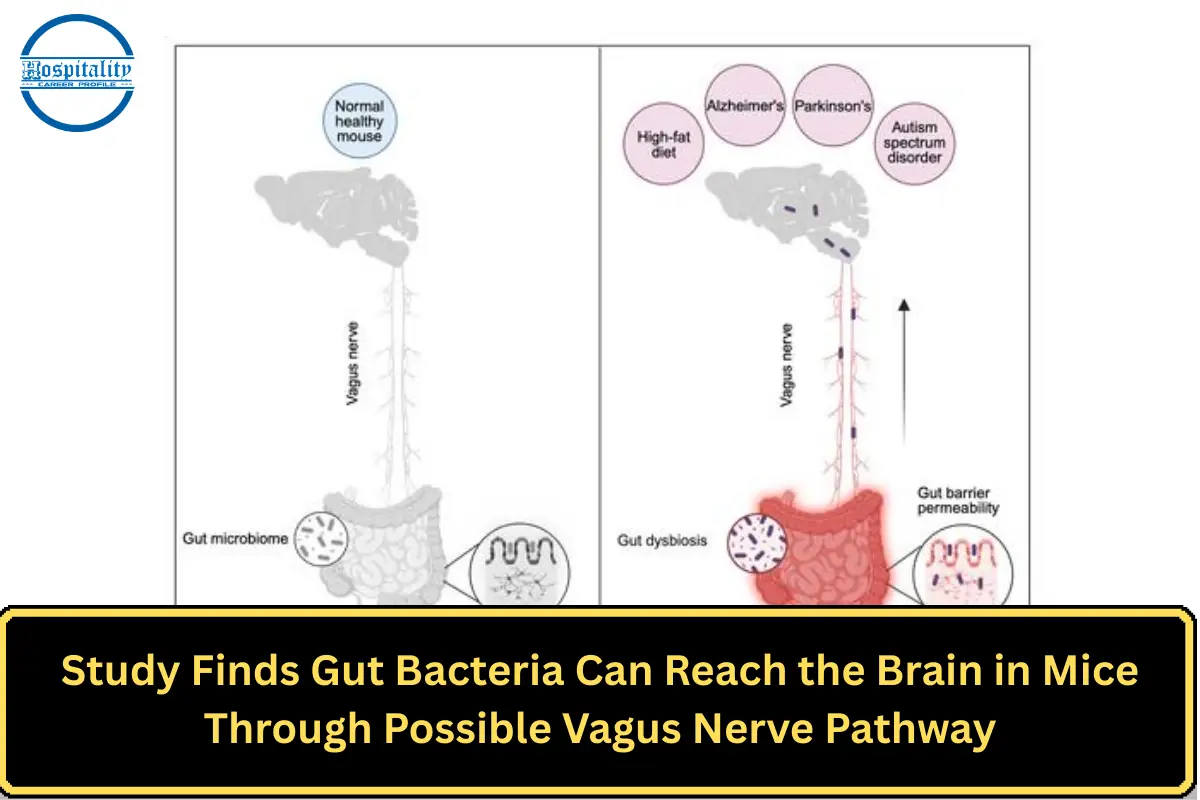
Researchers Identify Possible Route for Gut Bacteria to Reach the Brain in Animal Study
Scientists have discovered evidence suggesting that gut bacteria may be able to reach the brain through a pathway involving the vagus nerve, according to new research conducted using mice. The findings, reported in March 2026 by a team of biomedical researchers studying the gut-brain connection, offer new insights into how microorganisms in the digestive system could influence neurological processes.
The research focused on understanding whether bacteria located in the gastrointestinal tract could move beyond the gut and travel to the brain through neural pathways. By studying laboratory mice, scientists identified signs that certain bacteria could migrate through the body and potentially reach brain tissue through the vagus nerve, a major nerve connecting the digestive system to the brain.
Researchers say the discovery could contribute to growing scientific understanding of the complex relationship between the gut microbiome and neurological health. While the study was conducted in animals and further research is required to determine whether similar mechanisms occur in humans, the findings highlight a potential biological pathway linking gut bacteria and brain function.
The Role of the Vagus Nerve in Gut-Brain Communication
The vagus nerve plays a central role in communication between the brain and several major organs, including the stomach and intestines. It forms part of the body's autonomic nervous system and helps regulate processes such as digestion, heart rate, and immune responses.
Scientists have long suspected that the vagus nerve may serve as an important communication channel in the so-called gut-brain axis, the complex network linking the digestive system with neurological activity. The new research provides experimental evidence suggesting that microorganisms themselves may be capable of interacting with this pathway.
In the study, researchers tracked the movement of bacteria within the bodies of mice to determine whether the microorganisms could move from the intestinal tract toward the brain. The experiments revealed signs that bacteria may travel along neural pathways connected to the vagus nerve, suggesting a possible route through which gut microbes could influence brain biology.
Investigators emphasize that the research does not indicate that gut bacteria routinely migrate to the brain under normal conditions. Instead, the study highlights a potential mechanism that could help explain how microbial activity in the gut might affect neurological systems.
Understanding the Gut-Brain Axis
The human gut contains trillions of microorganisms collectively known as the microbiome. These bacteria and other microbes play an essential role in digestion, metabolism, and immune system function. In recent years, scientists have increasingly explored how the microbiome may also influence mental health and neurological conditions.
The concept of the gut-brain axis refers to the network of biochemical and neural signals linking the digestive system with the central nervous system. Researchers have found that gut microbes can produce molecules that influence brain activity, including neurotransmitters and immune signaling compounds.
Previous studies have shown that disruptions in the microbiome may be associated with various neurological and psychiatric conditions, although scientists continue to investigate the precise biological mechanisms involved. The new findings provide further evidence that the relationship between gut microbes and brain function may be more complex than previously understood.
Understanding how gut bacteria interact with the nervous system could help scientists better explain how changes in the microbiome influence mood, cognition, and neurological health.
Experimental Methods Used in the Study
The research team conducted a series of experiments using laboratory mice to observe how bacteria behave within the digestive system and surrounding tissues. Advanced imaging techniques and molecular analysis were used to track bacterial movement and identify potential pathways connecting the gut to the brain.
Researchers observed that certain bacterial cells appeared capable of traveling along structures associated with the vagus nerve. This observation suggested that the nerve could serve as a transport route linking the gut environment with brain tissue.
Scientists carefully monitored the animals to determine whether bacteria could be detected in regions associated with neurological structures. The experimental findings indicated the presence of bacterial signals within areas connected to neural pathways.
The study’s authors emphasize that animal models play an important role in helping researchers explore biological mechanisms that cannot easily be studied directly in humans. However, they caution that additional research will be required to determine how these findings may translate to human biology.
Implications for Neurological and Medical Research
The discovery of a potential pathway connecting gut bacteria to the brain may have important implications for medical research exploring neurological disorders and mental health conditions. Scientists have increasingly investigated the role of the microbiome in diseases affecting the brain and nervous system.
Researchers are studying possible links between gut bacteria and conditions such as neurodegenerative diseases, mood disorders, and inflammatory neurological conditions. While the exact role of microbes in these diseases remains under investigation, the new findings could provide additional clues about how microbial activity influences brain biology.
If future research confirms that microorganisms can interact with neural pathways connecting the gut and brain, scientists may be able to develop new approaches to studying neurological diseases. Such discoveries could potentially influence the development of therapies targeting the microbiome.
However, experts stress that the current findings represent an early stage in scientific investigation. Much more research will be required before any clinical implications can be determined.
Expanding Research on the Human Microbiome
Interest in the human microbiome has grown rapidly over the past decade as scientists continue to uncover its role in many aspects of human health. The gut microbiome in particular has been linked to metabolic regulation, immune responses, and disease prevention.
Advances in genetic sequencing technology have allowed researchers to analyze microbial communities in greater detail than ever before. These tools have made it possible to identify thousands of bacterial species living in the digestive system and study how they interact with human biology.
Researchers are also exploring how diet, medication, lifestyle, and environmental factors influence the composition of the microbiome. Changes in microbial balance may affect a wide range of biological systems, including those involved in inflammation and immune regulation.
The potential connection between gut microbes and neurological processes represents one of the most rapidly developing areas of microbiome research.
Future Research Directions
Scientists involved in the study say further research will focus on determining how bacterial movement along neural pathways occurs and under what conditions it may happen. Future studies may also examine whether similar biological mechanisms are present in other animal models or humans.
Understanding the exact relationship between gut microbes and the nervous system could help clarify how microbial communities influence brain development and neurological health. Researchers may investigate whether specific bacterial species are more likely to interact with neural pathways.
Additional experiments will also aim to determine how the immune system responds when bacteria interact with nerve structures connected to the brain. These findings could provide further insights into the body’s protective mechanisms and how they regulate microbial activity.
Scientists say multidisciplinary research involving microbiology, neuroscience, and immunology will likely be necessary to fully understand the implications of the discovery.
Growing Scientific Interest in the Gut-Brain Connection
The relationship between the digestive system and the brain has become a major focus of scientific investigation as researchers explore how biological systems throughout the body communicate with one another. The gut-brain axis is now recognized as an important area of study within both neuroscience and gastrointestinal research.
Understanding these connections could help scientists identify new factors that influence brain health and disease risk. Researchers believe that the microbiome may play a role in shaping neurological processes throughout a person’s lifetime.
While the latest findings were obtained from animal studies, they add to a growing body of research examining how microorganisms interact with the nervous system. Continued investigation into these mechanisms may provide deeper insights into the complex relationships linking the gut, immune system, and brain.
The researchers say their findings represent an important step toward understanding how microbes in the digestive system may interact with neural pathways that connect the gut to the brain.