Himachal Budget Focused on Rural Economy, Not Politics, Says CM Sukhvinder Singh Sukhu
Himachal Pradesh Chief Minister Sukhvinder Singh Sukhu says the state budget is focused on strengthening the rural economy rather than political considerations.
 SANJANA DUTTA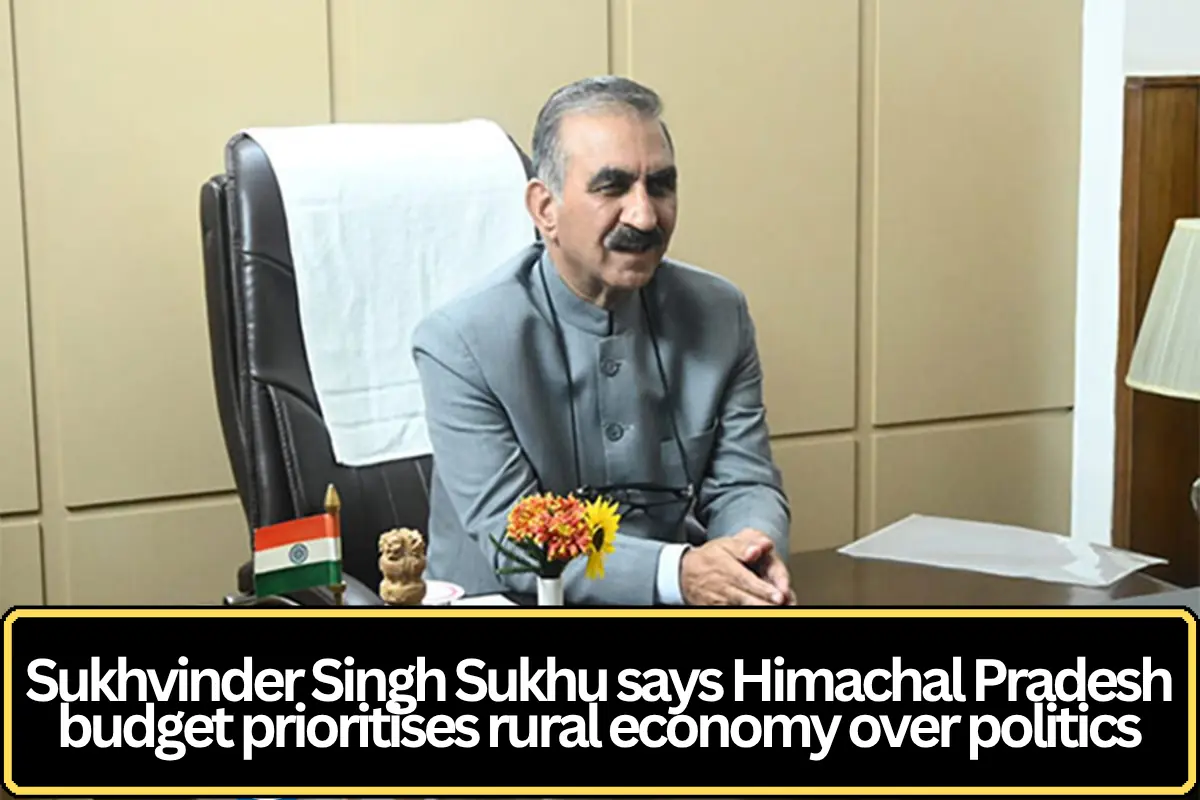
Himachal Budget Aims to Strengthen Rural Economy
Himachal Pradesh Chief Minister Sukhvinder Singh Sukhu on March 21 said that the state’s latest budget is designed to strengthen the rural economy rather than serve political interests, emphasizing a focus on agriculture, livelihoods, and grassroots development. The remarks came amid discussions over the intent and impact of the financial plan presented by the state government.
Addressing concerns raised by opposition parties, Sukhu stated that the budget prioritizes long-term economic stability and the welfare of rural communities, which form the backbone of the hill state. He highlighted that the initiatives outlined are aimed at addressing structural challenges and improving income opportunities in rural areas.
Focus on Agriculture and Allied Sectors
The budget places significant emphasis on agriculture and allied sectors, which remain critical to Himachal Pradesh’s economy. According to the chief minister, several measures have been introduced to support farmers, improve productivity, and ensure better market access for agricultural produce.
These include enhanced support for horticulture, expansion of irrigation facilities, and incentives for adopting modern farming techniques. The government has also outlined plans to strengthen cold storage infrastructure and supply chains to reduce post-harvest losses.
Officials said that boosting agricultural output and ensuring fair prices for farmers are central to the state’s economic strategy. The focus on horticulture, particularly apple cultivation, is expected to benefit a large section of the population dependent on farming.
Rural Infrastructure Development Prioritized
Infrastructure development in rural areas has been identified as another key priority in the budget. The government has proposed investments in road connectivity, water supply systems, and rural electrification to improve living conditions and support economic activities.
Improved connectivity is expected to facilitate access to markets, healthcare, and education, thereby enhancing overall quality of life. The administration has also emphasized the importance of maintaining and upgrading existing infrastructure to ensure sustainability.
Sukhu noted that strengthening rural infrastructure would not only benefit residents but also contribute to tourism and other economic sectors that rely on accessibility and connectivity.
Employment Generation and Livelihood Support
The budget outlines measures aimed at generating employment and supporting livelihoods in rural areas. These include skill development programs, promotion of small and medium enterprises, and initiatives to encourage self-employment.
The government plans to expand training opportunities in sectors such as handicrafts, food processing, and eco-tourism, which have strong potential in the state. By equipping individuals with relevant skills, the administration aims to create sustainable income sources.
In addition, support for rural entrepreneurship is expected to encourage innovation and diversification of economic activities. Officials believe that these efforts will help reduce migration to urban areas by creating opportunities within local communities.
Addressing Opposition Criticism
The chief minister’s statement comes in response to criticism from opposition leaders, who have questioned the motivations behind certain allocations in the budget. Some critics have suggested that the financial plan may have political undertones, particularly in the context of upcoming electoral cycles.
Sukhu dismissed these claims, asserting that the government’s approach is guided by developmental priorities rather than political considerations. He emphasized that the focus remains on delivering tangible benefits to citizens and addressing long-standing issues.
He also pointed out that investments in rural areas are essential for balanced regional development and cannot be viewed through a purely political lens. The administration has reiterated its commitment to transparency and accountability in implementing budgetary measures.
Social Welfare and Inclusive Growth
Beyond economic initiatives, the budget includes provisions for social welfare programs aimed at improving the well-being of vulnerable sections of society. These include measures related to healthcare, education, and social security.
The government has announced plans to strengthen public health infrastructure in rural areas, ensuring better access to medical services. Educational initiatives focus on improving school facilities and expanding opportunities for higher education and vocational training.
Officials said that inclusive growth remains a key objective, with efforts directed at ensuring that the benefits of development reach all sections of society. Special attention has been given to marginalized communities, women, and youth.
Financial Discipline and Resource Management
Sukhu highlighted the importance of maintaining financial discipline while implementing the budget. The government has outlined strategies to optimize resource utilization and enhance revenue generation without placing undue burden on citizens.
Efforts are being made to improve tax collection efficiency and explore alternative revenue sources. At the same time, the administration has emphasized prudent expenditure management to ensure fiscal sustainability.
Experts note that balancing development needs with fiscal responsibility is a key challenge for the state, given its geographical constraints and limited revenue base. The budget’s approach reflects an attempt to address these challenges while pursuing growth objectives.
Environmental Sustainability Considerations
Given Himachal Pradesh’s ecological sensitivity, the budget also incorporates measures aimed at promoting environmental sustainability. These include initiatives for water conservation, forest management, and renewable energy development.
The government has emphasized the need to balance economic growth with environmental protection, recognizing the importance of preserving natural resources for future generations. Programs to promote sustainable tourism and reduce environmental impact have also been included.
Officials said that integrating environmental considerations into development planning is essential for ensuring long-term resilience and sustainability.
Political Context and Public Expectations
The budget has been presented against a backdrop of heightened political activity, with parties positioning themselves ahead of future electoral contests. In this context, the government’s emphasis on rural development is seen as a strategic move to address key voter concerns.
Public expectations from the budget are high, particularly in areas such as employment, infrastructure, and social welfare. The success of the proposed measures will depend on effective implementation and timely delivery of benefits.
Analysts note that while the government’s focus on rural economy is aligned with the state’s needs, continuous monitoring and evaluation will be crucial to ensure desired outcomes.
Implementation and Way Forward
The state government has indicated that it will prioritize the implementation of budgetary initiatives, with a focus on transparency and efficiency. Mechanisms are being put in place to track progress and address challenges that may arise during execution.
Collaboration with local bodies, community organizations, and private sector stakeholders is expected to play a key role in achieving the objectives outlined in the budget. The administration has called for collective efforts to ensure success.
Observers believe that sustained commitment and effective governance will be essential to translate policy announcements into tangible results on the ground.
Conclusion
The Himachal Pradesh budget, as articulated by Chief Minister Sukhvinder Singh Sukhu, seeks to prioritize rural development and economic stability over political considerations.
Current Status
The budget proposals are currently under discussion as the state government moves forward with plans for implementation and monitoring of key initiatives.