Himachal Pradesh Presents ₹54,928 Crore Budget for 2026-27, Triggers Political Debate
The Himachal Pradesh government’s ₹54,928 crore budget for 2026-27 has sparked political debate, with opposition and ruling parties clashing over fiscal priorities and development focus.
 SANJANA DUTTA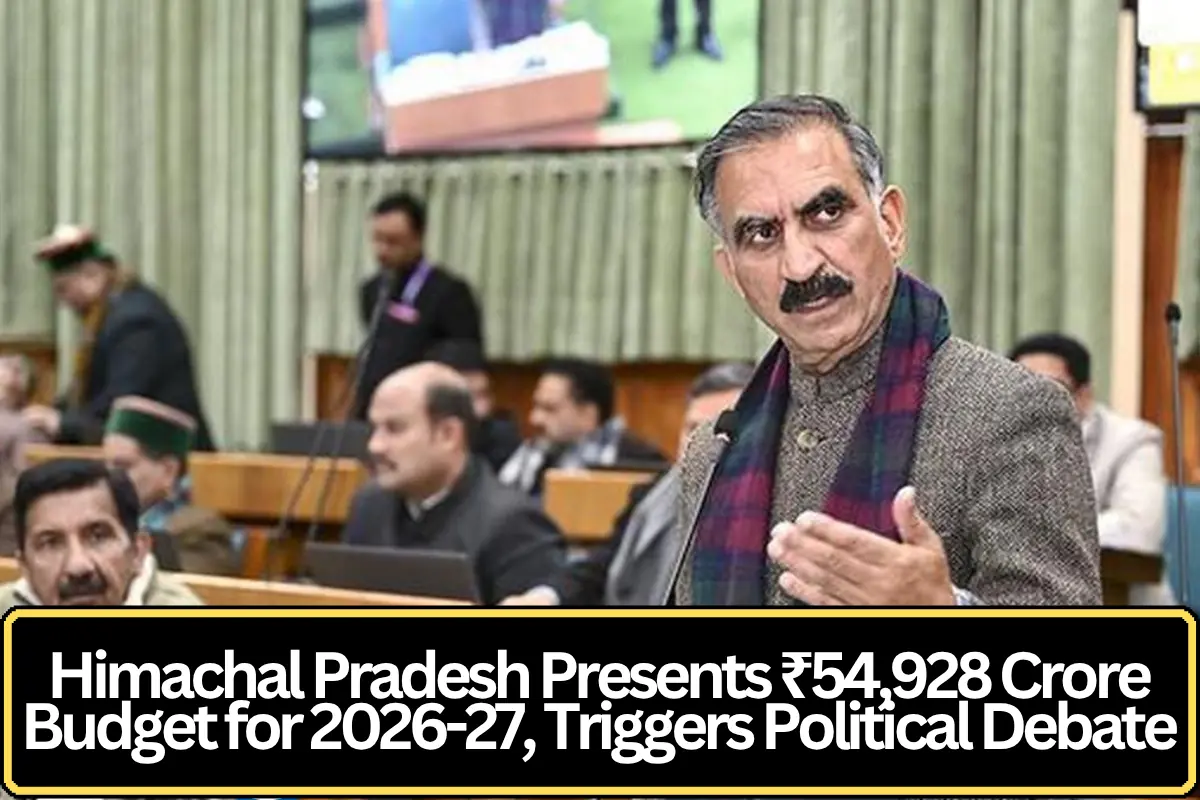
Himachal Pradesh Unveils ₹54,928 Crore Budget Amid Political Reactions
The Himachal Pradesh government has presented a ₹54,928 crore budget for the financial year 2026-27, triggering sharp political reactions from both the ruling party and the opposition. The budget, unveiled in the state assembly, outlines spending priorities, revenue strategies, and welfare initiatives, while also highlighting the government’s approach to economic growth and fiscal management.
The announcement comes at a time of heightened political activity in the state, with parties closely scrutinizing fiscal decisions ahead of future electoral contests. While the government has described the budget as development-oriented and focused on strengthening the rural economy, opposition leaders have raised concerns over financial sustainability and allocation priorities.
Focus on Rural Economy and Development Initiatives
The budget places significant emphasis on rural development, agriculture, and infrastructure expansion, reflecting the state’s largely agrarian economy. Allocations have been made for improving irrigation facilities, enhancing rural connectivity, and supporting farmers through various subsidy and assistance programs.
Government officials stated that the budget aims to boost economic activity in rural areas, generate employment opportunities, and improve living standards. Investments in sectors such as education, healthcare, and social welfare have also been highlighted as key components of the financial plan.
The administration has argued that these measures will contribute to long-term economic stability and inclusive growth, particularly in remote and underserved regions.
Revenue and Fiscal Management Strategy
On the revenue side, the government has outlined measures to enhance tax collection, improve compliance, and optimize resource utilization. Efforts to increase non-tax revenue, including through tourism and state-owned enterprises, have also been emphasized.
Officials have acknowledged the challenges posed by rising expenditure commitments and limited revenue sources, but expressed confidence in the state’s ability to manage its finances effectively. The budget includes provisions aimed at maintaining fiscal discipline while supporting development initiatives.
However, analysts note that balancing expenditure with revenue generation will remain a key challenge, particularly in the face of economic uncertainties and increasing public expectations.
Opposition Criticism and Concerns
The opposition has criticized the budget, alleging that it lacks concrete measures to address the state’s fiscal deficit and rising debt levels. Leaders have questioned the feasibility of certain schemes and accused the government of presenting an overly optimistic financial outlook.
Concerns have also been raised about the allocation of funds across sectors, with opposition parties arguing that critical areas may not have received adequate attention. Some have described the budget as politically motivated, aimed at appealing to specific voter groups.
In response, the government has rejected these claims, asserting that the budget is balanced and designed to meet the needs of all sections of society.
Political Implications and Debate
The budget has quickly become a focal point of political debate in Himachal Pradesh, with both sides using it to advance their narratives. The ruling party has positioned the financial plan as a roadmap for development and economic resilience, while the opposition has framed it as a missed opportunity to address structural challenges.
Political analysts suggest that such debates are likely to intensify as parties seek to influence public opinion and strengthen their positions ahead of elections. Fiscal policy decisions often play a significant role in shaping voter perceptions, particularly in states with closely contested political landscapes.
The ongoing discussions in the assembly and public forums reflect the broader importance of the budget in defining the state’s economic direction.
Sectoral Allocations and Policy Priorities
The budget outlines allocations for key sectors, including infrastructure, education, healthcare, and social welfare. Investments in road development, public transport, and urban infrastructure are expected to support economic growth and improve connectivity.
In the social sector, the government has proposed initiatives aimed at strengthening healthcare services, expanding educational opportunities, and supporting vulnerable populations. These measures are intended to address disparities and promote inclusive development.
The emphasis on sectoral development highlights the government’s effort to balance immediate needs with long-term growth objectives.
Economic Context and Challenges
The budget is being presented against a backdrop of broader economic challenges, including inflationary pressures, resource constraints, and the need for sustainable growth. Like many states, Himachal Pradesh faces the task of managing limited resources while meeting increasing demands for public services.
Experts note that effective implementation of budget proposals will be crucial in achieving desired outcomes. Monitoring expenditure, ensuring transparency, and maintaining fiscal discipline will play key roles in determining the success of the financial plan.
The state’s economic performance in the coming year will depend on both internal policy decisions and external factors, including national and global economic trends.
Public and Stakeholder Response
Reactions from various stakeholders, including industry groups, farmers’ associations, and civil society organizations, have been mixed. While some have welcomed the focus on rural development and welfare measures, others have called for greater clarity on implementation and funding mechanisms.
There is also a growing demand for increased transparency and accountability in budget execution, with stakeholders emphasizing the importance of delivering on announced promises.
Public engagement and feedback are expected to influence the government’s approach as it moves forward with the budget’s implementation.
Outlook for the Financial Year
Looking ahead, the Himachal Pradesh government faces the challenge of translating its budget proposals into tangible outcomes. Effective governance, efficient resource management, and timely execution of projects will be critical in achieving the stated objectives.
The political debate surrounding the budget is likely to continue, shaping the discourse on economic policy and governance in the state. As the financial year progresses, both the government and the opposition will closely monitor developments and assess the impact of the budget on various sectors.
The coming months will provide a clearer picture of how the budget influences the state’s economic trajectory and political landscape.
Conclusion
The ₹54,928 crore budget has set the stage for both development initiatives and political contestation in Himachal Pradesh, reflecting the complex interplay between economics and politics.
Current Status
The budget has been presented in the assembly, with discussions and political debate ongoing as stakeholders evaluate its implications for the state’s economy and governance.