Hong Kong Targets No.2 Global Finance Rank in 15 Years: Paul Chan
Hong Kong aims to rise to the world’s No.2 financial centre within 10–15 years, backed by policy reforms, capital market expansion, and wealth management growth.
 Tripti Srivastava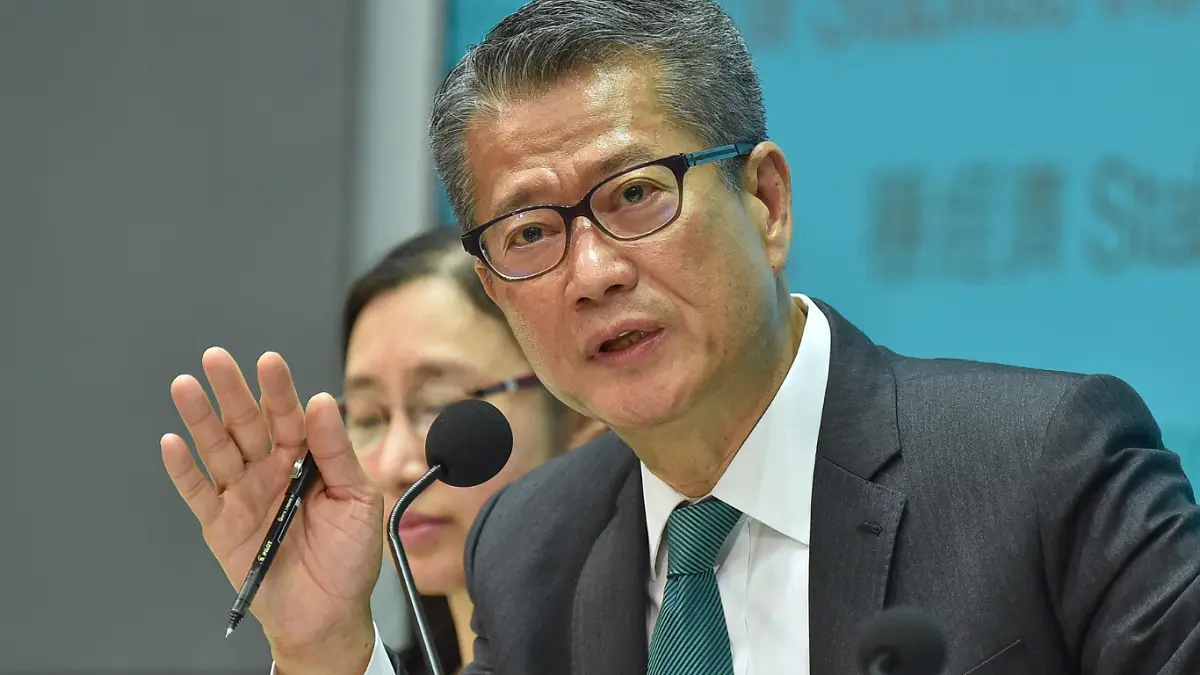
Hong Kong is aiming to climb to at least second place among global financial centres within the next 10 to 15 years, Financial Secretary Paul Chan said, outlining an ambitious strategy backed by policy reforms, capital market expansion, and growth in wealth management.
Speaking at the HSBC Global Investment Summit, Chan highlighted that the city, currently ranked third globally, is leveraging its financial stability, policy support, and expanding market capabilities to strengthen its position in international finance.
Current Ranking and Competitive Position
Hong Kong presently ranks third worldwide and first in the Asia-Pacific region in the latest Global Financial Centres Index. The index, compiled by Z/Yen and the China Development Institute, places the city just behind New York and London, while narrowly ahead of Singapore.
The ranking reflects Hong Kong’s strong performance across multiple financial sectors, including banking, fintech, and capital markets, as well as its role as a major gateway for cross-border investment flows.
Chan emphasised that while the city has maintained its position despite global market volatility and geopolitical challenges, the government is focused on advancing its competitive edge to move higher in the rankings.
A key pillar of Hong Kong’s growth strategy involves diversifying its financial services beyond traditional equity markets. Authorities are working to strengthen fixed income, currency trading, and green and sustainable finance segments.
The government’s “Finance+” initiative, highlighted in the 2026–27 Budget, aims to deepen the equity market while expanding bond and currency markets. It also prioritises the development of digital assets and sustainable finance to align with evolving global investment trends.
These efforts are designed to position Hong Kong as a comprehensive capital-raising hub for both mainland Chinese and international companies, thereby enhancing its role in global capital markets.
Wealth Management and Family Office Growth
Hong Kong is also targeting significant expansion in wealth and asset management, particularly through the development of a regional family office hub. Policy measures, including tax incentives and regulatory adjustments, are being introduced to attract high-net-worth individuals and institutional investors.
Officials have identified wealth management as a major growth driver, supported by increasing demand for overseas asset allocation from mainland China. Rising income levels and capital diversification needs are expected to create sustained opportunities for the sector.
The city’s position as a leading cross-border wealth management platform further reinforces its attractiveness to global investors seeking access to Asian markets.
Hong Kong remains the world’s largest offshore renminbi (RMB) centre, a status that continues to underpin its importance in global finance. Authorities see further growth potential in offshore RMB products and cross-border financial services.
The city’s financial infrastructure supports the internationalisation of the Chinese currency, enabling global investors to access RMB-denominated assets while facilitating cross-border trade and investment.
This unique positioning is expected to play a central role in Hong Kong’s long-term strategy to strengthen its global financial standing.
Policy Support and Market Reforms
Recent policy initiatives aim to reinforce Hong Kong’s financial ecosystem and support its upward trajectory in global rankings. These include new regulatory regimes for virtual assets and stablecoins, as well as targeted tax measures to enhance the competitiveness of asset and wealth management sectors.
The government has also established task forces to coordinate across industries and support companies expanding internationally, particularly mainland firms seeking global market access.
Chan noted that Hong Kong’s financial stability, supported by robust regulatory frameworks and market surveillance systems, provides a strong foundation for managing volatility and sustaining growth.
Hong Kong’s ambitions are closely aligned with broader national economic goals, including China’s push to strengthen its global financial influence. The city is positioning itself as both a gateway for foreign investment into mainland China and a platform for Chinese companies expanding overseas.
Authorities have emphasised Hong Kong’s role in supporting the country’s long-term development plans, particularly in facilitating cross-border capital flows and enhancing financial connectivity.
Chan reiterated that the city’s adaptability and ability to respond to changing geopolitical conditions remain key strengths, enabling it to maintain resilience while pursuing growth.
With a combination of policy reforms, market expansion, and strategic positioning, Hong Kong is seeking to solidify its role as a leading global financial centre and narrow the gap with the top-ranked markets in the coming decade.