Orbán Faces Tough Challenge as Opposition Gains Ground in Hungary Polls
Hungary’s 2026 election sees Viktor Orban face a strong challenge from Peter Magyar as voters weigh change amid economic and political concerns.
 SANJANA DUTTA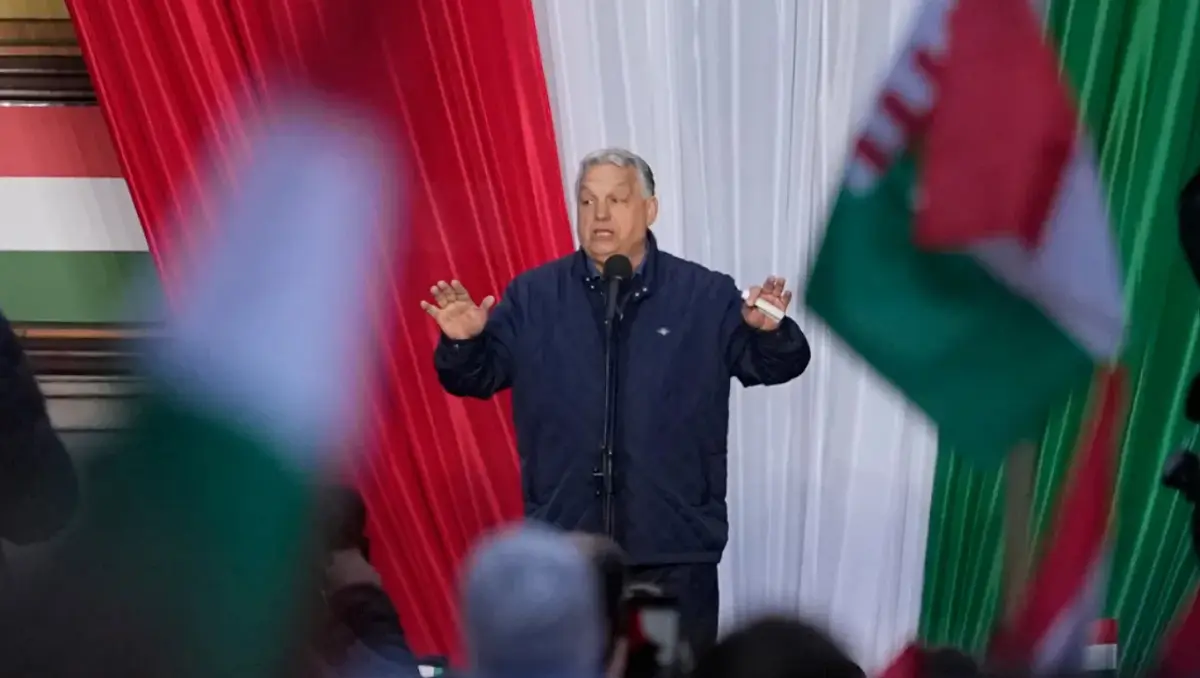
BUDAPEST, April 2026 — Hungarian Prime Minister Viktor Orbán faces one of the toughest electoral tests of his 16-year rule as the country votes, with a resurgent opposition and mounting economic pressures tightening the race.
Nearly eight million voters are set to decide whether to extend Orbán’s tenure or shift toward change, as opposition leader Peter Magyar and his Tisza party gain momentum in a closely contested election.
Opposition Surge Challenges Fidesz Dominance
Recent polls indicate Magyar’s pro-European Tisza party has edged ahead of Orbán’s ruling Fidesz, raising the possibility of a parliamentary majority. Large campaign rallies have signalled growing public support for change.
Magyar, a former ally of Orbán, rose to prominence during nationwide protests in 2024 and has focused his campaign on restoring ties with the European Union and addressing governance concerns.
Economic Pressures Drive Voter Discontent
Rising prices and cost-of-living pressures have emerged as key issues, fuelling voter dissatisfaction. Critics have also pointed to corruption concerns and the concentration of political power.
Magyar has centred his campaign on these issues, promising institutional reforms and improved economic management.
Global Stakes and Political Alignments
The election has drawn international attention, reflecting Hungary’s strategic position within Europe. The government has faced friction with the European Union over rule-of-law concerns and frozen funding.
Hungary’s ties with Moscow and its stance on the Ukraine war have further added geopolitical weight to the vote.
Campaign Messaging and Divided Electorate
Orbán has framed the election around security and foreign policy, warning of risks linked to the Ukraine conflict, though the message has received mixed responses.
While some voters remain loyal, citing stability and social policies, others have expressed frustration over economic challenges and governance issues.
Electoral System Adds Uncertainty
Hungary’s mixed electoral system, combining constituency races and party lists, adds uncertainty to the outcome. Analysts note that even a narrow lead in votes may not translate into a parliamentary majority.
What’s at Stake
The election could determine whether Hungary continues under Orbán’s long-standing leadership or moves toward a new political direction under a strengthened opposition.
The outcome is expected to have significant implications for Hungary’s relationship with the European Union and the broader geopolitical landscape.