
India Establishes AI Centres of Excellence to Advance Public Health Innovation
The Indian government has established artificial intelligence centers of excellence aimed at strengthening public health research, disease surveillance, and healthcare innovation through advanced technology and data-driven solutions.
 Akanksha jain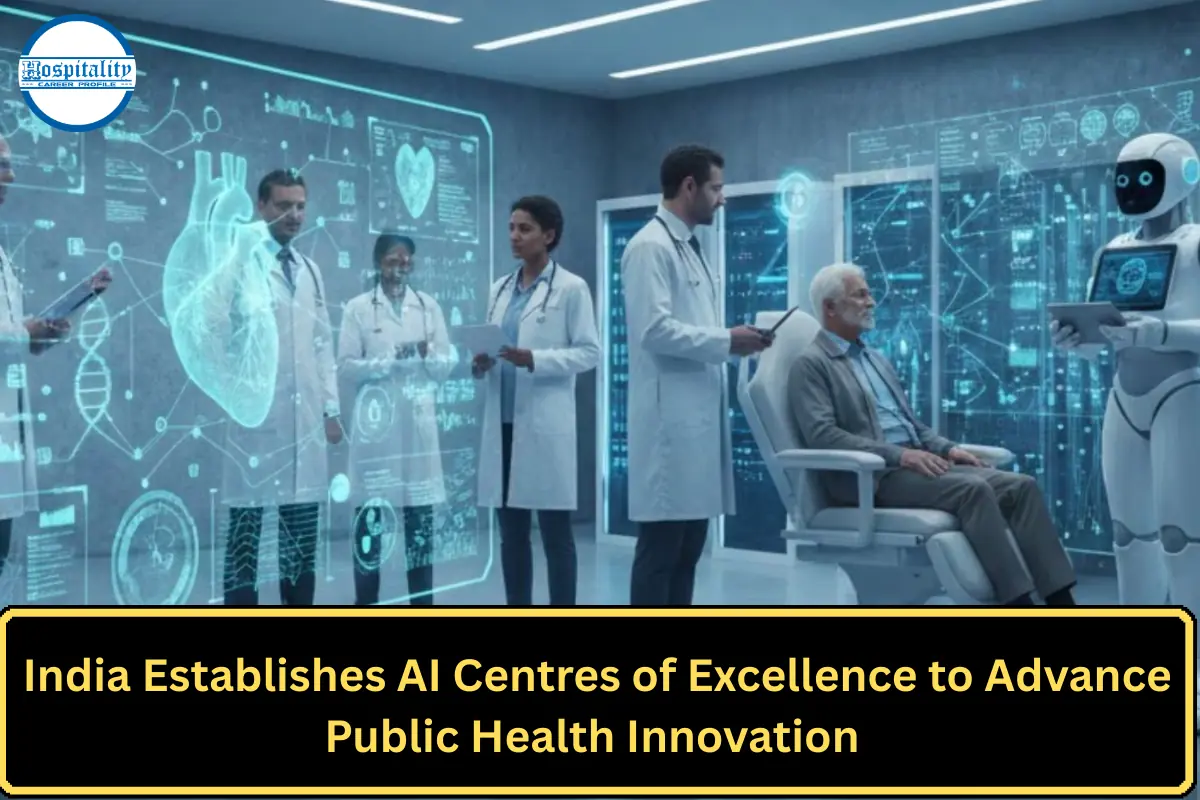
Government Launches AI Centres of Excellence to Strengthen Public Health Innovation
The Government of India has established new artificial intelligence centers of excellence aimed at advancing research and innovation in public health. The initiative, announced in 2026, is designed to support the development of technology-driven solutions that improve disease surveillance, healthcare management, and medical research across the country. Officials said the centers will bring together researchers, healthcare institutions, and technology experts to explore how artificial intelligence can strengthen India’s healthcare system.
The centers are expected to serve as hubs for interdisciplinary research where scientists, public health experts, and data specialists collaborate on projects focused on healthcare analytics, predictive disease modeling, and digital health platforms. By integrating advanced computing technologies with healthcare systems, the initiative seeks to improve the country’s capacity to respond to emerging health challenges and enhance the overall efficiency of public health services.
Government officials said the move reflects India’s broader strategy to integrate artificial intelligence into key sectors, including healthcare, where digital tools are increasingly being explored to support clinical decision-making and public health planning.
Focus on Technology-Driven Healthcare Solutions
The AI centers of excellence are expected to focus on developing technology solutions that can assist public health authorities in monitoring and responding to health issues. Artificial intelligence can analyze large datasets from hospitals, laboratories, and public health systems to detect patterns that may signal emerging health threats or disease outbreaks.
Such analytical capabilities may help health officials identify trends earlier and allocate medical resources more effectively. Predictive models developed using artificial intelligence can analyze population health data and estimate the potential spread of infectious diseases, enabling authorities to implement preventive measures more quickly.
Researchers working at the centers will also study how artificial intelligence can improve diagnostic tools, support healthcare planning, and assist in analyzing clinical data. These projects are expected to contribute to the development of new technologies that enhance both patient care and public health decision-making.
The initiative reflects a growing global trend in which governments are investing in digital health technologies to improve healthcare systems and respond to increasingly complex health challenges.
Strengthening Public Health Research Infrastructure
One of the key objectives of the centers of excellence is to strengthen India’s research infrastructure in the field of public health technology. By establishing dedicated research hubs focused on artificial intelligence, the government aims to encourage collaboration between healthcare professionals, academic researchers, and technology developers.
Such collaboration is considered essential for translating scientific research into practical tools that can be implemented in real healthcare environments. Artificial intelligence systems designed for healthcare applications must be carefully developed and validated to ensure accuracy, reliability, and patient safety.
The centers are expected to support research projects that involve analyzing medical records, evaluating healthcare delivery systems, and developing digital tools capable of assisting healthcare professionals in their daily work. These efforts may also contribute to the creation of data platforms that enable more efficient sharing and analysis of health information.
Officials say strengthening research infrastructure will help India build the expertise required to develop advanced healthcare technologies domestically.
Role of Artificial Intelligence in Public Health Management
Artificial intelligence technologies have increasingly been used in healthcare systems worldwide to support medical research, diagnostics, and hospital management. In public health, AI tools can analyze large volumes of epidemiological data to identify patterns related to disease spread, population health trends, and healthcare service demand.
Public health agencies often rely on complex datasets gathered from hospitals, laboratories, vaccination programs, and health surveys. Artificial intelligence can assist analysts by identifying correlations within these datasets that may otherwise be difficult to detect using traditional analytical methods.
For example, machine learning algorithms can evaluate historical health records to identify risk factors associated with certain diseases. These insights may help healthcare planners design preventive strategies or allocate resources more efficiently in areas with higher health risks.
Researchers believe that AI-driven tools may also assist public health authorities in evaluating the effectiveness of healthcare programs and identifying areas where improvements are needed.
Encouraging Collaboration Between Health and Technology Sectors
The establishment of AI centers of excellence is also intended to encourage collaboration between India’s healthcare sector and the technology industry. Successful development of artificial intelligence solutions for healthcare requires expertise from multiple disciplines, including medicine, data science, engineering, and public policy.
Through these centers, researchers and healthcare professionals will have opportunities to work alongside technology developers to design systems capable of addressing real-world healthcare challenges. Collaborative research programs may involve universities, hospitals, technology firms, and public health agencies.
Such partnerships can help ensure that technological innovations are aligned with the practical needs of healthcare providers and public health officials. By integrating knowledge from different fields, the centers aim to produce solutions that are both technically effective and clinically relevant.
Officials said interdisciplinary collaboration will be a key component of the initiative’s long-term success.
Supporting Digital Transformation in Healthcare
The creation of AI centers of excellence aligns with India’s broader efforts to promote digital transformation across its healthcare system. Over the past decade, the country has introduced several initiatives aimed at improving healthcare access, expanding digital health records, and supporting telemedicine services.
Artificial intelligence technologies are expected to play a growing role in these initiatives by providing tools that assist doctors, hospital administrators, and public health planners in managing healthcare data more effectively. Digital health systems generate large volumes of information, and AI can help analyze this data to produce actionable insights.
For example, hospitals may use AI systems to monitor patient trends, manage resources such as hospital beds and medical equipment, and identify areas where healthcare services can be improved. At the public health level, AI tools may assist authorities in monitoring disease patterns across large populations.
The government initiative is expected to support research that explores these possibilities and identifies practical applications of artificial intelligence within India’s healthcare infrastructure.
Addressing Challenges in Implementing AI in Healthcare
While artificial intelligence holds significant potential for healthcare innovation, experts note that implementing such technologies requires careful planning and oversight. Data privacy, system reliability, and ethical considerations must be addressed to ensure that AI tools are used responsibly in medical settings.
Healthcare data often includes sensitive personal information, and researchers must follow strict guidelines when collecting and analyzing such data. Ensuring that AI systems maintain patient confidentiality and comply with regulatory standards is essential.
Another challenge involves ensuring that AI models are accurate and unbiased. Because machine learning systems rely on training data, researchers must ensure that datasets represent diverse populations and medical conditions. This helps prevent potential errors or disparities in healthcare outcomes.
The centers of excellence are expected to incorporate ethical guidelines and technical standards into their research processes to ensure that AI applications are developed responsibly.
Future Outlook for AI in Public Health
The establishment of AI centers of excellence marks an important step in India’s efforts to expand the role of digital technologies in healthcare and public health research. By creating dedicated research hubs focused on artificial intelligence, the government aims to foster innovation that can improve healthcare delivery and strengthen disease prevention strategies.
As artificial intelligence technologies continue to evolve, researchers anticipate that new tools will emerge to assist healthcare professionals in diagnosing diseases, managing patient care, and monitoring public health trends. Continued investment in research and infrastructure will be necessary to translate these technological developments into practical healthcare solutions.
Government officials said the centers are expected to support long-term research initiatives that explore how artificial intelligence can enhance public health systems while maintaining patient safety and data security.
The initiative represents a broader commitment to using advanced technologies to address healthcare challenges and support innovation within India’s public health ecosystem.
Authorities said the newly established centers will continue developing research programs aimed at applying artificial intelligence to public health challenges while supporting collaboration among healthcare institutions, researchers, and technology experts.