India Strengthens Pharma Manufacturing Push with New Policy and Investment Focus
India is strengthening its pharmaceutical manufacturing sector through new policy measures and investment initiatives aimed at boosting domestic production and global competitiveness.
 Akanksha jain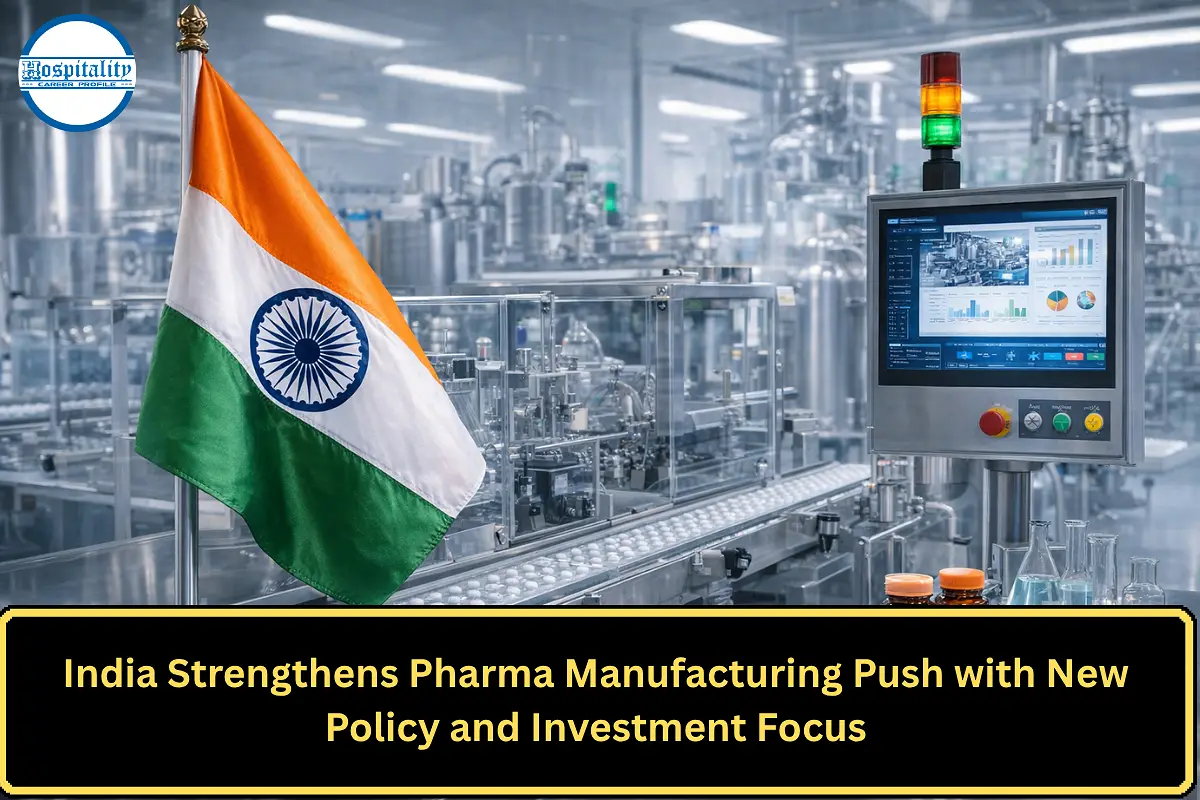
India Strengthens Pharma Manufacturing Push with New Policy and Investment Focus
India is intensifying efforts to strengthen its pharmaceutical manufacturing sector through new policy initiatives and increased investment focus in 2026, as the government and industry stakeholders aim to boost domestic production, reduce import dependence, and enhance global competitiveness. The developments come amid growing demand for medicines worldwide and the need for resilient supply chains in the healthcare sector.
The latest measures are designed to support local manufacturing of active pharmaceutical ingredients (APIs), finished formulations, and advanced therapies, while encouraging innovation and technological upgrades across the industry. Officials and industry experts say the push is part of a broader strategy to position India as a leading global hub for pharmaceutical production.
Policy Measures to Boost Domestic Production
Authorities are focusing on strengthening policy frameworks that incentivize domestic manufacturing, including production-linked incentives, infrastructure support, and streamlined regulatory processes. These measures are intended to encourage pharmaceutical companies to expand their manufacturing capacity within the country.
Reducing reliance on imported raw materials, particularly APIs, has emerged as a key priority. Supply chain disruptions in recent years have highlighted vulnerabilities, prompting policymakers to promote self-sufficiency in critical drug components.
Industry participants have welcomed the initiatives, noting that consistent policy support can help create a stable environment for long-term investment and growth.
Investment in Infrastructure and Technology
Investment in modern manufacturing infrastructure and advanced technologies is central to the strategy. Companies are being encouraged to adopt automation, digital tools, and quality control systems to enhance efficiency and ensure compliance with global standards.
Upgrading manufacturing facilities is expected to improve productivity and enable the production of complex and high-value drugs. The focus on technology is also aligned with global trends, where innovation plays a critical role in maintaining competitiveness.
Public and private sector collaboration is seen as essential for driving these investments and accelerating the modernization of the industry.
Expanding Global Market Presence
India is already one of the largest suppliers of generic medicines globally, and the new initiatives aim to further expand its presence in international markets. Strengthening manufacturing capabilities is expected to enhance export potential and reinforce India’s position as a reliable supplier of affordable medicines.
Efforts are also being made to diversify export markets and reduce dependence on a limited number of regions. Trade agreements and regulatory harmonization are expected to play a role in facilitating market access.
Industry experts believe that improved manufacturing standards and increased capacity will help Indian companies compete more effectively on a global scale.
Focus on Innovation and R&D
In addition to manufacturing, there is a growing emphasis on research and development to support innovation in drug discovery and formulation. Companies are being encouraged to invest in developing new therapies and improving existing products.
The integration of research with manufacturing is expected to create a more robust pharmaceutical ecosystem, enabling faster development and commercialization of new drugs. This approach aligns with global trends that emphasize innovation-driven growth in the pharmaceutical sector.
Government initiatives are also supporting collaboration between industry, academia, and research institutions to foster innovation.
Addressing Regulatory and Compliance Challenges
Ensuring compliance with international regulatory standards remains a critical aspect of the strategy. Indian pharmaceutical manufacturers must meet stringent quality and safety requirements to access global markets.
Regulatory authorities are working to streamline approval processes and improve oversight mechanisms, aiming to enhance transparency and efficiency. Strengthening regulatory frameworks is expected to boost investor confidence and support industry growth.
Companies are also investing in quality assurance systems to maintain compliance and build trust with global partners.
Employment and Economic Impact
The expansion of pharmaceutical manufacturing is expected to generate employment opportunities across various segments, including production, research, and logistics. The sector plays a significant role in India’s economy, contributing to exports and industrial development.
Increased investment and capacity expansion are likely to create jobs and support regional development, particularly in areas with established pharmaceutical clusters. The growth of the industry is also expected to have positive spillover effects on related sectors.
Policymakers view the pharmaceutical sector as a key driver of economic growth and a strategic industry for national development.
Challenges and Industry Outlook
Despite the positive outlook, challenges remain, including rising input costs, competition from global manufacturers, and the need for continuous innovation. Addressing these challenges will require sustained investment and strategic planning.
Industry stakeholders emphasize the importance of maintaining policy consistency and providing long-term support to ensure the success of the initiatives. Collaboration between government and industry will be crucial in overcoming obstacles and achieving growth targets.
Experts expect the pharmaceutical sector to continue evolving, with increased focus on high-value products and advanced manufacturing techniques.
Conclusion
India’s renewed focus on pharmaceutical manufacturing through policy support and investment initiatives marks a significant step toward strengthening its position in the global healthcare industry, with further developments expected as the strategy is implemented.