India Launches ‘TB Mukt Bharat’ 100-Day Campaign on World TB Day 2026
India launches a 100-day ‘TB Mukt Bharat’ campaign on World TB Day 2026, aiming to accelerate efforts to eliminate tuberculosis nationwide.
 Akanksha jain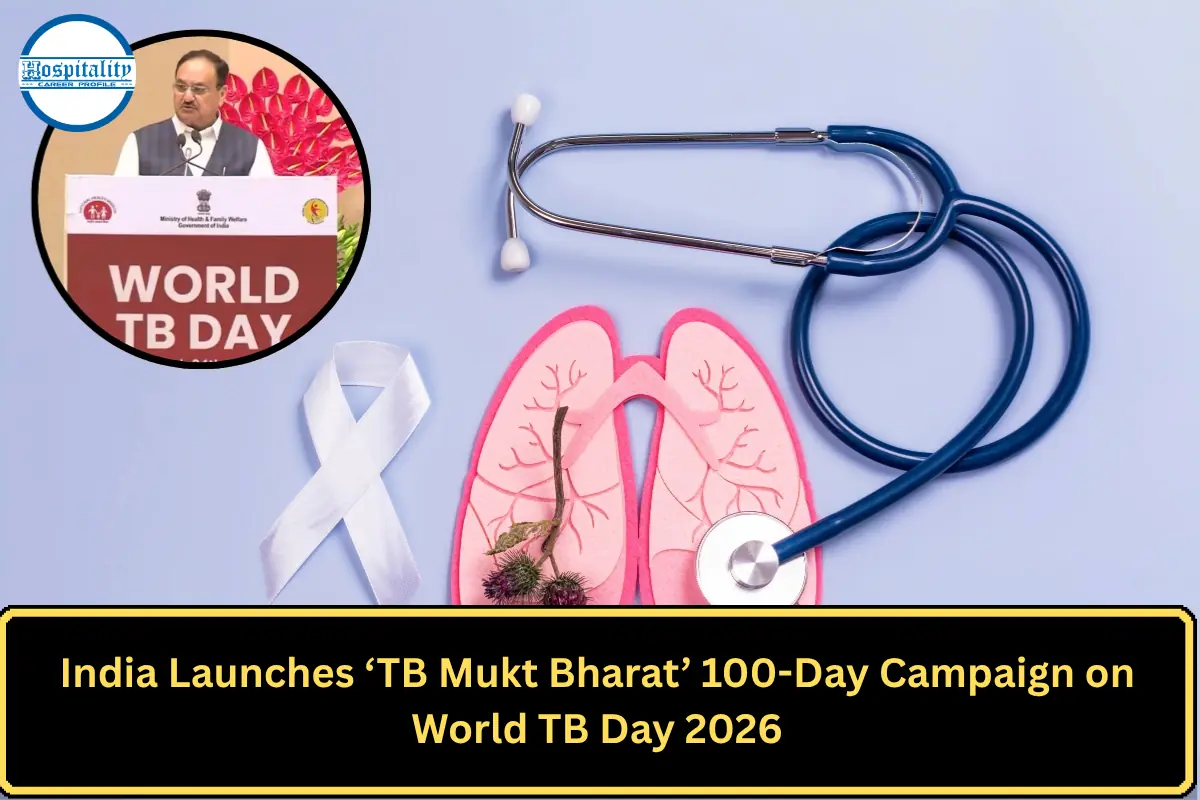
India Launches ‘TB Mukt Bharat’ 100-Day Campaign on World TB Day 2026
India, on March 24, 2026, marked World Tuberculosis Day with the launch of a nationwide 100-day intensified campaign titled ‘TB Mukt Bharat,' led by Union Health Minister J.P. Nadda, aiming to accelerate efforts to eliminate tuberculosis across the country through targeted interventions, enhanced screening, and community engagement.
The campaign, unveiled during a national event, seeks to strengthen India’s ongoing fight against tuberculosis, one of the country’s most pressing public health challenges. The initiative focuses on high-burden districts and vulnerable populations, with the goal of rapidly identifying, treating, and preventing TB cases within a defined timeframe.
Focused Strategy to Eliminate Tuberculosis
The ‘TB Mukt Bharat’ 100-day campaign is designed as an intensive, mission-mode effort to reduce TB incidence and mortality rates. Health authorities have outlined a multi-pronged approach that includes active case finding, early diagnosis, improved treatment adherence, and expanded use of digital health tools.
Officials emphasized that the campaign aligns with India’s broader goal of eliminating tuberculosis ahead of global targets. By concentrating resources and attention within a fixed period, the initiative aims to achieve measurable progress in controlling the disease.
The strategy also involves strengthening coordination between central and state governments to ensure effective implementation at the grassroots level.
Targeting High-Risk Populations
A key component of the campaign is its focus on high-risk and underserved populations, including individuals in densely populated urban areas, remote rural communities, and those with limited access to healthcare services. These groups are often disproportionately affected by TB due to factors such as poverty, malnutrition, and lack of awareness.
Health workers will conduct door-to-door screenings, community outreach programs, and awareness drives to identify suspected cases and ensure timely diagnosis. Mobile health units and local healthcare centers are being mobilized to support these efforts.
Experts note that targeting vulnerable populations is essential for breaking the chain of transmission and reducing the overall burden of the disease.
Strengthening Diagnostic and Treatment Systems
The campaign places significant emphasis on improving diagnostic capabilities and treatment infrastructure. Advanced diagnostic tools, including molecular testing technologies, are being deployed to enable faster and more accurate detection of TB cases.
Ensuring uninterrupted access to quality-assured medications is another priority, with the government working to strengthen supply chains and healthcare delivery systems. Treatment adherence programs, supported by digital monitoring tools, aim to reduce default rates and improve patient outcomes.
Healthcare providers are also being trained to manage drug-resistant TB cases more effectively, a growing concern in the country’s TB landscape.
Community Engagement and Awareness
Public awareness and community participation are central to the success of the ‘TB Mukt Bharat’ initiative. Authorities are launching nationwide campaigns to educate people about TB symptoms, prevention methods, and the importance of completing treatment.
Community health workers, non-governmental organizations, and local leaders are being engaged to disseminate information and encourage early reporting of symptoms. Efforts are also being made to reduce stigma associated with TB, which often prevents individuals from seeking timely medical care.
Experts stress that sustained community engagement is critical for achieving long-term success in TB elimination.
Integration with Existing Health Programs
The 100-day campaign is being integrated with existing national health programs to maximize impact and efficiency. Initiatives such as nutritional support schemes and primary healthcare services are being leveraged to address underlying risk factors associated with TB.
Collaboration with other public health initiatives ensures a comprehensive approach to disease management, addressing both medical and socio-economic determinants of health. This integrated strategy is expected to enhance the effectiveness of interventions.
Officials highlight that synergy between programs is essential for achieving sustainable health outcomes.
Role of Technology in TB Control
Digital health technologies are playing a crucial role in the campaign, enabling real-time tracking of cases, monitoring of treatment adherence, and data-driven decision-making. Platforms for patient management and reporting are being utilized to improve coordination among healthcare providers.
Telemedicine services are also being expanded to reach patients in remote areas, ensuring continuity of care and reducing the burden on healthcare facilities. These technological interventions are expected to enhance the efficiency and reach of the campaign.
Experts believe that leveraging technology is key to modernizing TB control efforts.
Challenges in TB Elimination
Despite ongoing efforts, India continues to face several challenges in eliminating tuberculosis. These include high population density, socio-economic disparities, and the prevalence of drug-resistant TB strains. Limited awareness and healthcare access in certain regions further complicate the situation.
Addressing these challenges requires sustained investment, policy support, and collaboration across sectors. Experts caution that while short-term campaigns can drive progress, long-term commitment is essential for achieving elimination goals.
The campaign aims to address these challenges through targeted interventions and strengthened healthcare systems.
Global Context and India’s Commitment
India accounts for a significant share of the global TB burden, making its efforts critical to achieving worldwide elimination targets. The launch of the ‘TB Mukt Bharat’ campaign reflects the country’s commitment to addressing this public health issue with urgency and scale.
International health organizations have emphasized the importance of India’s role in global TB control, noting that progress in the country can significantly impact global statistics. Collaborative efforts and knowledge sharing are expected to support these initiatives.
The campaign also aligns with global strategies aimed at ending TB as a public health threat.
Future Outlook
Looking ahead, the success of the 100-day campaign will depend on effective implementation, continuous monitoring, and sustained engagement from all stakeholders. Authorities plan to evaluate outcomes and identify best practices for scaling up successful interventions.
Experts suggest that lessons learned from the campaign could inform future strategies and strengthen India’s overall TB control framework. Continued investment in healthcare infrastructure, research, and community outreach will be essential for maintaining momentum.
The initiative represents a significant step toward achieving the goal of a TB-free India.
Conclusion
The launch of the ‘TB Mukt Bharat’ 100-day campaign on World TB Day 2026 underscores India’s intensified efforts to eliminate tuberculosis, with targeted actions, community engagement, and technological integration expected to play a pivotal role in reducing the disease burden nationwide.