India, US Begin Fresh Trade Talks April 20 as Tariff Shift Forces Reset
India and the US begin three-day trade talks from April 20 to revise a bilateral deal after tariff changes, with exports at $87.3 billion and surplus narrowing.
 RUKAIYA KADIVAL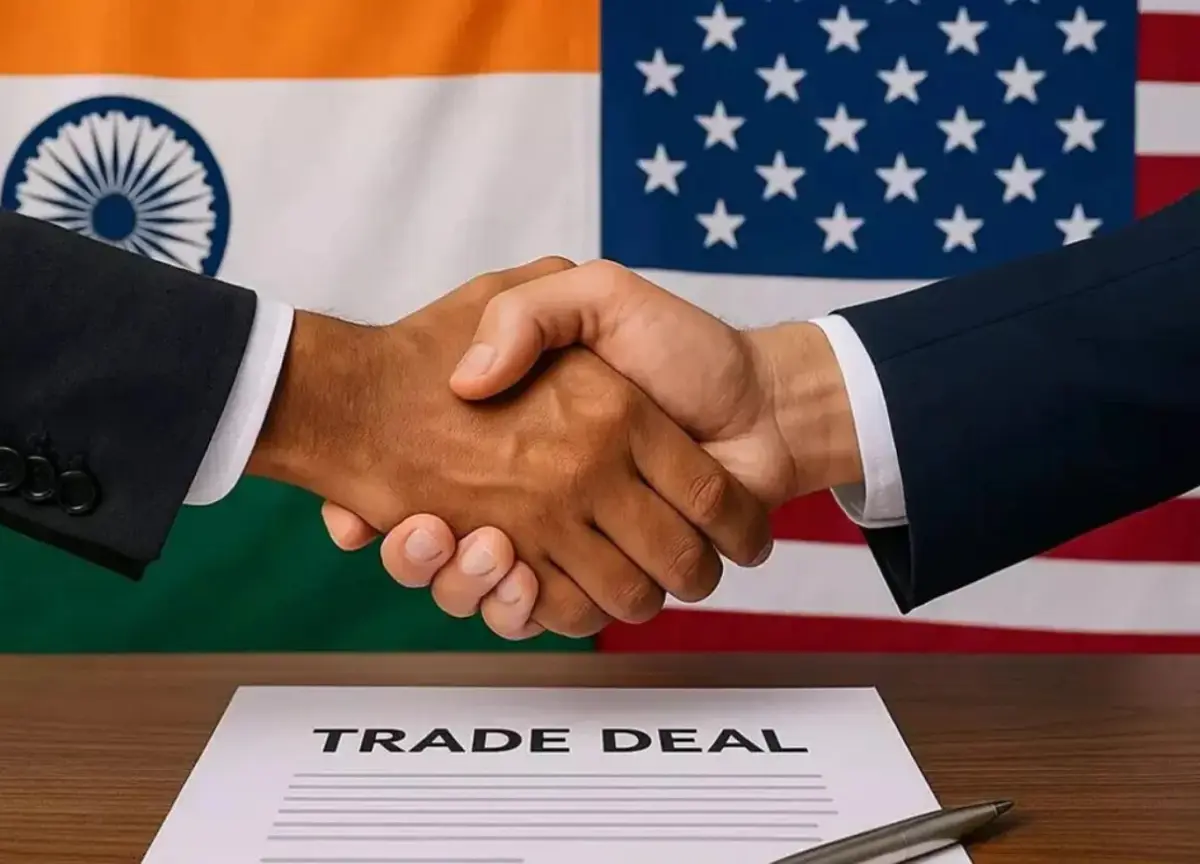
April 19, 2026: India and United States will resume negotiations on a proposed bilateral trade agreement (BTA) from April 20 to 22 in Washington, with talks expected to recalibrate terms after a new US tariff regime and as India’s trade surplus with the US narrowed to $34.4 billion in 2025-26.
The three-day discussions mark the first formal engagement between the two sides since major changes in US trade policy earlier this year disrupted the framework of a draft agreement finalised in February but not yet signed.
Talks Resume Under New Tariff Framework
The Indian delegation, led by chief negotiator Darpan Jain, additional secretary in the commerce department, will include officials from the customs department and the ministry of external affairs. The team is expected to engage US counterparts on restructuring the proposed agreement in light of recent tariff changes.
The negotiations were delayed after the US revised its tariff structure following a ruling by the US Supreme Court that struck down reciprocal tariffs imposed under the 1977 International Emergency Economic Powers Act. In response, Washington introduced a temporary flat 10% tariff on imports from all countries for a 150-day period beginning February 24.
This shift has altered the relative trade advantages under the earlier draft agreement, prompting both sides to revisit key provisions. Officials indicated that the agreement would need to be “recalibrated” and redrafted to align with the updated tariff environment.
Trade Data Highlights Shifting Dynamics
Recent trade figures underline evolving economic ties between the two countries. India’s exports to the US rose marginally by 0.92% to $87.3 billion in the last financial year, while imports from the US increased by 15.95% to $52.9 billion.
As a result, India’s trade surplus with the US narrowed to $34.4 billion in 2025-26, down from $40.89 billion in the previous year. The data reflects a faster growth in imports compared to exports, contributing to the reduced surplus.
At the same time, broader trade patterns have shifted, with China emerging as India’s largest trading partner in 2025-26, replacing the United States, which held the position for four consecutive years through 2024-25.
Section 301 Probes Add to Negotiation Agenda
In addition to tariff-related issues, the upcoming talks are expected to address two investigations initiated by the US Trade Representative under Section 301 of US trade law. India has formally contested these probes, arguing that the initiation notices lack sufficient justification.
New Delhi has sought the withdrawal of these investigations, making them a key point of discussion during the negotiations. The outcome of these deliberations could influence broader trade relations and regulatory alignment between the two economies.
The inclusion of these issues highlights the complexity of the negotiations, which extend beyond tariffs to cover regulatory and compliance frameworks.
Agreement Revisions and Strategic Context
The current round of talks is taking place against a backdrop of shifting global trade policies, with multiple countries reassessing their positions under the revised US tariff structure. For India, the fact that the BTA has not yet been signed provides flexibility to incorporate changes before finalisation.
Officials indicated that both sides are likely to examine the structure of concessions and market access provisions under the agreement to ensure compatibility with the new tariff regime.
The negotiations also reflect broader strategic efforts by both countries to strengthen economic ties while addressing emerging trade challenges in a changing global environment.
Current Status
The April 20–22 meetings represent a critical step in reviving momentum on the bilateral trade agreement after earlier delays. While discussions are expected to focus on technical adjustments and policy alignment, the outcome will depend on how both sides reconcile differences arising from the revised tariff framework.
With trade volumes remaining significant and policy shifts continuing to reshape global commerce, the talks are set to play a key role in defining the next phase of India-US economic engagement.