Indira Gandhi’s Remark on Being Called ‘A Man’ Resurfaces on International Women’s Day
A remark by former Prime Minister Indira Gandhi about feeling insulted when called “a man” has resurfaced on International Women’s Day, sparking discussions on leadership and gender stereotypes.
 SANJANA DUTTA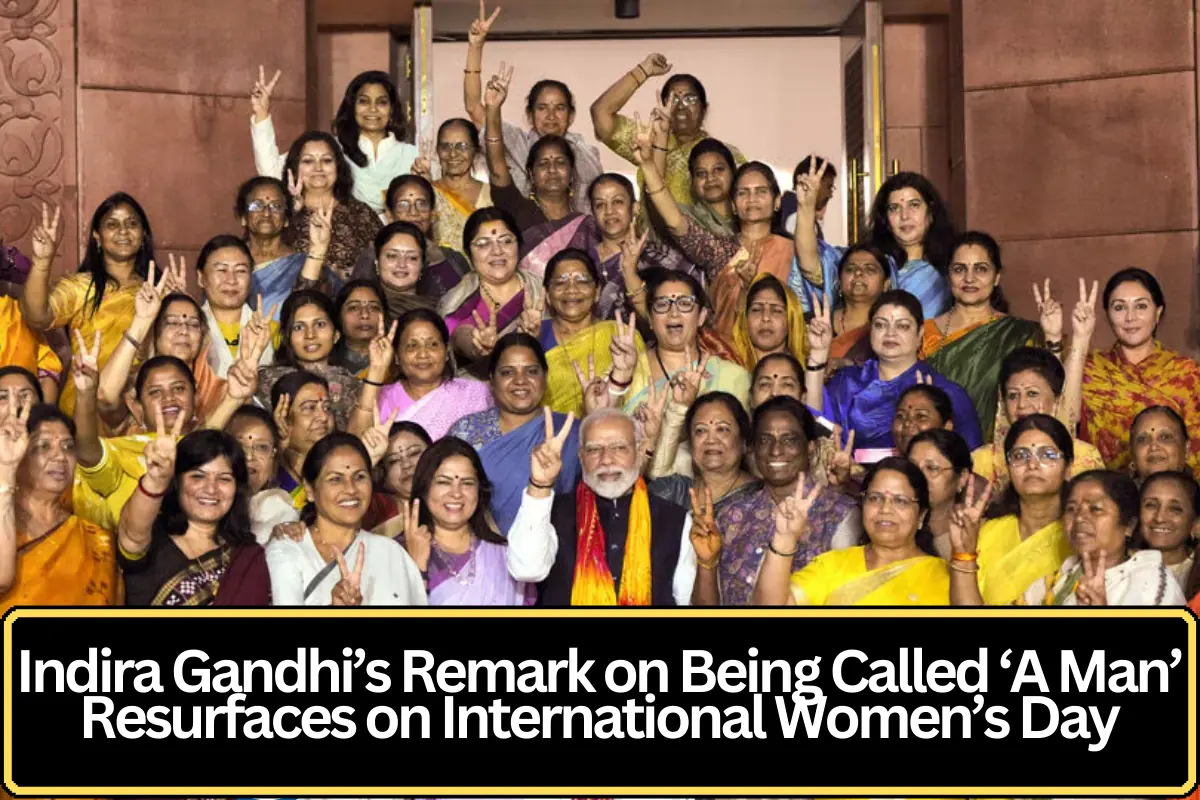
Indira Gandhi’s Words Gain Attention on Women’s Day
A remark by former Prime Minister Indira Gandhi about being called “a man” while praising her leadership has resurfaced on social media during International Women’s Day celebrations. The statement, widely shared in a viral video and posts online, has sparked discussions about gender stereotypes and the recognition of women leaders.
The comment attributed to Gandhi reflects her reaction to a common compliment often directed at women in leadership positions. In the clip circulating online, she expressed discomfort with the notion that strength or effectiveness in leadership should be compared to being “like a man.”
The renewed attention to the statement has prompted conversations about how women in politics and other sectors have historically been judged by standards traditionally associated with male leadership.
The Context Behind the Remark
Indira Gandhi, who served as India’s Prime Minister for multiple terms, was one of the most influential political leaders in the country’s history. During her tenure, she frequently faced commentary about her leadership style, often framed in gendered terms.
According to accounts widely shared online, Gandhi once said that she felt insulted when people praised her by saying she had the courage or strength of a man. The remark highlighted her belief that such comparisons diminished the idea that women could naturally possess the same leadership qualities.
Observers say the statement captured a broader issue faced by many women leaders around the world: being evaluated through gender‑based expectations rather than their abilities and achievements.
Social Media Reactions
The clip featuring Gandhi’s remarks has circulated widely across social media platforms as people mark International Women’s Day. Many users have shared the quote as a reminder of the persistent stereotypes that women leaders often encounter.
Supporters say the message remains relevant today, particularly as women continue to push for equal representation in politics, business, and other areas of public life.
Others have used the moment to highlight Gandhi’s role as a pioneering figure in Indian politics and her influence on future generations of women leaders.
Indira Gandhi’s Legacy
Indira Gandhi served as Prime Minister of India for over a decade and remains one of the most prominent figures in the country’s political history. Her tenure included significant political and economic decisions that shaped India’s development.
As the first and, so far, only woman to hold the office of Prime Minister in India, Gandhi’s leadership often placed her at the centre of discussions about women’s representation in politics.
Her political career also sparked debates about power, governance, and leadership, making her one of the most discussed figures in modern Indian history.
Women in Leadership and Changing Attitudes
The renewed attention to Gandhi’s remarks has encouraged broader reflection on how society views women in leadership roles. Despite progress in gender equality, women leaders still face stereotypes and expectations that differ from those applied to men.
Experts say such attitudes can influence how leadership qualities are perceived and recognised. Efforts to promote gender equality therefore focus not only on increasing representation but also on changing perceptions about leadership itself.
International Women’s Day frequently brings these issues into public discussion, encouraging societies to acknowledge both achievements and ongoing challenges.
International Women’s Day Conversations
International Women’s Day, observed on March 8, highlights the achievements of women while calling for continued progress toward gender equality. Discussions during the day often explore historical moments, influential figures, and ideas that have shaped the movement for women’s rights.
The resurfacing of Indira Gandhi’s remark has become part of this broader conversation, illustrating how past experiences of women leaders continue to resonate in present‑day discussions.
As people reflect on women’s contributions and challenges, such moments from history provide insight into the evolving understanding of leadership, equality, and respect.
For many observers, Gandhi’s words serve as a reminder that recognising women’s achievements should not require comparisons with traditional gender expectations.