International Women’s Day 2026 Webinar Focuses on Moving From Tokenism to True Gender Parity in Global Leadership
An International Women’s Day 2026 webinar explores how societies can move beyond symbolic representation to achieve real gender parity in leadership, governance, and global institutions.
 SANJANA DUTTA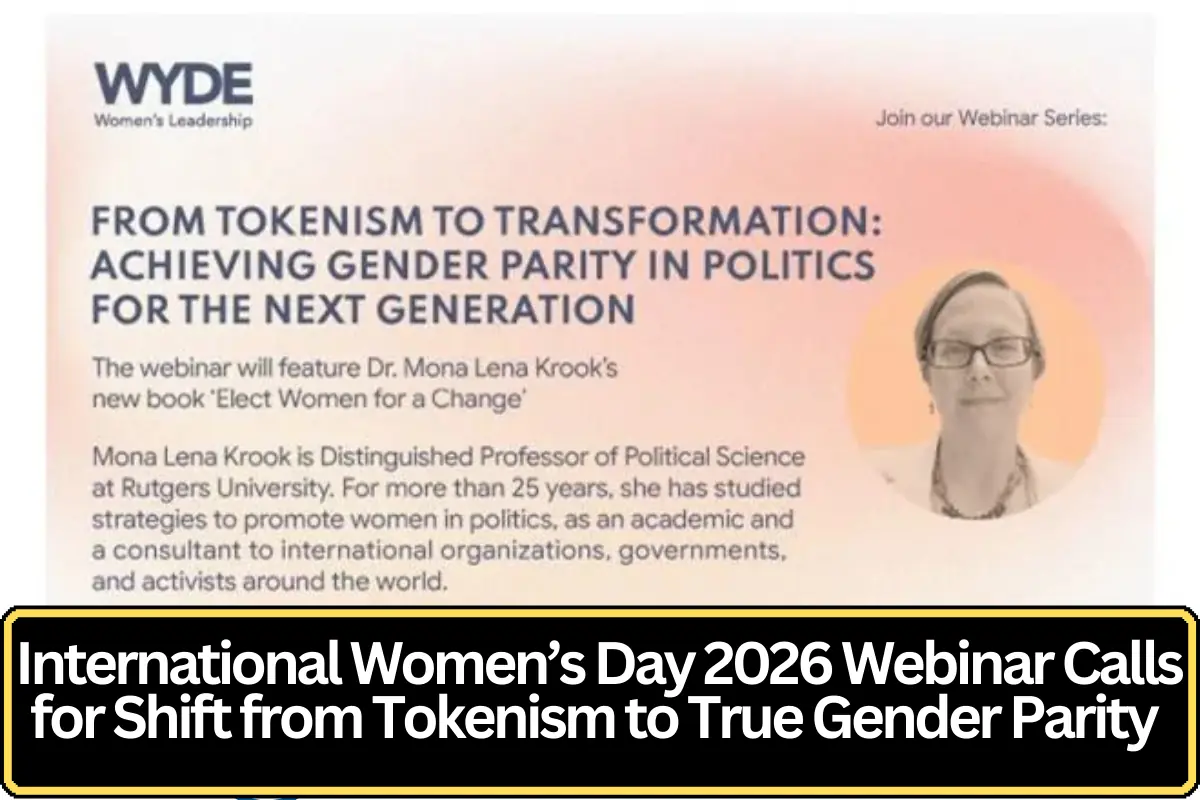
International Women’s Day 2026 Webinar Highlights the Need for Real Gender Parity
As the world prepares to mark International Women’s Day in 2026, global conversations about gender equality are once again taking center stage. One significant initiative is a webinar organized to explore the theme of moving from symbolic representation to meaningful transformation in gender equality. The online event brings together policy experts, academics, civil society representatives, and advocates who are working to promote women's participation in leadership and decision-making processes around the world.
The discussion focuses on the difference between token representation and genuine gender parity. While many countries and institutions have made progress by including women in leadership roles, experts argue that true equality requires deeper structural change. The webinar aims to examine how governments, organizations, and communities can move beyond symbolic gestures and implement policies that create real opportunities for women.
This conversation reflects a broader global movement to ensure that gender equality becomes a central pillar of governance, economic development, and social justice.
Understanding the Difference Between Tokenism and Transformation
What Tokenism Means in Leadership
Tokenism occurs when individuals from underrepresented groups are included in institutions primarily to create the appearance of diversity rather than to influence decision-making in meaningful ways. In the context of gender equality, tokenism often manifests when women are appointed to leadership positions without the authority, resources, or institutional support necessary to shape policy.
While such representation may appear progressive, critics argue that it can sometimes reinforce existing inequalities. When women are included in leadership only symbolically, they may face barriers that limit their ability to participate fully in decision-making processes.
Tokenism can also lead to unrealistic expectations, where a small number of women are expected to represent the interests and perspectives of an entire gender group. This situation often creates additional pressure while failing to address the underlying systemic challenges that restrict broader participation.
The Meaning of Genuine Transformation
Transformation, on the other hand, involves fundamental changes in institutions, policies, and cultural attitudes that enable women to participate equally in all areas of public and private life. Achieving genuine transformation requires more than symbolic appointments; it demands structural reforms that ensure equal access to education, economic opportunities, and political representation.
Experts emphasize that transformation must include long-term policy commitments, transparent governance systems, and accountability mechanisms. Institutions must also address workplace cultures, gender biases, and social norms that have historically limited women's participation.
When transformation occurs, women are not merely present in leadership roles—they actively influence policy outcomes, shape institutional priorities, and contribute to the broader development of their societies.
Global Progress in Women’s Representation
Achievements Over the Past Decades
Over the past several decades, the global community has made notable progress in advancing women's representation in political, economic, and social institutions. International frameworks and national policies have encouraged governments to promote gender equality through legislation, quotas, and development programs.
Many countries have adopted policies that aim to increase the number of women in parliaments, corporate boards, and leadership positions within public institutions. These initiatives have contributed to a gradual rise in women's participation in decision-making roles across different sectors.
Educational access has also improved significantly for girls and young women around the world. Higher levels of education have enabled more women to pursue careers in fields that were historically dominated by men, including politics, science, technology, and business.
Despite these achievements, gender gaps remain in many areas of leadership and economic participation. The webinar aims to explore why progress has been uneven and what steps are necessary to accelerate meaningful change.
Persistent Challenges and Barriers
Even as progress continues, several barriers still limit women's full participation in leadership. Structural inequalities, cultural norms, and economic disparities can restrict access to opportunities for women in many parts of the world.
For example, women often face challenges related to unequal pay, limited career advancement opportunities, and lack of representation in senior decision-making roles. In politics, campaign financing and party structures can sometimes create obstacles that discourage women from running for office.
Work-life balance issues, including unequal distribution of unpaid care responsibilities, also play a role in shaping career outcomes for women. Addressing these challenges requires coordinated efforts across governments, businesses, and civil society organizations.
The Role of Institutions in Promoting Gender Equality
Government Policies and Legislative Reforms
Governments play a critical role in advancing gender equality through policy frameworks and legal reforms. Laws that promote equal rights, prevent discrimination, and support women's participation in public life are essential components of long-term change.
Many countries have introduced gender quotas in political institutions to increase women's representation in legislative bodies. While such measures have sometimes been debated, they have helped create opportunities for women to participate in political leadership.
Beyond quotas, governments can also implement policies that support women’s education, entrepreneurship, and workforce participation. Investments in childcare services, parental leave policies, and workplace equality initiatives can significantly influence women’s ability to pursue leadership roles.
International Cooperation and Global Initiatives
International organizations and global initiatives have also played an important role in promoting gender equality. Through research, advocacy, and policy guidance, these institutions help governments and civil society organizations implement strategies that support women's empowerment.
Global partnerships encourage knowledge sharing and collaboration among countries facing similar challenges. By learning from successful policy models and innovative programs, governments can develop more effective strategies to promote gender parity.
The International Women’s Day webinar serves as a platform for such knowledge exchange, bringing together experts from different regions to discuss best practices and policy solutions.
Women’s Leadership and Economic Development
The Economic Impact of Gender Equality
Research consistently shows that gender equality contributes positively to economic growth and social development. When women participate fully in the workforce and leadership roles, they bring diverse perspectives that can enhance innovation and decision-making.
Greater representation of women in leadership positions has been linked to improved organizational performance, stronger governance, and more inclusive economic policies. Businesses and governments that prioritize gender diversity often experience higher levels of productivity and resilience.
Promoting women’s entrepreneurship is another important aspect of economic empowerment. Access to financial resources, training programs, and professional networks can enable women to build successful businesses and contribute to economic development.
Education and Skill Development
Education remains one of the most powerful tools for advancing gender equality. Access to quality education allows girls and young women to develop the skills and confidence needed to pursue leadership opportunities.
Programs that encourage girls to study science, technology, engineering, and mathematics have gained increasing attention in recent years. These initiatives aim to address gender imbalances in sectors that are expected to play a major role in future economic growth.
By investing in education and skill development, societies can create pathways for women to participate more actively in innovation, policymaking, and entrepreneurship.
The Role of Civil Society and Community Advocacy
Grassroots Movements for Change
Civil society organizations and grassroots movements have played a vital role in advancing gender equality around the world. Advocacy groups often work to raise awareness about issues such as gender discrimination, violence against women, and unequal access to opportunities.
These organizations also provide support networks for women pursuing leadership roles in politics, business, and community development. Through training programs, mentorship initiatives, and policy advocacy, civil society groups help create an environment that encourages women's participation.
The involvement of community leaders and local organizations is particularly important in addressing cultural barriers and promoting inclusive social norms.
The Importance of Public Awareness
Public awareness campaigns can influence social attitudes and encourage broader support for gender equality initiatives. Media organizations, educational institutions, and community groups often collaborate to promote messages about the importance of women's leadership and empowerment.
Changing cultural perceptions is a gradual process, but sustained awareness efforts can help challenge stereotypes and promote a more inclusive vision of leadership.
The International Women’s Day webinar contributes to these efforts by encouraging dialogue and reflection on how societies can move from symbolic representation to meaningful transformation.
Looking Ahead: Building a More Inclusive Future
Opportunities for Policy Innovation
As conversations about gender equality continue to evolve, policymakers and organizations are exploring new approaches to address persistent challenges. Digital technology, data-driven policy analysis, and collaborative governance models offer opportunities to design more effective strategies for promoting gender parity.
Innovation in policy design can help identify barriers that limit women's participation and create targeted solutions that address those challenges. By combining research with practical policy initiatives, governments and institutions can accelerate progress toward equality.
The Importance of Collective Action
Achieving gender parity requires cooperation across multiple sectors of society. Governments, businesses, educational institutions, and civil society organizations must work together to create environments that support women's empowerment.
International observances such as International Women’s Day serve as important reminders of the progress that has been made and the work that remains to be done. Events like the 2026 webinar provide a space for reflection, dialogue, and the exchange of ideas that can shape future policies and initiatives.
Conclusion
The International Women’s Day 2026 webinar highlights the ongoing global effort to move beyond tokenism and achieve genuine gender parity. While significant progress has been made in increasing women's representation in leadership roles, experts emphasize that real transformation requires deeper institutional change.
By addressing structural barriers, promoting inclusive policies, and encouraging collaboration across sectors, societies can create opportunities for women to participate fully in shaping their communities and institutions. The conversations taking place during the webinar represent an important step toward building a future where gender equality is not merely a symbolic goal but a lived reality.
As International Women’s Day approaches, the focus on transformation rather than tokenism underscores a broader commitment to building more inclusive and equitable societies worldwide.