Iran Conflict Enters Day 15 as US and Israel Intensify Strikes and Regional Tensions Escalate
The conflict involving Iran, the United States, and Israel entered its 15th day with continued strikes, regional tensions, and growing concern over the impact on global energy routes and Middle East stability.
 SANJANA DUTTA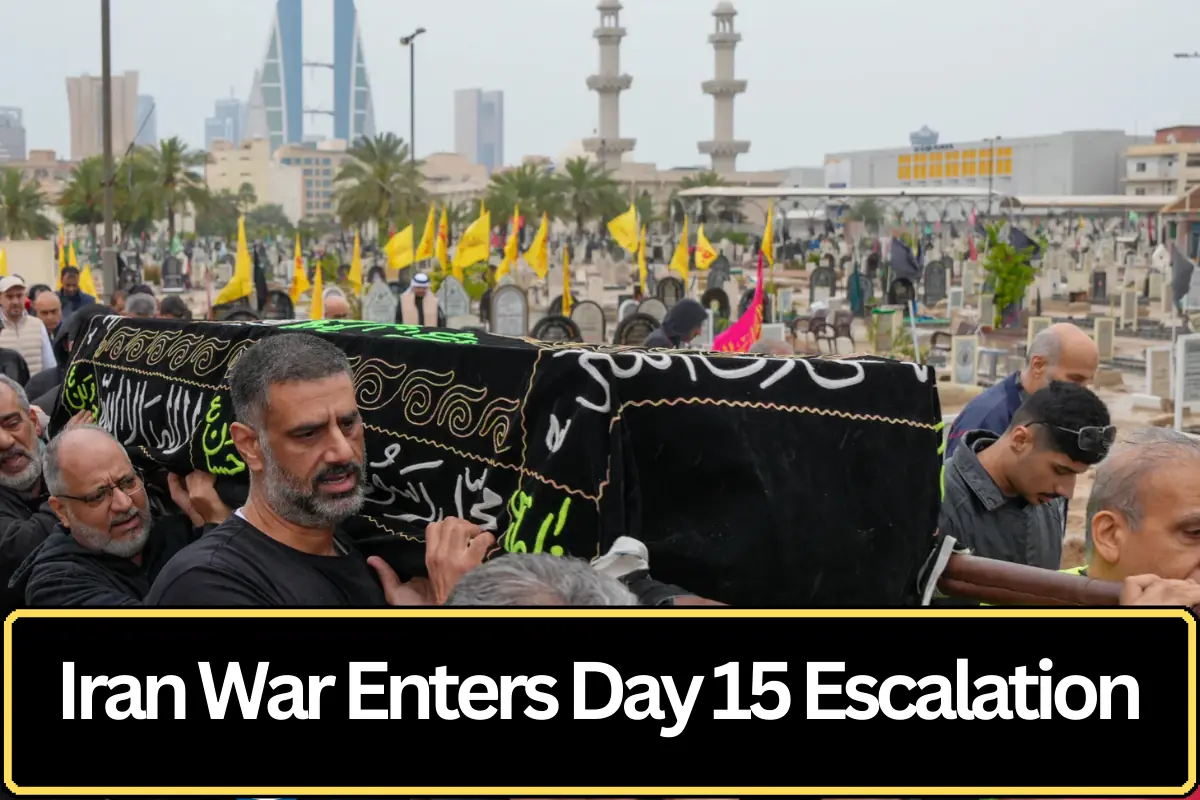
Conflict Involving Iran, United States and Israel Reaches Day 15
The ongoing conflict involving Iran, the United States and Israel entered its fifteenth day as military operations continued across several locations in the Middle East, raising concerns about regional stability and global energy security. The confrontation has expanded beyond isolated strikes, with multiple attacks targeting military installations, energy infrastructure and strategic sites. Governments across the region are closely monitoring the situation as tensions intensify and the risk of broader escalation remains high.
The latest developments follow a series of coordinated military actions and retaliatory responses that have unfolded over the past two weeks. The United States and Israel have carried out strikes against targets associated with Iran’s military capabilities, while Iran and allied groups have responded with their own operations across parts of the region. The exchanges have heightened fears of a wider regional confrontation involving several Middle Eastern countries.
Military Operations Continue Across Strategic Locations
During the fifteenth day of the conflict, reports indicated that multiple sites connected to Iran’s military and logistical infrastructure were targeted in continued air and missile strikes. These operations form part of an ongoing campaign aimed at weakening Iran’s strategic capabilities and limiting its ability to project power across the region.
Iran has condemned the attacks and has warned that it will respond to any further military action against its territory or interests. Officials in Tehran have stated that the country retains the capacity to defend itself and to retaliate if the strikes continue.
The exchanges of military actions have not been confined to a single area. Incidents have been reported across several locations including strategic facilities and transport corridors connected to regional military operations.
Regional Security Concerns Intensify
The prolonged conflict has raised serious concerns about the potential for a wider regional war. Countries across the Middle East are assessing the implications of the ongoing confrontation, particularly as military operations appear to be expanding in scope and intensity.
Strategic waterways and energy infrastructure remain key areas of concern. The Persian Gulf and nearby maritime routes are essential for global oil shipments, and any disruption to these corridors could have consequences for international energy supply chains.
Security analysts warn that extended hostilities could increase the risk of attacks on shipping routes, oil terminals and military bases across the region. Governments have therefore stepped up monitoring and security measures around critical infrastructure and maritime traffic.
Global Energy Markets Closely Watching Developments
The escalation in military activity has drawn close attention from global energy markets. The Middle East accounts for a significant portion of the world’s oil production and export capacity, making stability in the region a critical factor for global economic activity.
Energy traders and policymakers are monitoring the situation to assess whether disruptions to infrastructure or shipping routes could affect the movement of oil and gas supplies. Even the possibility of instability in major maritime chokepoints can influence energy prices and market expectations.
Several incidents during the conflict have involved infrastructure connected to energy production and storage, highlighting the strategic importance of such facilities during periods of geopolitical tension.
Diplomatic Efforts and International Reactions
The escalation of hostilities has prompted calls for restraint from international organizations and governments seeking to prevent the conflict from spreading further. Diplomatic channels remain active as several countries attempt to encourage de‑escalation and dialogue.
Global leaders have expressed concern about the humanitarian and economic implications of a prolonged confrontation. Military conflicts involving major regional actors often generate ripple effects that extend beyond national borders, affecting trade, energy markets and international security arrangements.
International observers say that diplomatic initiatives may intensify as the conflict continues, particularly if the pace of military operations increases.
Humanitarian and Economic Implications
Beyond the immediate military dimension, the conflict has raised concerns about humanitarian conditions in areas affected by strikes and military operations. Infrastructure damage, disruptions to transportation networks and uncertainty surrounding security conditions can affect civilian populations living near strategic facilities.
Economic consequences are also becoming a focus of attention. Prolonged instability in the Middle East can influence investment decisions, trade flows and energy supply chains. Countries dependent on oil imports from the region are monitoring developments closely.
Experts note that geopolitical conflicts involving major energy producers can have long‑term effects on markets if supply disruptions persist or if shipping routes become unsafe for commercial traffic.
Strategic Importance of the Persian Gulf Region
The Persian Gulf remains one of the most strategically sensitive areas in global geopolitics due to its concentration of energy resources and critical maritime corridors. A large share of the world’s oil exports passes through nearby shipping lanes each day.
Military operations occurring near these routes often raise concerns among governments and shipping operators responsible for safeguarding commercial trade. Naval forces from multiple countries routinely patrol the region to maintain maritime security and protect international shipping.
The ongoing conflict has therefore prompted heightened vigilance around key ports, energy facilities and shipping corridors used by oil tankers and cargo vessels.
Outlook as Conflict Continues
With the confrontation now entering its third week, analysts say the direction of the conflict will depend on political decisions taken by the countries involved and the effectiveness of diplomatic efforts aimed at reducing tensions.
While military operations have continued, international attention remains focused on whether negotiations or external mediation could help prevent further escalation.
The evolving situation underscores the fragile security environment in the Middle East, where conflicts involving major regional powers can quickly influence global political and economic dynamics.
Current Situation
The conflict involving Iran, the United States and Israel has entered its fifteenth day with continued military operations and heightened regional tensions, while governments and international observers monitor developments closely amid concerns about wider escalation and potential impacts on global energy security.